How West Africa's reform-driven economy is turning raw cotton into finished clothing, a Eurobond into a longer runway, and a port into a regional logistics hub
Benin rarely tops the list of Africa's fastest-growing economies, but the small West African nation of roughly 14 million people has quietly logged some of the continent's highest growth rates for nearly a decade. This isn't about oil — Benin has none of consequence — but about a sustained, state-directed effort to move up the value chain: turning raw cotton into finished garments, a transit port into a regional logistics platform, and a previously chaotic fiscal position into one that earned a positive outlook from S&P Global Ratings. The approach, pursued under President Patrice Talon since 2016 and now entering a new phase as Benin nears the end of a multi-year IMF program, offers a useful case study in how a small economy without major mineral wealth can engineer growth through infrastructure, industrial policy, and fiscal discipline.
Growth Anchored in Ports, Construction, and Agriculture
The World Bank estimates Benin's economy expanded by 6.3% in 2024 and projects growth holding in the 6.4% range through 2025–2026, driven by the Port of Cotonou's expansion, a roughly 30% rise in agricultural productivity, and sustained momentum in construction and manufacturing. Cotonou — West Africa's second-busiest container port after Lomé and Abidjan — remains the single largest driver of services-sector growth. Its modernization, including expanded berths, new handling equipment, and improved road and rail links, is designed to let Benin compete more directly with neighboring Togo for transshipment cargo destined for the Sahel.
The port has also benefited from its role as a transit corridor for Nigerien trade, including oil, with cross-border transit gradually resuming since August 2024 after a period of disruption.
Cotton: Still King, But No Longer Just a Raw Export
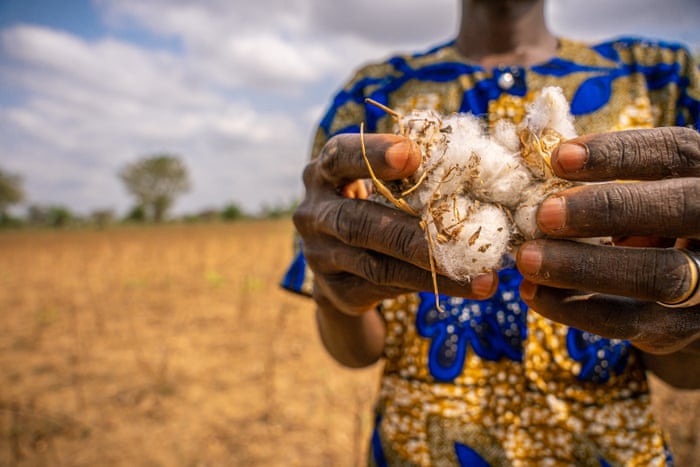
Cotton remains the backbone of Benin's export economy and its single largest agricultural employer. Benin has ranked as Africa's leading cotton producer by volume for several years, with the crop accounting for roughly half of total exports in 2023. Forecasts for the 2025/2026 season point to yields of around 488 kilograms per hectare, keeping Benin competitive with regional rivals.
What distinguishes Benin's current strategy is the deliberate push to process more cotton domestically. That ambition is embodied in the Glo-Djigbé Industrial Zone (GDIZ) — a roughly 1,640-hectare special economic zone outside Cotonou developed as a public-private partnership between the government and pan-African industrial-parks developer Arise IIP.
Glo-Djigbé: Betting on Textiles and Jobs
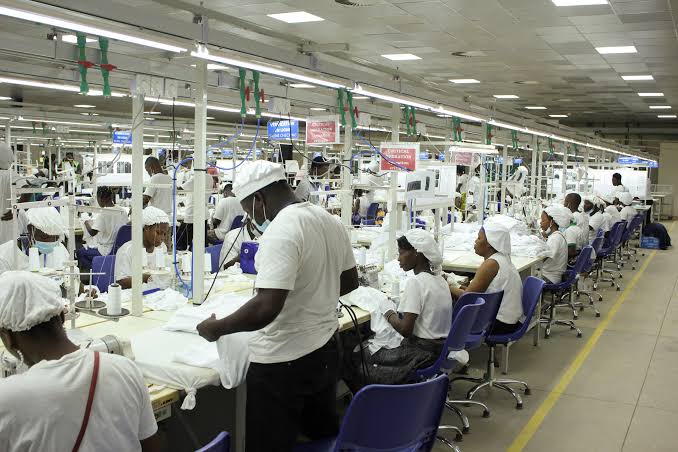
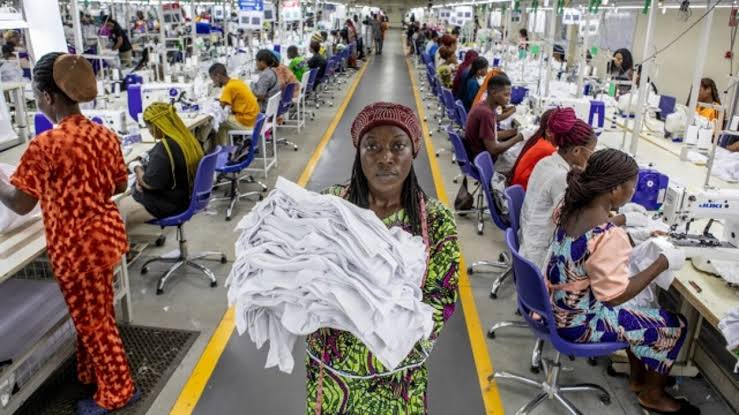
GDIZ is the centerpiece of Benin's industrialization strategy. The zone is targeting at least $1.4 billion in first-phase investment and aims to create around 300,000 jobs by 2030, anchored by vertically integrated textile factories combining spinning, weaving, and garment manufacturing under one roof.
Progress has been tangible. Through a government-run apprenticeship initiative called Azôli, close to 30,000 young Beninese have already found employment tied to GDIZ. In February 2026, the zone marked a further milestone with the operational launch of Btex, billed as the largest eco-responsible textile park in the world.
Export results are starting to show: GDIZ-based manufacturers shipped their first ready-to-wear exports to a U.S. apparel brand in September 2024, and Beninese factories have exported finished clothing — including 80,000 children's leggings — to French retailer Kiabi. More than 40 textile and processing companies now operate inside the zone.
Fiscal Discipline and a Reshaped Debt Profile
Benin's industrial ambitions sit alongside an unusually disciplined fiscal track record for the region. The IMF completed the final reviews of Benin's EFF, ECF, and RSF arrangements in February 2026 — triggering an immediate disbursement of roughly $118 million. The IMF noted that fiscal consolidation had cut Benin's deficit to 3.1% of GDP in 2024, with the 2026 budget designed to hold it within the WAEMU's 3%-of-GDP ceiling.
Central government debt was revised upward to 60.5% of GDP at end-2024 — a level the IMF still assesses as moderate risk given the country's strengthened debt-carrying capacity. In January 2025, Benin issued a **$500 million, 16-year Eurobond**, using $250 million to buy back part of a Eurobond originally due in 2032 — extending average maturity and reducing near-term debt-service costs. S&P Global Ratings has affirmed Benin's BB-/B ratings with a positive outlook.
The Social Ledger: Uneven Progress on Poverty
Benin's growth story has not yet translated into uniform social gains. World Bank poverty data show the national poverty rate at roughly 36.2% in the 2021–2022 survey round — a real but modest improvement given the pace of headline GDP growth. Other estimates put the rate closer to 38.5%, rising to about 44.2% in rural areas, underscoring a persistent urban-rural divide. Growth concentrated in Cotonou's port, construction, and industrial-zone activity has not yet fully reached rural cotton-farming communities.
This is the live test of Benin's strategy: whether channeling cotton into domestic factories eventually lifts farmgate incomes and rural employment enough to close that gap, or whether gains accrue mainly to urban industrial workers and port-linked logistics jobs.
Regional Integration and the AfCFTA Dimension
Benin's bet on becoming a regional logistics and light-manufacturing hub is closely tied to West African trade integration. The reopening of transit trade with Niger since August 2024 illustrates how quickly Benin's port-dependent growth can be disrupted — and how much it stands to gain — from the stability of its Sahelian neighbors. Benin's National Assembly also enacted a new competition law in January 2025, a step intended to make the country a more predictable trading partner as the African Continental Free Trade Area's Guided Trade Initiative expands.
Outlook
Benin's combination of high growth, a credible fiscal anchor, and a genuine — if still nascent — push into textile manufacturing makes it one of West Africa's more interesting development stories outside the region's oil and gold producers. The risks are familiar: cotton-price volatility, dependence on a small number of anchor investors at GDIZ, and a debt level that leaves limited room for fiscal slippage. But with the IMF program concluding on solid footing, a freshly extended Eurobond maturity profile, and the first "Made in Benin" garments now reaching European and American shelves, the country has built more of a foundation for durable growth than its modest size on the map would suggest.
Sources: World Bank, IMF, S&P Global Ratings, AfDB, UMOA-Titres, GDIZ Benin, Arise IIP
Published By | Business News Editor