Written By | International News Agencies
Berlin and Mecklenburg-Western Pomerania go to the polls on Sunday
World Politics
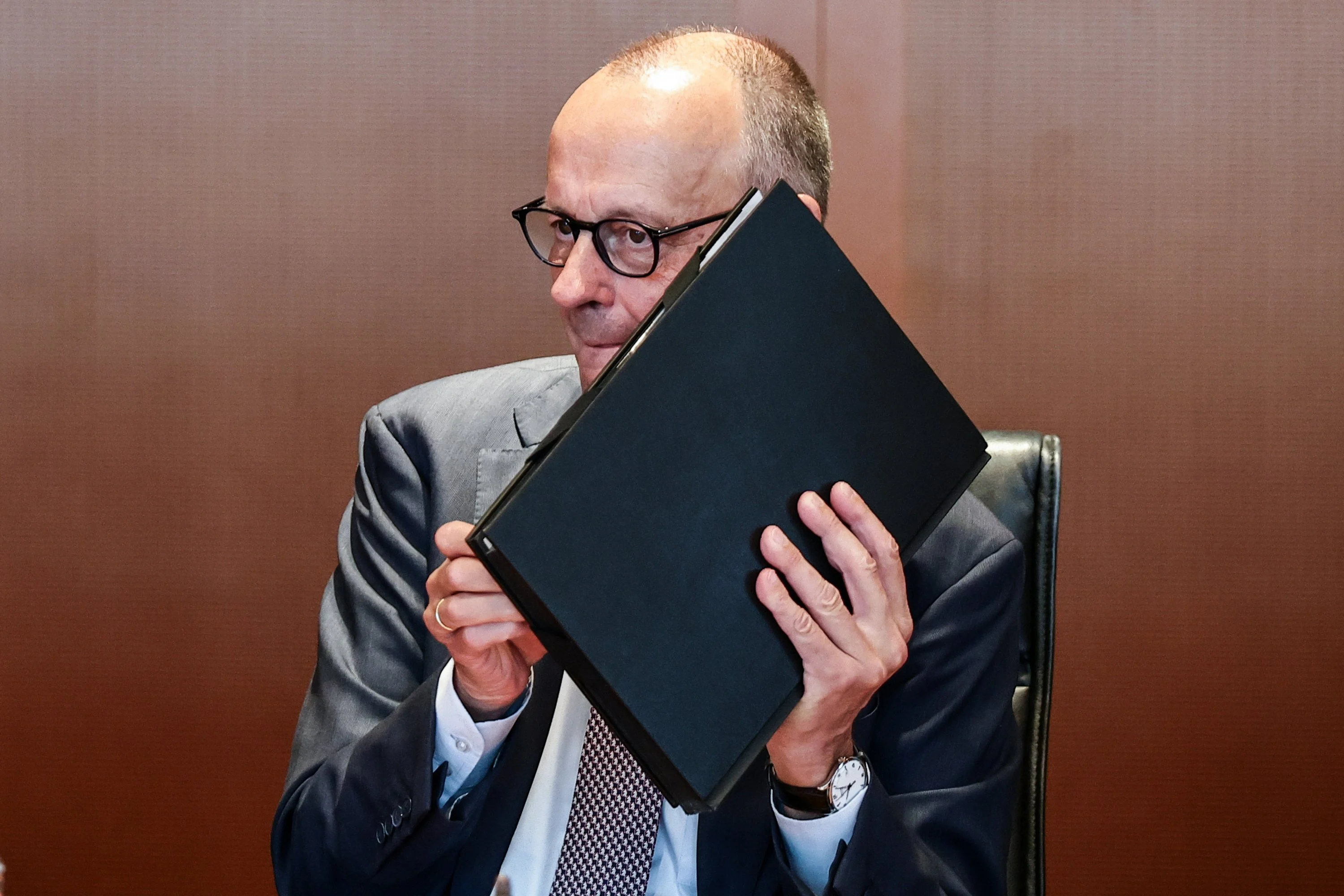
Friedrich Merz will not be in New York next week. The German chancellor cancelled a long-planned trip to the United Nations General Assembly, a fixture in any German leader's diary, in order to stay in Berlin and deal with a problem that has become more pressing than diplomacy: whether he will still be chancellor at the end of the month. On Sunday, voters in the city-state of Berlin and the north-eastern state of Mecklenburg-Western Pomerania elect new parliaments. That evening, the executive committee of Merz's Christian Democratic Union will convene in Berlin, a meeting his office has framed as a routine post-election stocktake and which almost nobody in German politics believes is anything of the kind.
The gathering caps a fortnight in which the unthinkable has become sayable inside Germany's largest party. Sixteen months after taking office promising to restart a stagnant economy, rearm the country against Russia, cut irregular migration and drain support from the far right, Merz has delivered on parts of the second item and very little of the rest. A Forsa poll published this week put the share of Germans satisfied with his performance at ten percent. The far-right Alternative for Germany, the party he vowed to shrink, now outpolls his own at national level and humiliated it on 6 September in Saxony-Anhalt, taking roughly forty-four percent to the CDU's seventeen.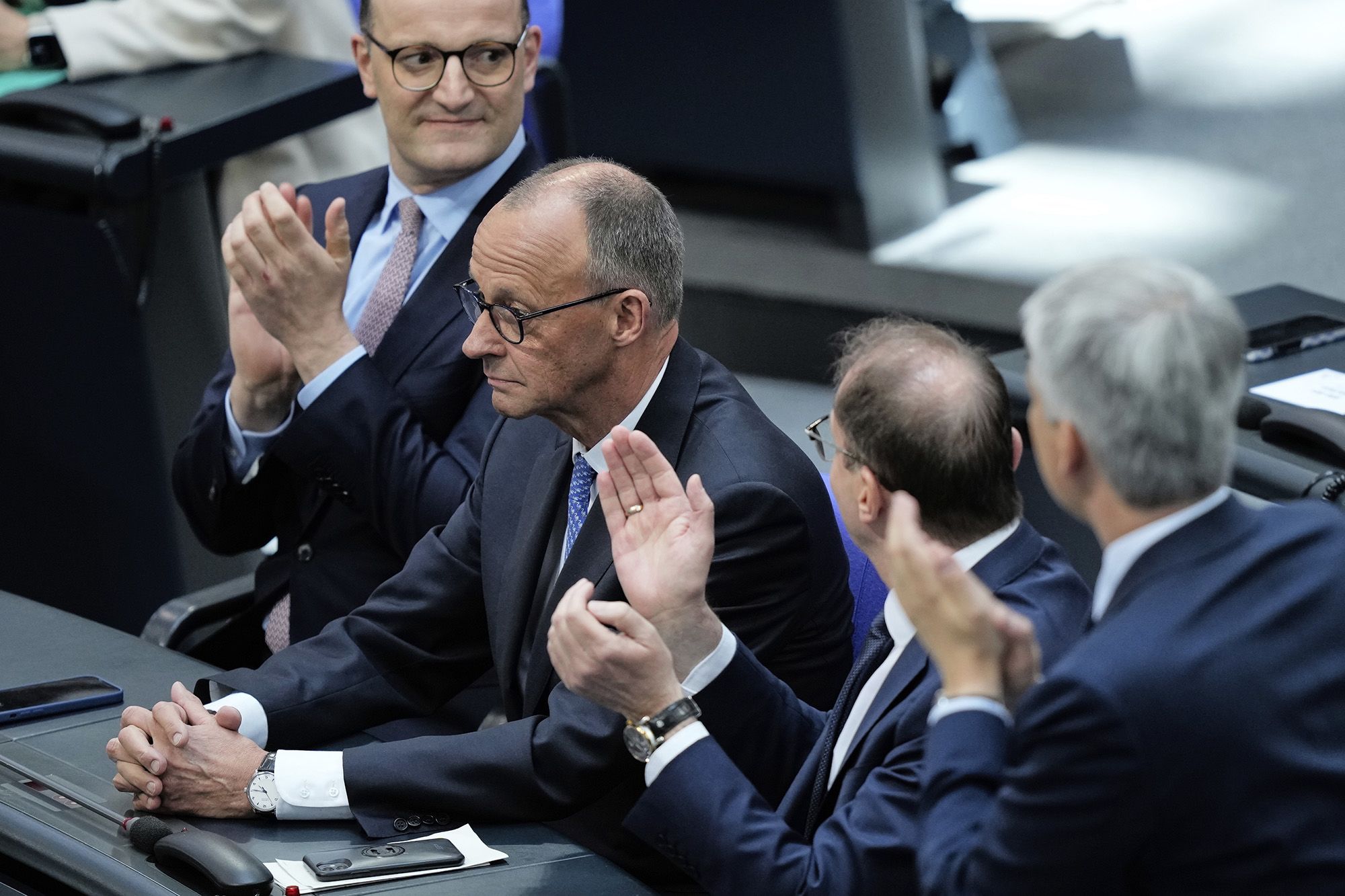
Background: a government that never found its footing
Merz was elected chancellor on 6 May 2025 at the head of a grand coalition of his CDU, the Bavarian CSU and the Social Democrats, commanding 328 of the Bundestag's 630 seats. The arrangement was born of arithmetic rather than affection. With the AfD excluded by the CDU's self-imposed firewall and the smaller parties diminished, the two old rivals were the only combination available. Lars Klingbeil, the SPD co-chair, took the finance ministry and the vice-chancellorship, which gave the Social Democrats a veto over precisely the economic and welfare reforms the CDU's right wing most wanted.
The government's record is genuinely mixed rather than uniformly poor. It has passed well over a hundred and seventy laws, tightened migration rules, reformed the Bürgergeld minimum-income scheme and stabilised pensions, though economists have called the pension package inadequate. Its most consequential act was constitutional: exempting defence spending from the debt brake, which unlocked the largest German rearmament since reunification and, with it, a substantial increase in Berlin's weight inside NATO and the European Union. Merz repaired relations with Paris, courted the Nordic and eastern member states, and was early in endorsing the five-percent defence spending target that other allies subsequently adopted.
None of it has registered with voters, because none of it has produced growth. The economics ministry halved its 2026 growth forecast and raised its inflation projection as the war between the United States and Iran drove energy costs up; business expectations fell to their lowest in nearly three years. Germany still has no credible answer to the decline of its car industry, its energy costs or its under-investment in infrastructure. An Atlantic Council assessment published in May, marking Merz's first year, found eighty-six percent of Germans dissatisfied or very dissatisfied with the government and warned that without major changes it was uncertain whether the coalition would survive the parliamentary term.
The same analysis identified the chancellor's own style as part of the problem. Merz's bluntness, admired in opposition, has repeatedly caused trouble at home and abroad; he keeps no close circle of advisers and is not much given to taking advice from the one he has. His chancellery has struggled to coordinate policy, and its handling of constitutional court appointments last year was a self-inflicted wound. His working relationship with Donald Trump, initially a selling point, did not survive Merz's public criticism of the American war on Iran.
Key developments: from palace revolt to open succession talk
The internal crisis crystallised in July. Jens Spahn, the CDU/CSU parliamentary group leader and one of the party's most powerful figures, resigned on 18 July after it emerged that he and his husband had had a child through surrogacy in the United States, a practice illegal in Germany and opposed by his own party. Thorsten Frei was elected to succeed him with 170 of 185 votes cast. The cabinet reshuffle that followed was widely judged chaotic: Carsten Linnemann, the CDU general secretary, was moved to the health ministry and replaced at party headquarters by Franziska Hoppermann. Der Spiegel described the mood inside the CDU as a palace revolt, and the labour-wing leader Dennis Radke called the fracture worse than the Kohl-era donations scandal. By August, replacing the chancellor was no longer taboo in private conversation among Union legislators.
Saxony-Anhalt on 6 September turned private talk into a countdown. The AfD took 43.9 percent and 39 of 83 seats, the first outright first-place finish for a far-right party in a German state election since 1949, on record turnout of about 77 percent. The CDU fell to 17.2 percent. Because the AfD finished three seats short of a majority and every other party refuses to govern with it, the result produced no far-right administration — but it destroyed the argument that the firewall strategy was working.
Since then the manoeuvring has been open. Names floated as successors include Hendrik Wüst, minister-president of North Rhine-Westphalia and the candidate of the party's centre; Markus Söder, the Bavarian premier and CSU chairman; and Spahn, whose July departure may prove temporary. Each faces an obstacle. Wüst is opposed by Söder; Söder is opposed by Christian Democrats unwilling to hand the chancellery to the Bavarian sister party for the first time in history; Spahn's resignation is recent. Reporting by Der Spiegel found that virtually none of the senior figures it consulted believed Merz had a future as chancellor.
On 16 September eight CDU state premiers issued a joint statement backing him, arguing that "Germany's political landscape needs stability" now more than ever. It was intended to quell the speculation and was widely read as confirmation of how serious it had become. Oliver Lembcke, a political scientist at Ruhr University Bochum, told AFP that the manoeuvring showed Merz himself "apparently regards an early end to his chancellorship as a real possibility." That, Lembcke said, is why he is courting the state premiers: "If they do not demonstratively express their confidence in him after the elections, his position will become very difficult."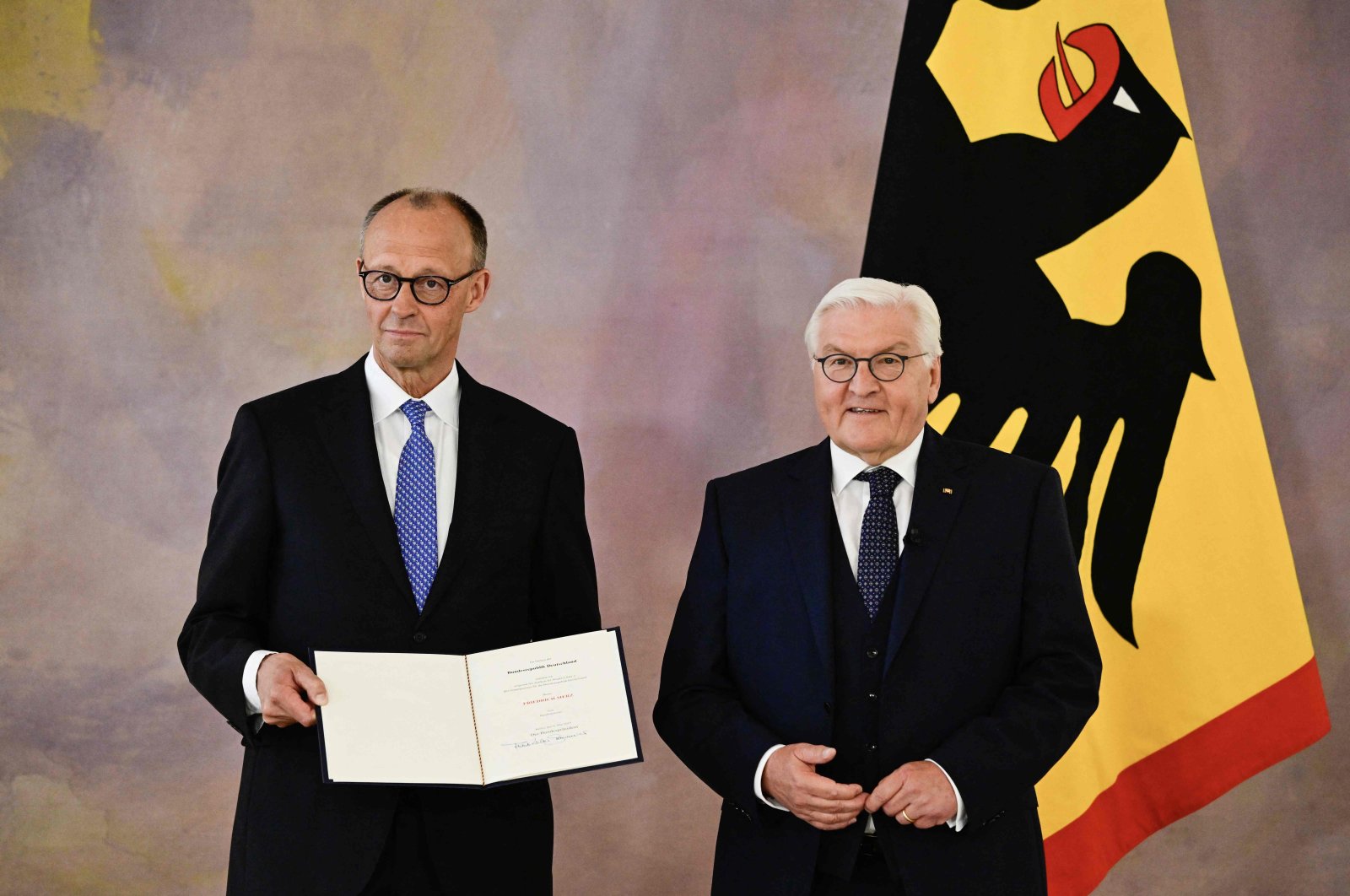
Sunday's arithmetic
Neither election is likely to help. In Berlin, polling has the CDU running roughly level with the far-left Die Linke at the top of a fragmented field — one composite trend put Die Linke on 20.6 percent, the CDU on 19.9, the AfD on 17.8, the Greens on 16 and the SPD on 12.1, which would produce a five-party parliament with no obvious majority. Losing a capital the CDU currently governs would be damaging in itself.
Mecklenburg-Western Pomerania is worse. The AfD, with Leif-Erik Holm as its candidate for minister-president, leads on between roughly 36 and 37 percent depending on the pollster; the SPD's Manuela Schwesig, one of the party's few genuinely popular incumbents, has closed to within a few points. The CDU is polling between seven and nine percent in a state it once contested seriously. Sources differ on the precise figures, but the direction is not in dispute. Even if Schwesig holds the premiership through a three-way alliance with the Left and the Greens, the CDU's own number will be the headline inside the party.
What happens next
Removing a German chancellor against his will is deliberately difficult. The Basic Law permits no simple no-confidence vote: under Article 67, the Bundestag can only unseat a chancellor by electing a successor in a constructive vote of no confidence, which means any CDU challenger would need Social Democratic votes to take office. Article 68 allows the chancellor himself to call a confidence vote, and only a chancellor who loses one can ask the president to dissolve parliament — and President Frank-Walter Steinmeier, who is known to oppose early elections on the grounds that they would chiefly benefit the AfD, would still have the option of refusing.
The realistic route out, therefore, is not a parliamentary ambush but a negotiated departure: enough state premiers and caucus members withholding confidence that Merz concludes he cannot continue, followed by a succession the SPD agrees to ratify. Merz has given no sign of contemplating it. In a speech on Tuesday he said he would press on with the economic and welfare reforms agreed with the Social Democrats, adding that "the bitter election result of September 6 in Saxony-Anhalt changes nothing in this regard." He faces re-election as CDU chairman in early 2028, and a federal budget must pass later this year.
The stakes reach well beyond Berlin. Germany is the largest European funder of Ukraine's defence after the United States, the anchor of the continent's rearmament programme, and — with the European Commission unveiling ambitions this week that range from a new partnership with Canada to a European security council — the member state whose stability the whole project assumes. That the chancellor has withdrawn from the General Assembly to manage his own party tells its own story about where German attention now sits. By Sunday night, the party that has governed Germany for most of its postwar history will have to decide whether it believes its leader can recover, or whether it prefers the risks of changing him with three years of the term still to run.