Written By | Health News Agencies

Scientists say the world's most famous weight-loss drug just did something nobody ordered: it appears to be slowing the speed at which the human body ages, right down to the DNA.
SAN DIEGO, California
Millions of people are already jabbing semaglutide into their stomachs every week to shrink their waistlines. Now a study out of the University of California, San Diego, is suggesting the drug behind Ozempic and Wegovy might be doing something far stranger to their bodies than melting fat: slowing down the molecular countdown clock buried inside their own cells.
The findings, published in the journal Nature Communications and amplified this week by UC San Diego's own newsroom, mark the first time researchers have shown in a randomized, placebo-controlled human trial that a GLP-1 drug can measurably decelerate biological aging — not just the number on the scale, but the deeper, cellular arithmetic of how fast a body is wearing out.
"We are not saying that semaglutide reverses aging or makes people younger," said lead researcher Dr. Michael J. Corley of UC San Diego's Division of Geriatrics and Palliative Care, choosing his words with the caution of a scientist who knows exactly how fast a headline can run away from him. "What we are seeing is a signal that it may slow some of the biological processes associated with aging."
It is, in the understatement-soaked language of academic medicine, a very big deal.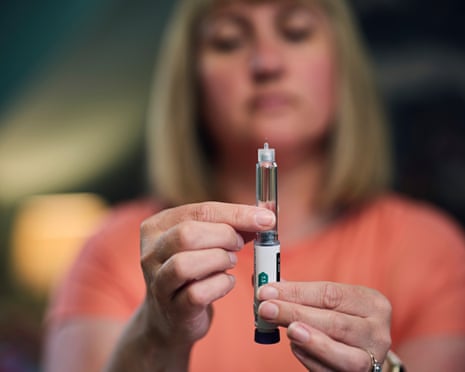
The Study That Started As Something Else Entirely
The trial wasn't even designed to study aging. It was built to answer a narrower, more clinical question: could semaglutide help people living with HIV who develop a cruel side effect of long-term antiretroviral therapy called lipohypertrophy — an abnormal buildup of fat, often in the belly, neck, and upper back, that can be as psychologically devastating as it is metabolically dangerous.
Researchers enrolled 84 adults with HIV-associated lipohypertrophy into a 32-week, randomized, double-blind, placebo-controlled Phase 2b trial. Forty-five received semaglutide; thirty-nine received a placebo. It was a textbook drug trial, the kind that runs in hundreds of clinics every year, generating modest, useful, forgettable data.
Except Corley's team did something extra. Using leftover blood samples, they ran a battery of "epigenetic clocks" — sophisticated lab tests that read chemical tags on DNA to estimate how fast someone's body is biologically aging, independent of their birth certificate. Think of it as an odometer reading for your cells, one that can run faster or slower than the calendar depending on stress, disease, diet, and now, it seems, medication.
What they found stopped people in the hallway.
The Numbers That Made Researchers Do A Double-Take
Using a widely respected epigenetic clock called DunedinPACE — developed to measure the pace of aging rather than a single age estimate — patients on semaglutide showed roughly a 9% slower pace of biological aging compared to those on placebo.
Nine percent might not sound like a Hollywood miracle. But translated into the currency doctors actually care about, a slower pace of aging is linked to lower long-term risk of heart disease, kidney decline, cognitive impairment, and death from any cause. It's the kind of number that, extrapolated across a lifetime, could mean years of added healthy life.
The semaglutide group also showed a striking drop on the PhenoAge clock — a decrease of roughly 4.9 years per year of measurement, a statistically significant result (p = 0.004) that raised eyebrows even among cautious biostatisticians. And on SystemsAge, an aggregate measure that folds together aging signals from multiple organ systems, the semaglutide group came in nearly four years "younger," biologically speaking, than the placebo group.
Crucially, the effects weren't confined to one organ or tissue type. Corley's team found aging-related improvements across markers tied to the blood, the brain, the heart, the liver, the kidneys, and metabolic health — a pattern that suggests something systemic is happening, not a fluke in one narrow pathway.
"Emerging data also suggest that GLP-1 drugs may reprogram certain cells in different organs, which could help explain why we see effects across multiple aging clocks," Corley said, gesturing at a mechanism that remains, for now, more hypothesis than proven fact.
Why HIV Patients Matter To The Anti-Aging Story
There's a reason this trial happened in people with HIV in the first place, and it's not incidental to the aging story — it's central to it.
People living with HIV, even those on modern antiretroviral therapy that fully suppresses the virus, tend to experience accelerated biological aging. Chronic low-grade inflammation, metabolic disruption, and the physical stress of lipohypertrophy all appear to push their cellular clocks to run faster than those of HIV-negative peers of the same chronological age. In other words, this population offered researchers something rare: a group of people whose "aging speedometer" was already elevated and detectable, making any slowdown easier to spot in a relatively small, short trial.
That is also the study's most important caveat. This was not a trial of healthy 45-year-olds trying to stave off wrinkles and creaky knees. It was a specific population with a specific metabolic condition, tested for just 32 weeks, with only 84 total participants. The epigenetic aging analysis itself was what researchers call a "post hoc exploratory" analysis — meaning it wasn't the trial's original primary goal, and the findings, however striking, need to be replicated in larger, more diverse populations before anyone should treat them as settled science.
The Semaglutide Gold Rush Keeps Expanding
Semaglutide has already had one of the strangest career arcs of any drug in modern medicine. Approved originally for type 2 diabetes as Ozempic, it exploded into cultural ubiquity as a weight-loss drug under the brand name Wegovy, sparking supply shortages, celebrity rumor mills, and a multibillion-dollar arms race between Novo Nordisk and rivals like Eli Lilly.
Along the way, researchers kept finding the drug doing things nobody expected. It's been linked to reduced cardiovascular events, improved kidney outcomes, and even changes in addictive behaviors and alcohol cravings in some studies. Now, add "possible geroprotector" — an agent that protects against the biological damage of aging — to the list of things this once-simple diabetes drug appears to be quietly doing to the human body.
It's worth noting semaglutide isn't without downsides that have made their own tabloid headlines this year: reports of gastrointestinal side effects, the psychological complexities of rapid weight loss, and yes, even reports of odd changes to patients' feet as they lose significant body fat. No drug this widely used, this quickly, arrives without an asterisk-laden fine print.
What Experts Are Saying — And Warning
Independent researchers who reviewed the findings, while intrigued, urged the same caution Corley himself voiced. Epigenetic clocks, however sophisticated, are surrogate markers — statistical proxies correlated with aging and mortality risk, not direct proof that someone will live longer or healthier because of a lower reading. The field of epigenetic aging science, while maturing rapidly, has also faced criticism in the past for clocks that don't always agree with each other or replicate cleanly across different labs and populations.
Still, the fact that multiple independent clocks — DunedinPACE, PhenoAge, and SystemsAge — moved in the same direction, in a randomized and placebo-controlled design, gives this study more credibility than the flood of observational anti-aging claims that circulate on social media and in wellness marketing. This wasn't a retrospective look at people who happened to be on Ozempic. It was a controlled experiment, with a coin-flip assignment to drug or placebo, reducing the chance the result is just an illusion created by healthier or wealthier people happening to take the drug.
What This Means For You
If you're currently on semaglutide for diabetes or weight loss, this study doesn't change your prescription, your dose, or your doctor's advice — and it emphatically does not mean you should seek out the drug purely to "reverse aging." Corley's own words should serve as the community's collective disclaimer: this is a signal, not a verdict.
But it does add fresh fuel to one of the most active fields in modern medicine: the search for drugs that don't just treat a single disease but slow the underlying biological process that makes us vulnerable to nearly all of them at once. Metformin, rapamycin, and now GLP-1 drugs like semaglutide are all being investigated, in various stages, as potential "geroprotectors" — medications repurposed or designed to buy healthy years, not just treat sickness after it arrives.
For the tens of millions of Americans already taking semaglutide-class drugs, largely for diabetes or obesity, this study offers a strange kind of bonus hope: that the injection already in their refrigerator might be doing more good, in more places in their body, than they signed up for. For everyone else, it's a reminder that one of the most consequential experiments in modern pharmacology — what happens when an entire population starts taking a class of drug that touches nearly every organ system — is still very much unfolding in real time.
The Bottom Line
Nine percent might be a modest number on paper. But when it's attached to the pace at which your own cells are ticking down, it's the kind of modest number that keeps aging researchers up at night — in the good way. Larger trials, longer follow-up, and studies in people without HIV are almost certainly coming. Until then, semaglutide's résumé keeps getting longer: diabetes drug, weight-loss phenomenon, heart-protective agent, and now, cautiously, a possible ally against the oldest enemy of all — time itself.
If you are currently managing HIV, diabetes, or considering GLP-1 therapy for any reason, talk to your physician about what's proven, what's promising, and what's still, for now, just a very compelling signal in a small, early trial.



