Written By |
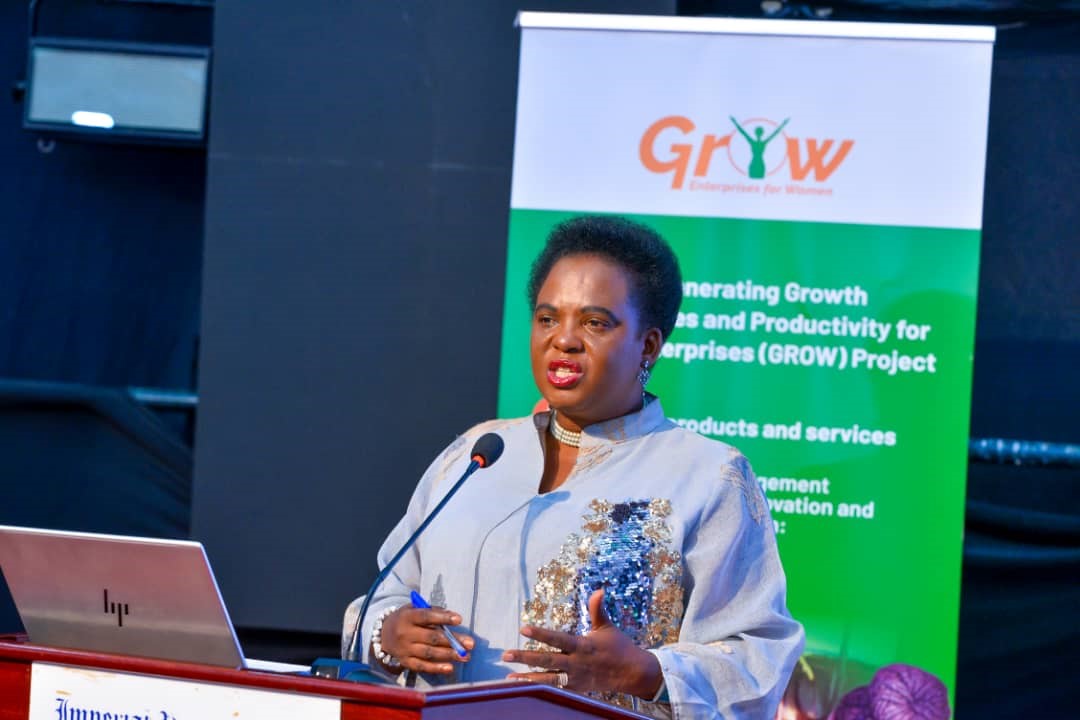
Gender minister, Betty Amongi, said the Cabinet has now reduced the interest rate from 10.5% to 10% (Pictures: GROW Press)
KAMPALA - The Cabinet has approved revised guidelines for the Growth Opportunities and Productivity for Women Enterprises (GROW) loans, setting a fixed interest rate of 10%. The move comes barely a month after Speaker Anita Annet Among directed the finance ministry to address MPs’ concerns over their constituents' difficulties in accessing loans. Among's directive instructed the ministry to present a report outlining the beneficiaries, regulatory framework, areas that have benefited so far, allocated amounts, and expenditure to date.
According to the gender minister, Betty Amongi, the Cabinet has now reduced the interest rate from 10.5% to 10%. Speaking during a consultative meeting with lawmakers, beneficiaries, and financial institutions on Friday, November 8, at the Imperial Royale Hotel in Kampala, Amongi said that the reduction of the interest rate aims at addressing emerging concerns from stakeholders, particularly women entrepreneurs, about equitable access to this resource envelope. Amongi added that the President has given them a nod to slash the interest rates on GROW loans.
About the GROW Loan project
The GROW loan project is a five-year program set to end in December 2027. It is financed by a $217 million World Bank grant. The GROW project was rolled out to empower women entrepreneurs by providing affordable loans to scale their ventures from small to medium and large businesses.
The funds are currently accessible through financial institutions including dfcu, Posta Bank, Finance Trust, Equity, and Centenary Bank.
“We have signed agreements with five commercial banks valued at sh98.8 billion. The initial advance was sh26 billion, but the total package we have for the GROW loan is sh260 billion. By October 15, the banks had lent out sh23 billion to 1,397 women entrepreneurs, and the average loan was sh15 million,” said John Ssengendo Eudes, the project coordinator.
Beneficiaries laud program
Some of the beneficiaries praised the GROW loan program for rescuing their businesses from the brink of collapse.
Irene Kansiime, a resident of Nabweeru in Nansana municipality, said: “The process was very fast; within five days I had received the sh30 million loan, which I have been able to invest in fitting a sauna and steam room in my hotel. The remaining balance will be used as working capital.”
Another beneficiary, Martha Alupo from Kumi district, who received sh10 million, said: “I invested it in stationery and printing. I was able to add more items to my business, like the embroidery machine and a heat press, and I am looking forward to improving my printing business.”
Torch Media Africa



