Written By | Evan Sande Ndahura

Evan Sande Ndahura is a Ugandan writer, poet, social critic, and emerging public intellectual whose work interrogates power, inequality, African identity, leadership, and social justice.
“In every society, it is not intelligence alone that decides who rises or survives, but the strength of the hands willing to hold you when you fall. Wealth may pay the bill, but social capital decides whether anyone stays beside the bed.”
Introduction: Beyond Talent and Wealth
In today’s world, success is often advertised as a product of intelligence, hard work, and money. Yet beneath these visible factors lies a quieter, more decisive force, social capital. How we are raised, the networks we inherit or build, and the socio-political and economic relationships we sustain now play a defining role in determining who succeeds, who survives, and how long one lives.
This article re-examines an old truth that modern society pretends is new: a person’s destiny is deeply tied to the strength of their human connections.
Social Capital as the New Measure of Wealth and Survival
Wealth and poverty today increasingly revolve around the strength of one’s social networks. Social capital determines access to jobs, justice, healthcare, protection, and dignity. It quietly decides whose phone call is answered, whose file is moved forward, and whose life is saved in moments of crisis.
Calamities such as chronic illnesses, such as cancer, diabetes, and other life-threatening conditions, have exposed a painful reality to both the rich and the poor: the true size of one’s family is revealed in suffering.
A wealthy person may afford hospital bills, attracting crowds of visitors in the early days of illness. But prolonged suffering exposes the truth. Over time, numbers thin. Only resilient, committed relationships remain. By one’s final days, the illusion of popularity disappears, and social capital reveals its real weight.
Thus, success and lifespan being determined by social capital is not a new phenomenon. It is deeply rooted in African history.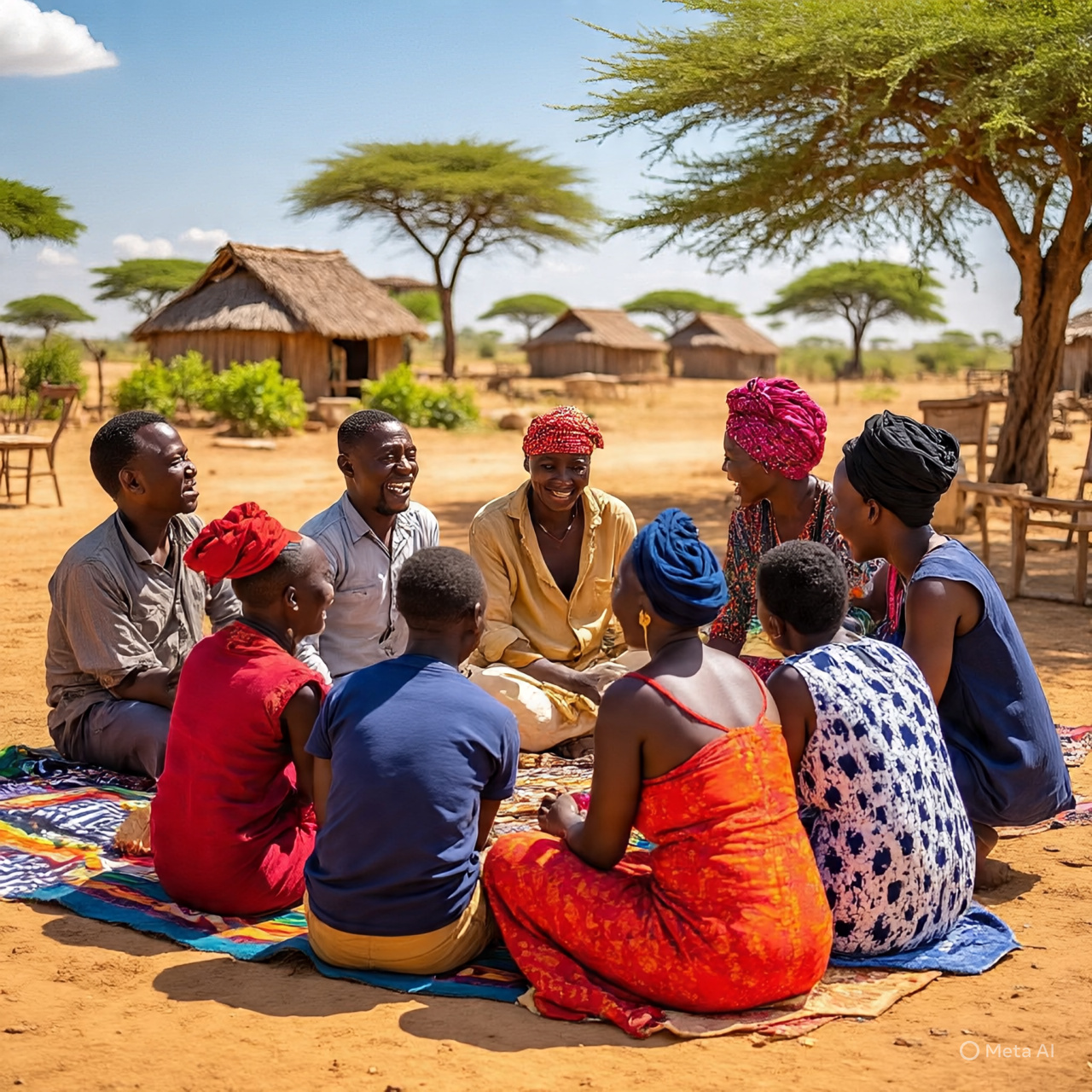
African History: Social Capital as Social Security
Traditionally, African societies were built on communal strength. Leadership, marriage, trade, and conflict resolution were anchored in the expansion and protection of social ties. Family was not merely biological; it was political, economic, and spiritual.
Marriage was strategic. Parents guided their children on whom to marry, not out of oppression, but foresight. The aim was to strengthen alliances, ensure social protection, improve health outcomes, and secure the future of generations unborn.
In African societies, your network was your insurance:
Colonial Disruption: Breaking Social Capital to Rule
Colonial masters understood one thing clearly: you cannot rule a united people. To entrench foreign rule in Africa, they had to dismantle indigenous social capital systems.
They:
By breaking African social networks, colonial rule succeeded in making individuals isolated, dependent, and governable.
The Post-Colonial Reality: Networks Over Merit
In the post-colonial era, social capital has returned, not as culture, but as class power.
An educated child of a poor man needs bribes to get a job, and a rich man’s child needs only a phone call.
This is the cruel paradox: a poor man’s life is more expensive than a rich man’s life. The poor pay more for healthcare, justice, education, and survival because they lack networks.
A personal encounter illustrates this truth. While working as an Uber driver in Kampala, I once drove a woman visiting her younger brother at one of the city’s most expensive primary schools. Curious, I asked why the family would pay fees higher than university tuition. Her answer was simple and precise:
“Social capital.”
She explained that where a child studies, who they study with, and the families those peers come from determine:
Education, she argued, is not just about knowledge; it is about who you sit next to in class. Social Capital, Power, and Respect
Historically and presently, social capital determines:
A well-connected person survives longer not because they are morally superior, but because systems respond to them faster.
Conclusion: The Families That Understood Early
In post-colonial Africa, families that quickly realised the need to revamp and protect their social networks now dominate leadership, business, and politics. They invest deliberately in:
Meanwhile, families that abandoned social capital, believing only in individual effort, remain trapped in cycles of struggle.
The truth remains uncomfortable but undeniable: Success is rarely individual. Longevity is rarely accidental. Both are social.
“In the end, it is not wealth that buries us with dignity, nor intelligence that keeps us alive, but the hands that remain holding ours when power, money, and time have all walked away.”
About the Writer
Evan Sande Ndahura is a Ugandan writer, poet, social critic, and emerging public intellectual whose work interrogates power, inequality, African identity, leadership, and social justice. Through essays, opinion columns, and slam-style prose, he consistently explores the hidden structures that shape African lives—colonial legacies, social capital, poverty, and moral leadership.
Ndahura’s writing is known for its raw realism, historical grounding, and fearless critique of systems that normalise inequality. His work reflects lived experience, deep observation of East African society, and a commitment to restoring African communal wisdom in a fractured modern world. He writes not merely to inform, but to provoke thought, challenge comfort, and reclaim African narratives.



