Written By | Health News Agencies
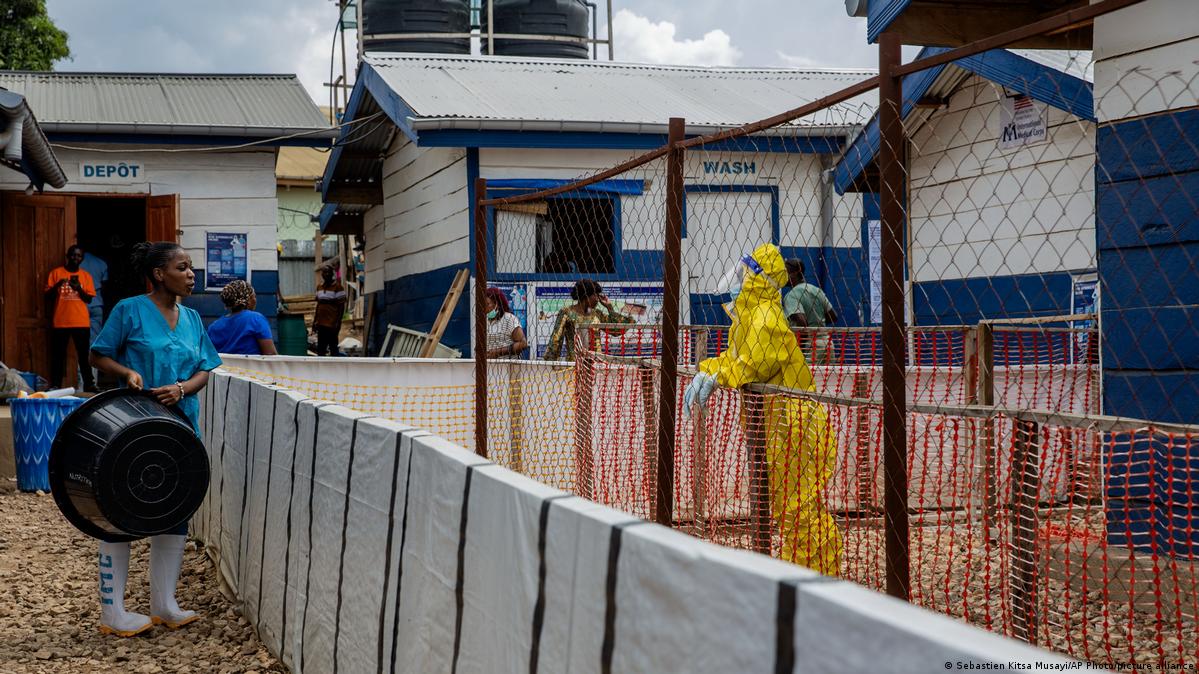
A traveller from Uganda is now in isolation in Nigeria's capital, 44 people are being watched, and the world's second-largest Ebola outbreak has no approved vaccine and no approved cure.
ABUJA / GENEVA
The virus that has been tearing through eastern Congo for five months has now crossed into the biggest country in Africa. Nigeria confirmed on Wednesday that a woman who recently travelled to Uganda is infected with Ebola Bundibugyo virus, making it the fifth country to detect the disease since the outbreak was declared in the Democratic Republic of the Congo on May 15, 2026.
The woman, whose name has not been released, is in isolation in the Nigerian capital, Abuja, and receiving medical care. Forty-four people who may have come into contact with her have been identified and placed under monitoring, according to Nigeria's Federal Ministry of Health and Social Welfare and the World Health Organization's Africa office.
It is the kind of headline health officials have dreaded since the first cases surfaced in May. And the backdrop could hardly be grimmer: as of October 20, the US Centers for Disease Control and Prevention counts 9,582 confirmed cases and 4,605 confirmed deaths, and calls the outbreak the second-largest Ebola epidemic ever recorded, behind only the West Africa catastrophe of 2014 to 2016.
Six days of illness before the test came back
The timeline released by Nigerian authorities shows just how slowly a case can come to light. The woman's symptoms began on October 7, four days after she arrived in Nigeria. On October 11 she sought care at a private health facility in Abuja. Laboratory testing did not confirm Ebola Bundibugyo virus until October 20, nine days after she first walked into that clinic.
That gap is exactly what worries infection-control experts. Early Ebola symptoms such as fever, fatigue, muscle pain and headache look like malaria, typhoid and a dozen other common illnesses in West and Central Africa. A patient who is not yet suspected of having Ebola may be examined by staff wearing ordinary protection, and that is how health workers become victims. Nigerian officials say infection prevention and control measures are now being stepped up at the private facility where she was treated.
Investigators are also trying to work out where she caught the virus and to rebuild her travel and exposure history in detail. The Nigeria Centre for Disease Control and Prevention has activated its incident management system, and the WHO says it is supporting case investigation, contact tracing, infection control and the supply of protective equipment for health workers.
A fast, brutal outbreak
To understand why a single case in Abuja is making international news, you have to look at the scale of what is happening in Congo. According to the CDC, the outbreak passed 1,000 confirmed cases within 40 days of the response being activated. The 2018 outbreak in the same country took about 235 days to reach that milestone. The agency says plainly that the current epidemic is spreading substantially faster than previous Ebola outbreaks.
The CDC's October 20 figures put 9,552 of the confirmed cases and 4,602 of the confirmed deaths in the DRC, which means roughly half of the confirmed patients have died. Seven provinces are affected: Bas-Uele, Haut-Uele, Ituri, North Kivu, South Kivu, South Ubangi and Tshopo. The European Centre for Disease Prevention and Control reported earlier in October that Ituri alone had 6,513 cases, including 3,007 deaths, with North Kivu next at 1,785 cases and 1,021 deaths. At that point 64 of the country's 167 health zones were affected.
The ECDC also issued a sobering warning: the outbreak is likely larger than reported. The DRC's health ministry counts only confirmed cases, and suspected cases and deaths have been temporarily excluded while they are investigated. The WHO declared the outbreak a Public Health Emergency of International Concern in May.
Beyond Congo, the virus has already travelled. Kenya has reported nine confirmed cases and one death. Its first case was a man who arrived in Nairobi on October 3 and died, and the later cases were relatives and healthcare providers of that man, all of whom were in quarantine when diagnosed. Kenya says it has seen no community spread. Uganda has recorded 20 confirmed cases and two confirmed deaths, with no active cases currently reported. France had one confirmed case, a patient who recovered on July 4.
Why Bundibugyo is a different beast
Most people who have heard of Ebola have heard of the Zaire strain, the one behind the 2014 West African epidemic. Bundibugyo is a rarer cousin, and it has a serious practical disadvantage: there is no licensed vaccine and no approved specific treatment for it. Ervebo, the vaccine used against Zaire Ebola, was approved for the Zaire strain only.
A vaccination campaign using Ervebo for frontline workers began on August 27 in the affected provinces, according to the ECDC, but the scientific question of whether it protects against Bundibugyo is still open. Emanuele Capobianco of the vaccine alliance Gavi put it bluntly in an interview with RFI republished this week: Ervebo's "protection against Bundibugyo has not been established." He added: "There is currently no approved vaccine specifically for this virus."
The race for something better is under way. A phase one trial of a vaccine developed at the University of Oxford, made with the Serum Institute of India, is now running in Masaka, Uganda. It aims to recruit 110 volunteers, with enrolment expected to finish by November and each participant followed for 12 months. Eugene Rizagira, an epidemiologist at the London School of Hygiene and Tropical Medicine, explained the aim simply: the trial is testing "whether the vaccine is safe, first and foremost." A separate mRNA candidate from Moderna is also in early-stage testing.
In Congo itself, a full-scale human trial is due to begin this month to test whether Ervebo offers cross-protection, with Bundibugyo-specific vaccines to be added later. The WHO expects the first clinical trial of a potential vaccine in the field to start by the end of October. If results are positive, larger phase two and three trials would follow, and Gavi says a rollout could happen in the first half of 2027 if everything goes well. The global Ervebo stockpile holds about 500,000 doses; 70,000 were released in August at the Congolese government's request, and Gavi mobilised $50 million at the start of the outbreak.
"We are running a marathon," Capobianco said.
The obstacles on the ground
Vaccines are only part of the story. The CDC lists a daunting set of obstacles in eastern Congo: limited health infrastructure and scarce diagnostics and supplies, ongoing armed conflict that complicates contact tracing, violence against health workers, shortages of protective equipment that have led to health worker infections, heavy population movement across borders, and deep distrust of authorities that feeds misinformation.
Trust is the thread that runs through every expert's comments. Gavi's Capobianco says about 70 percent of deaths are happening in communities, before patients ever reach a health facility. That means the sick are dying at home, where relatives wash and bury them, which is among the most efficient ways Ebola spreads. "Trust is hard to build, easy to lose," he warned. The WHO's own outbreak page puts it in four words: "Community engagement will be key."
The WHO also reports that 2,269 patients had recovered and 1,066 were in isolation in hospital as of early October, a reminder that survival is possible with good care. But care is exactly what remote Ituri and North Kivu struggle to deliver.
What the authorities are saying about travel
Nigeria's case has re-opened the argument over borders. The WHO's position, repeated in its statement on Nigeria, is that it "advises against any restriction of travel to, or trade with, affected countries," and it urges neighbouring states to strengthen surveillance, safe laboratory testing, response teams, infection control in public and private facilities, pre-positioned supplies, community engagement and monitoring at points of entry.
The United States has taken a firmer line. Under a CDC order, travellers who have been in the DRC within the past 21 days may not board commercial flights to US destinations. American citizens who have been in the DRC are told to remain outside the country for 21 days before returning, and citizens who were in Uganda or South Sudan must enter through designated airports for enhanced screening. The CDC also advises against all travel to Ituri and North Kivu. No Ebola case linked to this outbreak has been reported in the United States, and the agency rates the risk to the American public as low. About 500 CDC staff are working on the response, with more than 120 deployed to affected countries.
Europe is taking a similar view of risk. The ECDC assesses the likelihood of infection as low for EU and EEA residents travelling in affected areas and very low for people living in the EU or EEA. Still, there have been medical evacuations: a health worker was flown to the Netherlands on October 1, and a US citizen was evacuated to Germany in July.
Expert perspective
Specialists following the outbreak stress that imported cases are expected in a crisis of this size, and that what matters is how fast they are found and contained. Kenya's experience is instructive: the nine cases there all trace back to one traveller, and the later patients were already in quarantine, which is the best-case outcome for contact tracing. Nigeria will be hoping to repeat it.
The country has a mixed record to draw on. It stopped an Ebola importation in 2014 through aggressive contact tracing, a history that is documented in the public health literature, and it has a national centre for disease control that has been through several outbreak responses since. The challenge now is the delay between symptom onset and confirmation, and the fact that the patient was treated at a private facility, where infection-control standards can vary.
The numbers also show why scientists say the world should not relax because the risk to wealthy countries is called low. A disease that kills close to half of confirmed patients, spreads faster than any previous outbreak at its stage, and has no approved vaccine is a regional emergency that can become a global one if it takes hold in a major transport hub.
What this means for you
For most readers, the risk is extremely small. Ebola does not spread through the air like flu or Covid. It spreads through direct contact with the blood or body fluids of a person who is sick or has died of the disease, or through contaminated materials. People are generally not contagious until they have symptoms.
If you live in or are travelling to the region, the advice from the CDC is practical: avoid all travel to Ituri and North Kivu, avoid nonessential travel to Haut-Uele and Tshopo, take enhanced precautions elsewhere in the DRC and Uganda, and monitor yourself for symptoms during travel and for 21 days after leaving. Fever, severe headache, muscle pain, vomiting or unexplained bleeding after such a trip is a reason to call a health provider before turning up in person, and to say clearly where you have been.
If you work in healthcare anywhere, particularly in busy private clinics, the Abuja case is a reminder to ask every feverish patient about recent travel. The nine days between this patient's first visit to a clinic and her confirmed test are the gap that proper screening is designed to close.
And if you want to help, the best contributions are the least dramatic: support for the groups funding community engagement, protective gear and trials, and caution about sharing unverified claims online. Misinformation is one of the outbreak's named obstacles.
What happens next
The next two to three weeks will matter enormously. The incubation period of Ebola is up to 21 days, so Nigerian officials will watch the 44 contacts, and any others they find, until the window closes. If none of them falls ill, Nigeria will have contained its first case. If one does, the picture changes quickly.
In Congo, the early-stage vaccine results expected later this month and the start of the larger field trial are the biggest scientific milestones. Positive data would still lead only to months of larger trials, which is why health officials keep telling the public that today's best defences are old-fashioned ones: finding cases fast, isolating them, tracing contacts, protecting health workers and earning the community's trust.
For now, one woman in an Abuja isolation unit is the face of a very large problem. How Nigeria handles her case, and how the world responds to the 9,582 confirmed cases behind it, will show whether this epidemic can be turned around before it grows.



