Written By | Health News Agencies
The Andes virus is even more alarming: it is the only hantavirus strain documented to spread between humans. That transforms it from a sporadic zoonotic oddity into a genuine outbreak pathogen.
WASHINGTON, D.C.
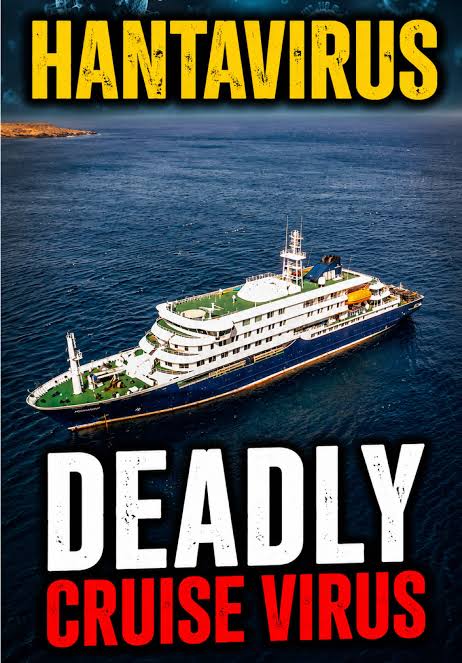
When 280 passengers boarded the Dutch expedition cruise ship MV Hondius in Ushuaia, Argentina on April 1, 2026, they embarked on the adventure of a lifetime — a sweeping voyage through Antarctica, South Georgia, Tristan da Cunha, and Ascension Island.
What nobody knew was that one desolate stop would seed a viral outbreak reaching 32 countries, killing three people, hospitalizing a dozen more, and triggering the largest international hantavirus response in history.
The culprit: the Andes virus — a rare, ferocious strain of hantavirus found primarily in South America, and the only known hantavirus capable of spreading directly from person to person.
The Ship, the Island, and the Invisible Enemy
Tristan da Cunha sits in the remote South Atlantic. With fewer than 300 people, it is the most remote inhabited island on Earth. The MV Hondius docked there for three days in mid-April.
Within days, a passenger fell ill — fatigue, muscle aches, fever, then cough, then breathlessness. Within 72 hours, they were fighting for their life in intensive care.
The WHO was notified on May 2. On May 6, testing confirmed Andes virus.
By the time passengers disembarked to their home countries — France, Spain, Canada, the United States, and beyond — the virus had traveled with them. Three died. Eleven cases confirmed. Two probable. Contact tracers tracked more than 600 people across 32 countries.
What Is Hantavirus — and Why Is Andes So Different?
Hantaviruses are primarily rodent-borne. Humans typically contract them by inhaling dust contaminated with rodent droppings or urine. In the U.S., the Sin Nombre virus has a case fatality rate of nearly 40 percent.
The Andes virus is even more alarming: it is the only hantavirus strain documented to spread between humans. That transforms it from a sporadic zoonotic oddity into a genuine outbreak pathogen.
Hantavirus pulmonary syndrome (HPS) begins like the flu: fever, headache, fatigue, muscle aches. Then, with startling speed, the lungs fill with fluid. The heart struggles. Most who reach this stage require mechanical ventilation.
There is no approved antiviral treatment. No vaccine. The case fatality rate for Andes virus is estimated between 12 and 40 percent.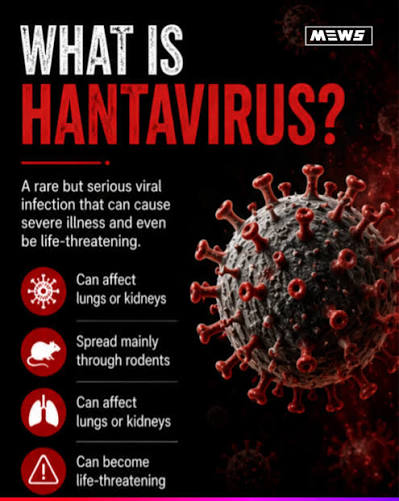
An Unprecedented International Response
The CDC coordinated with state health departments to repatriate 18 American passengers considered high-risk. They were requested to remain at the Nebraska Quarantine Facility through May 31 — the 21-day incubation period. The European Centre for Disease Prevention and Control issued a rapid risk assessment. Canada's Public Health Agency followed.
As of late May, contact tracers had identified more than 600 individuals aboard the ship or in close contact with confirmed cases. All were being monitored.
On Tristan da Cunha itself, a passenger who disembarked developed symptoms but received only a "probable" classification due to the island's limited diagnostic infrastructure.
Expert Perspective: 'This Is What We've Always Feared'
Epidemiologists say the outbreak illustrates how modern travel turns a rare pathogen into an international emergency overnight. The confined environment of a cruise ship — shared cabins, dining rooms, ventilation systems — provides exactly the conditions for sustained transmission.
"A pathogen with documented human-to-human spread, a confined mobile environment, and passengers from dozens of countries who disperse globally before anyone realizes an outbreak is underway," public health analysts noted. "That's the nightmare."
How Did It Start?
Investigators are still working to determine the origin. The leading hypothesis: passengers were exposed to infected rodents — or rodent-contaminated materials — during the stop at Tristan da Cunha or earlier ports in South America. The ship's prior stops in Ushuaia and along the Argentine coast are considered more probable sources, with subsequent person-to-person spread driving the cluster aboard.
What This Means for You
For most travelers, this outbreak should not prompt widespread alarm — but informed awareness. The risk of hantavirus exposure from typical travel is extremely low. However, for adventure travelers in rural South America (particularly Argentina and Chile), the CDC advises:
Anyone who was on the MV Hondius voyage or in close contact with a passenger should consult a healthcare provider. Symptoms — particularly fever, muscle aches, and rapidly worsening shortness of breath — should never be dismissed in the 42 days following potential exposure.
"Time is critical with hantavirus. Early identification and rapid transfer to a center with ECMO capability can be the difference between life and death."
A Virus That Refuses to Stay Remote
Hantavirus has historically been a disease of isolated places. The MV Hondius outbreak is a jarring reminder that in an era of global adventure travel, no pathogen stays remote for long.
Three people boarded a ship looking for adventure in the world's most spectacular wild places. They found it — and then some. The outbreak has already produced the largest international hantavirus contact-tracing effort in recorded history — and one of the most important public health lessons of the decade: even the rarest viruses can reach every corner of the planet faster than any health authority can track them.



