Written By | Health Expert
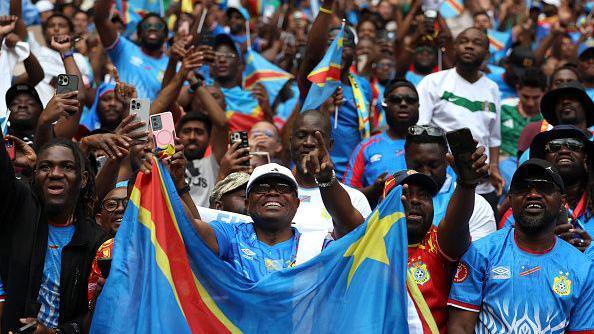
Millions of fans, including thousands from Central and East Africa, are expected to travel to North America.
Five days from now, the 2026 FIFA World Cup kicks off across sixteen American cities, welcoming millions of fans from every corner of the globe. But in the halls of the CDC, WHO, and public health agencies nationwide, a shadow hangs over the festivities: a deadly Ebola outbreak declared a global health emergency just three weeks ago, caused by a strain with no licensed vaccine and no proven cure.
The outbreak, which has killed at least 63 people in the Democratic Republic of Congo and Uganda since mid-May, is caused by the Bundibugyo ebolavirus — a less common but still lethal strain. Unlike the Zaire strain behind the 2014-2016 West African epidemic, there is no emergency vaccine for this one. The pharmaceutical tools that health workers rely on simply do not work against Bundibugyo.
The Outbreak: How It Started
The alarm was raised on May 5, 2026, when WHO received reports of a high-mortality outbreak in Ituri Province, northeastern DRC — a remote, impoverished region with a long and tragic history with Ebola.
Laboratory analysis on May 15 confirmed Bundibugyo virus. Within 24 hours, the DRC declared its 17th Ebola outbreak — a sobering number, made more so by the fact that this crisis came just five months after the previous one ended.
On May 17, the WHO Director-General invoked the organization's most powerful tool: declaring a Public Health Emergency of International Concern (PHEIC) — the same category used for COVID-19 and the 2014 Ebola crisis.
The Numbers: A Growing Crisis
As of June 2, the DRC has confirmed 363 cases of Bundibugyo virus, including 62 confirmed deaths. An additional 206 people are hospitalized in isolation facilities. The outbreak spans 17 health zones in Ituri Province alone. Uganda has confirmed 15 cases and one death. The WHO is investigating more than 1,100 additional possible infections.
The Bundibugyo strain is less lethal than Zaire (which can kill up to 90% of those infected) but still deadly. Historically, Bundibugyo outbreaks have carried case fatality rates of 25 to 36 percent. There are no approved vaccines and no specific antivirals. Treatment is essentially supportive: fluids, blood transfusions, and intensive nursing care — difficult to provide at scale in an under-resourced region.
The outbreak spans 17 health zones in Ituri Province alone. Uganda has confirmed 15 cases and one death
Enter The World Cup
Under ordinary circumstances, an outbreak in northeastern DRC would receive limited international attention. But the 2026 FIFA World Cup — the largest in history, with 48 teams across 16 host cities in the U.S., Canada, and Mexico — begins June 11. Millions of fans, including thousands from Central and East Africa, are expected to travel to North America.
DRC's national team has qualified. In late May, the DRC football federation cancelled a training camp in Kinshasa over Ebola concerns (though the capital is more than 1,500 miles from the epicenter). DR Congo was cleared to participate, with players following enhanced monitoring protocols. A pre-tournament friendly match in the U.S. was cancelled by a local mayor over Ebola fears — a decision experts called disproportionate to the actual risk.
What The U.S. Government Is Doing
The CDC has implemented enhanced entry screening for all travelers arriving from DRC, Uganda, or South Sudan within the previous 21 days. Those travelers must enter through one of four designated gateway airports: Atlanta, Houston, New York (JFK), or Washington, D.C. (Dulles).
The U.S., Canada, and Mexico have coordinated travel measures. Host cities are scaling up surveillance, hospital coordination, and infectious disease monitoring. As of June 1, no suspected or confirmed Ebola cases linked to the outbreak have been reported anywhere in the United States.
FIFA confirmed it is "aware and monitoring" the outbreak and working with host governments to ensure a "safe and secure tournament."
Expert Perspective: The Real Risk Is Not What You Think
Infectious disease experts are united: the risk of Ebola spreading widely at the World Cup is very low. Unlike measles or COVID-19, Ebola is only contagious after symptoms develop, and transmission requires direct contact with bodily fluids of someone visibly ill. At a sporting event, that is unlikely.
Moreover, the outbreak is concentrated in a remote area. People sick with Ebola are too ill to travel internationally.
But experts say the same cannot be said for measles. Health specialists have told CNBC that measles — not Ebola — is their "biggest concern" at the World Cup. Measles is one of the most contagious viruses known: one infected person can infect up to 18 others in an unvaccinated population. In 2025, the U.S. recorded more than 2,100 confirmed measles cases — the most since 1991.
STAT News put it bluntly: "Measles is a bigger threat than Ebola at the World Cup." Unlike Ebola, measles has no geographic containment — it is circulating in U.S. communities right now.
A Public Health System Under Test
The 2026 tournament is a stress test for the systems the U.S. has built since COVID-19 to detect and respond to infectious disease threats. Host cities are ensuring rapid response protocols are in place — for measles, influenza, or the remote possibility of Ebola. Emergency operations centers are on standby. Hospital isolation units have been restocked.
Meanwhile, in the DRC, international health workers are racing to contain an outbreak with few pharmaceutical tools. Experimental treatments are being trialed. Contact tracing continues in an area with limited infrastructure and strained trust. Infection prevention and control remain the primary weapons.
What This Means For You
If you are attending World Cup matches, the risk of encountering Ebola is extremely low. You should not be deterred. However, the outbreak is a reminder to be up to date on routine vaccinations before international travel — particularly measles, mumps, and rubella (MMR).
If you have traveled to DRC, Uganda, or South Sudan within the past 21 days and develop fever, headache, or severe muscle pain, contact a healthcare provider immediately — and call ahead before going to a clinic or ER.
For those planning travel to DRC or Uganda, the CDC advises reconsidering non-essential travel and consulting a travel health clinic.
The World Cup Goes On — With Eyes Wide Open
The matches will kick off. The fans will roar. For the estimated 5 million people attending games across three countries, the 2026 World Cup will be a joyful, once-in-a-lifetime experience.
But in the background, a quiet army of epidemiologists, contact tracers, airport screeners, and emergency physicians will be watching, waiting, and prepared. The 2026 World Cup is not just a test of athletic excellence — it is a test of whether the global public health system is finally ready to meet the next challenge before it becomes a catastrophe.
In the DRC's Ituri Province, the crisis is already real. Sixty-three people are dead. Hundreds more are fighting for their lives. The job of public health is to keep the crisis there, not here.