Written By | International News Agencies
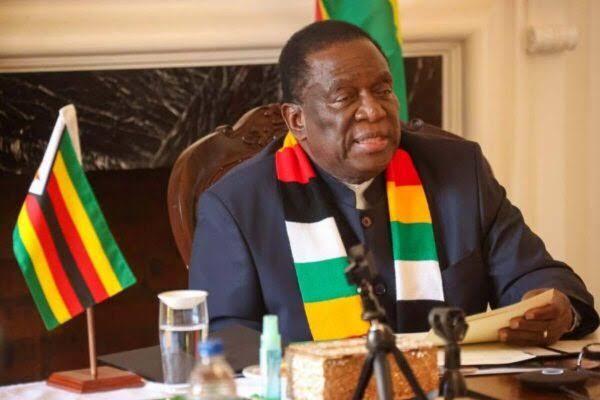
Mnangagwa has made ambiguous comments about his political longevity before, but this one arrived in a starkly different context than earlier deflections
Harare, Zimbabwe
Zimbabwean President Emmerson Mnangagwa marked his 84th birthday this week the way few democratically elected leaders do: with a brand-new national public holiday declared in his honor, and with a public suggestion that he intends to remain in office for nearly another decade. Speaking at the Sanganai/Hlanganani Tourism Expo in Masvingo on Sept. 9, Mnangagwa told an audience of tourism officials and supporters that he expected to "still be around" when they reconvened for the same event nine years from now — a remark that, layered on top of a constitutional amendment he signed in July extending his own term, has convinced opposition figures and even some ruling-party-aligned commentators that Zimbabwe's president is laying the groundwork to remain in power until 2035, or possibly beyond.
"I will still be around; I do not know about you," Mnangagwa told the gathering, according to a report by New Zimbabwe. "So when we come back after nine years," he added, "you will then give me an update." The comment landed just days before the government made official what critics had already suspected was coming: on Sept. 10, authorities published Statutory Instrument 148 of 2026, declaring Mnangagwa's Sept. 15 birthday a permanent annual public holiday named "Munhumutapa Day," after the historic African empire that once spanned parts of present-day Zimbabwe and Mozambique.
Why This Is Landing Differently Than Past Remarks
Mnangagwa has made ambiguous comments about his political longevity before, but this one arrived in a starkly different context than earlier deflections. In July, both chambers of Zimbabwe's parliament passed, and Mnangagwa signed, Constitutional Amendment Bill No. 3 — legislation that extended presidential and parliamentary terms from five years to seven and pushed Mnangagwa's own exit date from 2028 to 2030. The amendment also altered the method by which the presidency could be filled in certain circumstances, opening a path for Mnangagwa to be elected by parliament rather than through a direct popular vote, according to reporting by eNCA. At 83 at the time — he turned 84 this week — Mnangagwa's second and constitutionally final term was already being stretched by two additional years before he ever hinted at 2035.
That backdrop is why the Sept. 9 remark, and the birthday holiday that followed it, triggered immediate alarm rather than being brushed off as an old man's aside. The Children of Zimbabwe War Veterans Association, known as COZWVA and generally aligned with the ruling ZANU-PF party, interpreted Mnangagwa's comments as a "strategic signal" about a political horizon that could extend as far as 2037 — 18 years beyond the roughly 10-year tenure many assumed he would serve when he took power. Political analyst Gabriel Manyati, writing for Nehanda Radio, situated the remark within a broader pattern he described as a series of "trial balloons": individually deniable statements and symbolic gestures — the birthday holiday chief among them — designed to normalize the idea of extended rule incrementally rather than through a single, more legally vulnerable announcement.
Adding to that pattern, ZANU-PF's Harare Province chairman, Godwills Masimirembwa, announced on Aug. 30 that the party's National People's Congress — ordinarily a key forum where leadership questions are aired — would be postponed from 2027 to 2030, aligning it with Mnangagwa's newly extended term rather than the original schedule. Separately, a ZANU-PF-linked figure named Joshua Maponga has floated what he calls Constitutional Amendment Bill No. 4, a proposal to convert Zimbabwe's constitutional republic into what he terms an "Indigenous Consultative Royal Democracy," nominating Mnangagwa as its inaugural monarch. The proposal has no formal legislative standing and is widely regarded, including by Manyati, as ideological priming rather than a serious near-term legal threat — but its mere circulation within ZANU-PF-aligned circles has fed opposition arguments that even more extreme scenarios are being tested for public reaction.
Opposition Response: "Drunk With Power"
Nelson Chamisa, the opposition leader who lost a disputed 2023 presidential election to Mnangagwa and does not recognize the result as legitimate, was blunt in his criticism. Drawing a direct line to Zimbabwe's history under Mnangagwa's predecessor, the late Robert Mugabe — who ruled for 37 years before being removed in a November 2017 military takeover that installed Mnangagwa himself — Chamisa noted the symmetry of the new holiday: "Mugabe, this day, his birthday, was a holiday. Mnangagwa, his birthday is a holiday," he said, according to New Zimbabwe. He went further in assessing the president's evident ambitions: "Something happens when one gets to that office... He wants to be life president," adding that "people get drunk with power." Chamisa nonetheless predicted the effort would ultimately fail, saying such schemes have "very short legs."
The response from Zimbabwe's fractured but vocal opposition has not been limited to rhetoric. A newly formed umbrella group calling itself the People's Coalition said it was preparing a legal challenge to the July term-extension amendment at the Constitutional Court, framing the fight in blunt terms: "The government has guns, money, and media. But the people have numbers." The Movement for Democratic Change, the party once led by the late Morgan Tsvangirai and now one of several groups using variations of that name, warned that "Zimbabwe cannot be allowed to slide into constitutional dictatorship in silence" and called for intervention from the African Union and the Southern African Development Community, or SADC — a regional bloc Zimbabwe has at times chaired and whose credibility on democratic backsliding has itself faced scrutiny across the region. Chamisa, addressing supporters separately, framed the moment as a test of collective resolve: "Today, we face a common challenge: oppression. We are organizing... Be and get ready."
The Quiet Succession Battle Inside ZANU-PF
Mnangagwa's apparent ambitions are also reshaping the internal politics of his own party, where Vice President Constantino Chiwenga — the retired general whose military backing was instrumental in the 2017 operation that ousted Mugabe and installed Mnangagwa — has long been viewed as the most likely successor and, increasingly, as a potential rival. In recent weeks, Chiwenga has been dispatched to a series of what Zimbabwean outlet ZimEye described as "low-key" foreign assignments: a climate-focused program in August and, departing Sept. 8, a Chinese trade and investment delegation that took him to the China International Fair for Trade in Services in Beijing and a series of company tours and business forums in Zhejiang Province, according to Zimbabwe's ambassador to China, Abigail Shoniwa. ZimEye characterized the assignments as occurring amid what it called a "Zanu PF succession storm," and while the government has offered no public confirmation of any rift, the pattern has fueled speculation among Zimbabwean political analysts that Mnangagwa is deliberately limiting Chiwenga's domestic visibility as talk of a decade-long extension gathers pace.
Analysis and What Comes Next
The dynamic unfolding in Harare echoes a pattern seen elsewhere on the continent — most immediately in the Democratic Republic of Congo, where President Félix Tshisekedi is separately pursuing a referendum route to a third term — in which incumbents use procedural, incremental steps rather than a single dramatic constitutional rupture to extend their hold on power. What distinguishes Zimbabwe's case is the added layer of intra-party succession politics: unlike a straightforward incumbent-versus-opposition contest, Mnangagwa's position also depends on managing a securocrat establishment, epitomized by Chiwenga, that helped install him in the first place and retains its own networks of military and political influence. Analysts including Manyati have suggested that any move toward 2035 or beyond would require Mnangagwa to either neutralize Chiwenga's influence within the party well before the 2030 National People's Congress or risk the kind of internal coup dynamic that ended Mugabe's own rule.
For now, three things bear watching. First is the Constitutional Court challenge the People's Coalition says it intends to file against the July term-extension amendment, which will test whether Zimbabwe's judiciary is willing to check executive power on this question. Second is whether Maponga's "Constitutional Amendment Bill No. 4" gains any real traction within ZANU-PF structures or remains a fringe proposal, since its trajectory will indicate how far the party's mainstream is willing to go. And third is the succession contest inside ZANU-PF itself: whether Chiwenga's marginalization continues unchallenged, or whether it instead hardens factional resistance to a president many in his own liberation-movement-turned-ruling-party once expected to serve a single, transitional term after Mugabe's fall.



