GOMA, Democratic Republic of Congo
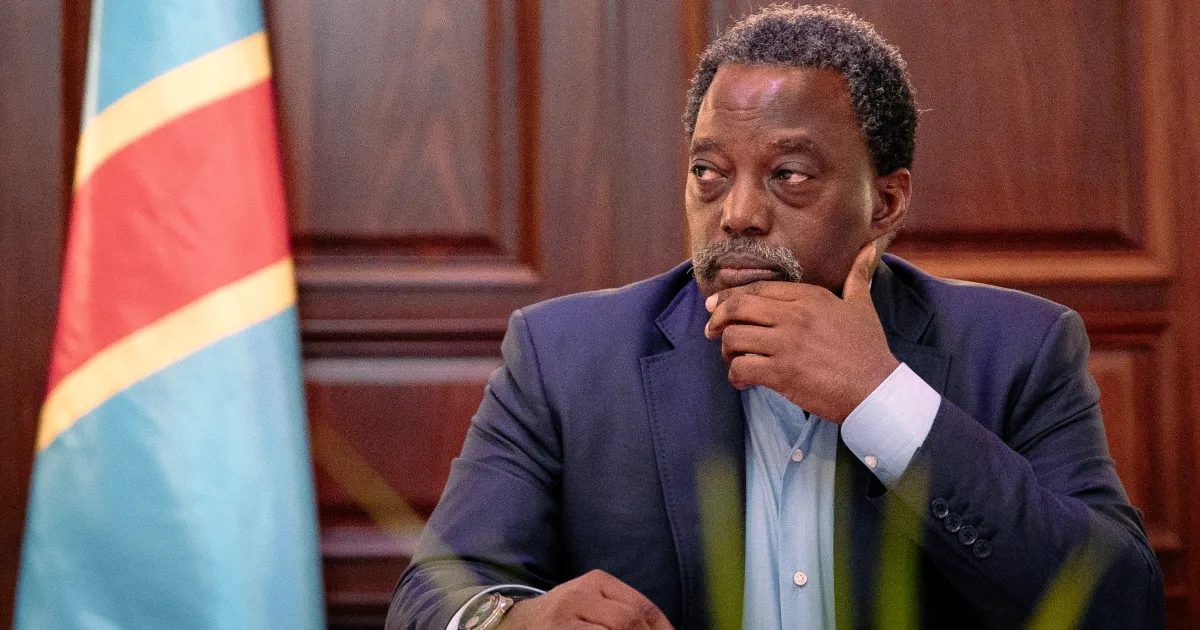
Joseph Kabila, who governed the Democratic Republic of Congo for 18 years, on Monday took the leadership of a new politico-military movement based in rebel-held Goma, an act that turns a long-running suspicion into a declared political fact. The Front pour la refondation de la nation (FRN), or Front for the Refoundation of the Nation, was announced on Oct. 12 and brings together the M23 armed group and the Alliance Fleuve Congo (AFC), the political coalition that has administered M23-held territory. Its political declaration, as reported by Agence France-Presse, says its members want to "put an end to tyranny by all means, including force."
The launch matters now for two reasons. It removes the ambiguity that surrounded Kabila's relationship with the insurgency, and it lands in the middle of fragile peace diplomacy that was already struggling to turn ceasefire promises into a durable settlement. It also arrives as Congolese politics is absorbed by a separate quarrel over whether President Félix Tshisekedi, whose second and final term ends in 2028, will try to change the constitution to stay in power.
What was announced
According to reporting by Radio Okapi, the announcement was made on Monday, Oct. 12, in Goma, and its initiators presented it as marking the end of the AFC/M23 coalition in its previous form. Kabila leads the front. Corneille Nangaa, the former head of the country's electoral commission who helped found the AFC, and Bertrand Bisimwa, the M23 political leader, are vice presidents, Radio Okapi reported. The Congolese outlet Ntemo.cd listed a third vice president, identified as Kaniki and described as governor of North Kivu in areas under M23 control, and said Sultani Makenga, the M23's military commander, had been announced as chief of staff. Those additional details come from a single outlet and could not be corroborated elsewhere.
AFP reported that Kabila appeared before the press in Goma with several officials of the armed movement but did not speak. The movement's final declaration was read by Claude Ibalanky, according to Ntemo.cd. Radio Okapi reported that the movement invokes Article 64 of the Congolese constitution, which says every Congolese has a duty to thwart anyone who seizes or exercises power unconstitutionally, and uses it to contest Tshisekedi's authority. Ntemo.cd noted that the front's political and operational outlines "remain to be defined."
How Kabila got here
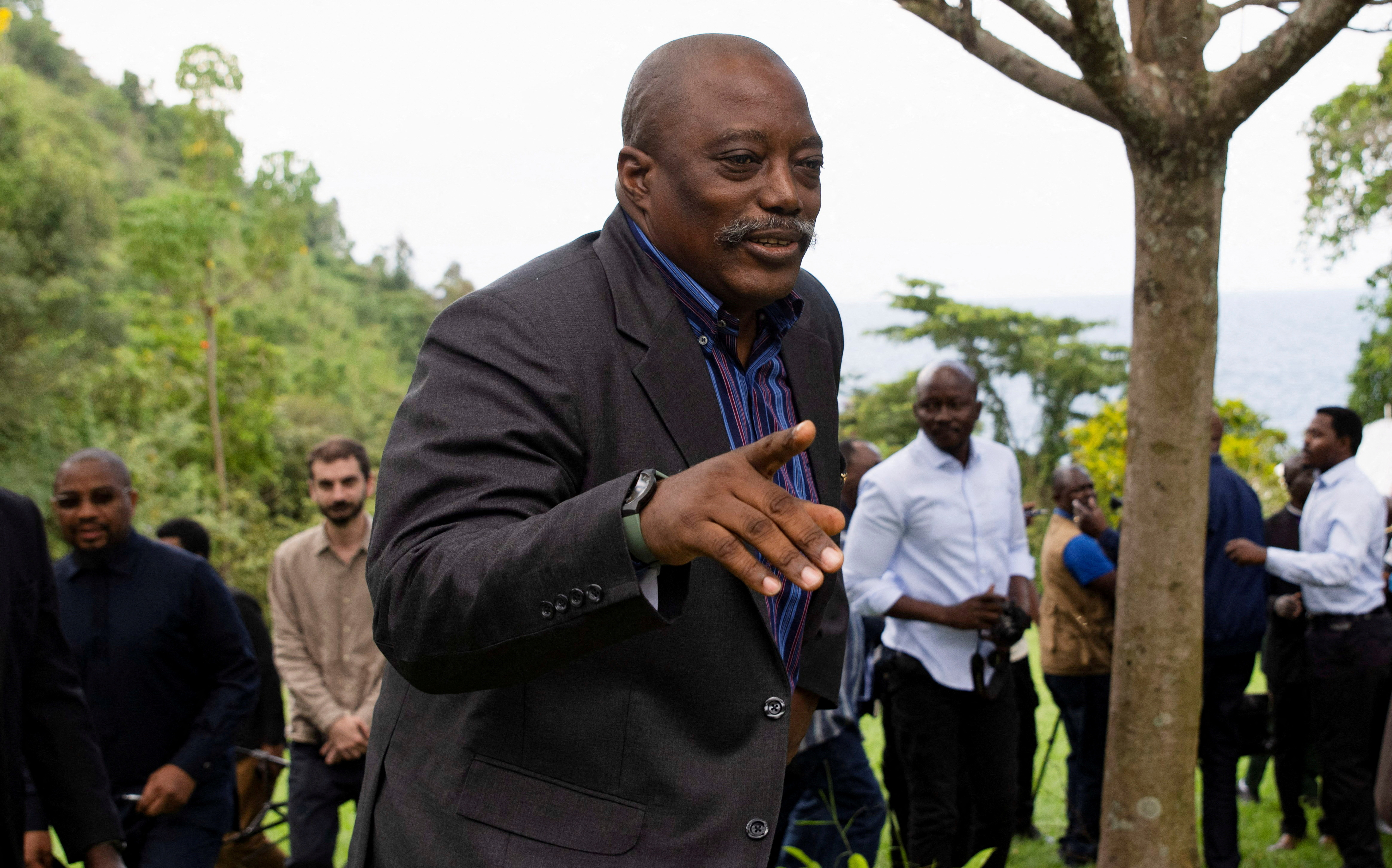
Kabila took office in 2001 after the assassination of his father, Laurent-Désiré Kabila, and left in January 2019, when Tshisekedi succeeded him. The handover produced an uneasy power-sharing arrangement between Kabila's Common Front for Congo coalition and Tshisekedi's camp. It collapsed in December 2020, when Tshisekedi announced he was leaving the arrangement and assembled a new majority, the Sacred Union, that displaced Kabila's allies from the leadership of parliament and the government.
The M23, named for a March 23, 2009 peace agreement, seized Goma in January 2025 and then Bukavu, with Kinshasa and several international actors saying the group is backed by the Rwandan army. Rwanda denies this. Kabila reappeared in Goma in 2025 after years abroad, days after denouncing a "dictatorship" online, according to AFP.
On Sept. 30, 2025, a high military court in Kinshasa sentenced Kabila to death in absentia for treason, conspiracy, organizing an insurrectionist movement and war crimes. It also ordered him to pay $29 billion in damages to the Congolese state and $2 billion each to North Kivu and South Kivu, according to Al Jazeera's report on the verdict at the time. He was tried without legal representation. Emmanuel Ramazani Shadary, secretary of Kabila's party, the People's Party for Reconstruction and Democracy (PPRD), called the ruling a "political, unfair decision." Kabila has denied involvement with the M23, and his camp has denounced the verdict as politically motivated.
News.az, an Azerbaijani outlet, reported that the United States sanctioned Kabila in April 2026 over alleged support for Rwanda-backed rebels; that detail was not confirmed by other sources reviewed for this report.
The run-up: a speech and a rejected dialogue
The founding came three days after Kabila released a statement titled "Le pays est en péril : ne pas agir c'est être complice" ("The country is in peril: not acting is being complicit"). In it, according to Radio Okapi's press review, he accused Tshisekedi of pursuing a war with no prospect of victory, denounced the government's "contemptuous refusal" of initiatives for an inclusive national dialogue, and described a slide toward dictatorship.
Government figures responded sharply. Patrick Muyaya, the government spokesman, called Kabila "a man of the past" and accused him of links with the AFC/M23 rebellion, Radio Okapi reported. Julien Paluku, a minister, wrote in the newspaper Le Phare that Kabila had committed "acts of treason" and was complicit in the past in eastern Congo. A formation led by former prime minister Jean-Michel Sama Lukonde said the speech ignored security priorities and what it called Rwandan aggression, and reaffirmed support for Tshisekedi's peace initiatives. Opposition and civil-society voices were divided, Radio Okapi reported: some welcomed the call for a national awakening, while others demanded truth and accountability from all sides.
As of Tuesday, none of the sources reviewed reported an official government response to the front's creation itself. Radio Okapi reported that several of Kabila's associates, including members of the PPRD, had announced they were distancing themselves from the initiative and resigning.
The peace process under pressure
The timing complicates diplomacy that was only beginning to show movement. In August, after talks in Switzerland from Aug. 17 to 21, Kinshasa and the AFC/M23 agreed a roadmap setting out stages and a timetable for negotiations under the Doha framework mediated by Qatar, according to a Swiss government statement reported by Africanews. The parties also agreed a standard method for reporting alleged ceasefire violations and a first ceasefire verification mission to Minembwe, in South Kivu province.
Analysts cautioned even then that progress was limited. Political analyst Christian Moleka told Africanews that the ceasefire commitments are only part of the first of seven protocols under the Doha framework, and that six remain unsigned. A separate Washington-mediated agreement between Kinshasa and Kigali has also failed to end the fighting, AFP noted.
The FRN raises several immediate questions for that process. If the AFC/M23 has indeed folded into a broader front under Kabila, mediators must decide whether the Doha track still has a counterpart in the same form, and whether Kinshasa will keep negotiating with a body led by a man it has sentenced to death. Policy Wire, summarizing wire reporting on the launch, said experts warned that the coalition could escalate violence and hinder negotiations. A Kabila-led front also hands Kinshasa a sharper argument that the insurgency is a bid for political power, not only a security problem.
The third-term dispute
The front's founding text borrows the language of constitutional defense, and that is no accident. AFP reported that the ruling majority has spent months preparing public opinion for a constitutional change that could allow Tshisekedi a third term, which the opposition calls a maneuver to stay in power. Rallies against the idea, held in June and September in Kinshasa and other cities, were dispersed, and the United Nations reported at least one death at the first, according to AFP, which did not state the year of those rallies.
Kabila's own record complicates his claim to the democratic high ground. AFP noted that he once tried to extend his rule beyond two terms before backing down under pressure from the street and the international community. His critics in Kinshasa will argue that a man who held office for 18 years, and who now shares a platform with an armed group that Kinshasa blames for deadly offensives, is poorly placed to speak of tyranny. His supporters will answer that the alternative is a president who is dismantling the limits that he himself accepted.
Analysis: a political label for a military reality
The practical effect of the announcement may be less about battlefield capacity than about legitimacy. The M23 has controlled Goma and surrounding territory since early 2025 but has struggled to present itself as a national movement. Kabila supplies a national name, a political network and, in the eyes of some Congolese, a claim to a constitutional order that predates Tshisekedi. For Kabila, the move trades whatever remained of his deniability for a base and a protector, in a city where he has been seen before and where the Kinshasa court's arrest order cannot reach him.
The risks run both ways. Defections from the PPRD, reported by Radio Okapi, suggest that many of his former allies see the alliance as a step too far, and Congolese public opinion, shaped by the M23's capture of major cities and by accusations of Rwandan backing, may regard the front as a foreign-sponsored project. Details that would show the front's real weight, including membership, territorial presence and military structure, are not yet public.
What to watch
Four developments will indicate where this goes. First, whether the government responds with new legal or military measures, or with an approach to dialogue. Second, how Qatar, Switzerland, the United States and the African Union treat the Doha track now that the interlocutor has changed. Third, whether more PPRD figures and regional leaders break from Kabila or rally to him. Fourth, whether the front's declared willingness to use force translates into new offensives beyond the territory the M23 already holds, a scenario that would deepen a humanitarian crisis that, by Al Jazeera's count at the time of Kabila's sentencing, had already killed more than 3,000 people and displaced close to a million since January 2025.
Published By | News Editor