Written By | Health News Agencies
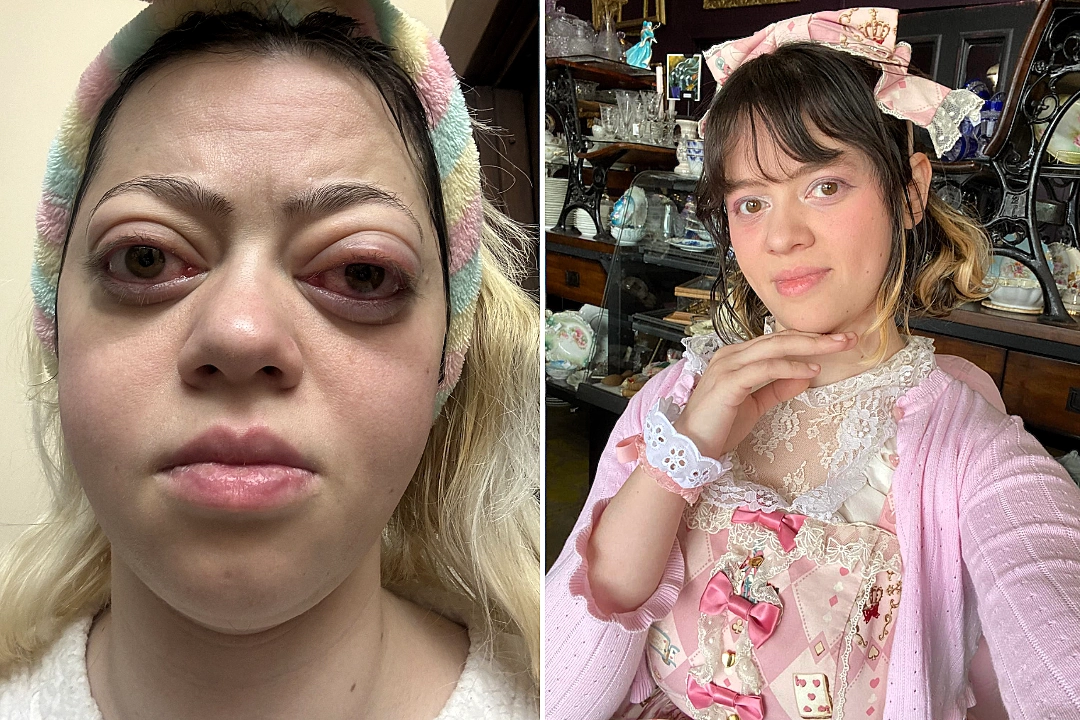
Thyroid eye disease has spent decades disfiguring faces, doubling vision, and quietly destroying self-esteem — with only one grueling, $150,000 treatment course available to fight it
WASHINGTON, D.C.
Picture waking up one morning and not recognizing your own face in the mirror. Your eyes seem to be pushing forward out of their sockets. Your eyelids won’t fully close anymore. Everything you look at splits into two overlapping images. For hundreds of thousands of Americans living with thyroid eye disease, that isn’t a nightmare — it’s Tuesday. And for six long years, if they wanted a drug specifically built to treat it, they had exactly one option, at a price tag that could buy a house in most of the country. This week, that changed. The U.S. Food and Drug Administration has approved Lumvoa (veligrotug-vvze), a new infusion therapy from Colorado-based Viridian Therapeutics, giving thyroid eye disease patients a real alternative for the first time since the condition’s only targeted treatment hit the market — and, according to the trial data behind it, possibly a better one.
The Disease That Turns Your Own Immune System Against Your Eyes
Thyroid eye disease, also known as Graves’ ophthalmopathy or thyroid-associated orbitopathy, is an autoimmune condition in which the body’s own immune system attacks the muscles and fatty tissue surrounding the eyes, causing them to swell and push forward. It’s most commonly linked to Graves’ disease, the autoimmune disorder that causes an overactive thyroid, though it can also strike people with underactive thyroids or even those whose thyroid function is entirely normal — proof that this disease follows its own rules.
The numbers are staggering once you look closely. Roughly 40% of people with Graves’ disease worldwide develop some degree of eye involvement, according to patient advocacy and clinical data, and more than half of all Graves’ patients will develop at least mild TED at some point in the course of their disease. Severe forms strike an estimated 3% to 5% of patients — the cases where eyelids won’t close, corneas dry out and scar, or swollen tissue crushes the optic nerve, threatening permanent vision loss. Women are affected roughly three times more often than men, and the disease most commonly strikes between the ages of 35 and 59 — often during the exact years people are raising families and building careers, which is precisely why patient advocates have long described TED not just as a medical condition but as a disease that quietly wrecks confidence, relationships and livelihoods along with eyesight.
For Six Years, Patients Had Exactly One Option
Before this week, there was only one FDA-approved drug built specifically to treat thyroid eye disease: Tepezza (teprotumumab-trbw), originally developed by Horizon Therapeutics and now sold by Amgen, which acquired Horizon in 2023. Tepezza won its FDA approval in January 2020 as the first-ever targeted therapy for TED, and it has functioned as a monopoly ever since — the only game in town for patients desperate to avoid disfiguring surgery or to reverse damage already done. That monopoly has come at a steep price: Tepezza carries a list price exceeding $18,700 per vial, and a full course of treatment runs close to $150,000.
Tepezza works by blocking the insulin-like growth factor-1 receptor, or IGF-1R, a protein that plays a central role in the inflammatory cascade driving TED. It undeniably helped many patients — but it also left gaps. Its approval was built primarily on data in patients with active, inflamed TED, leaving those whose disease had progressed to a chronic, burned-out stage with far less robust evidence behind their treatment, and it comes with well-documented side effects, including hearing problems and elevated blood sugar, that have limited its use in some patients.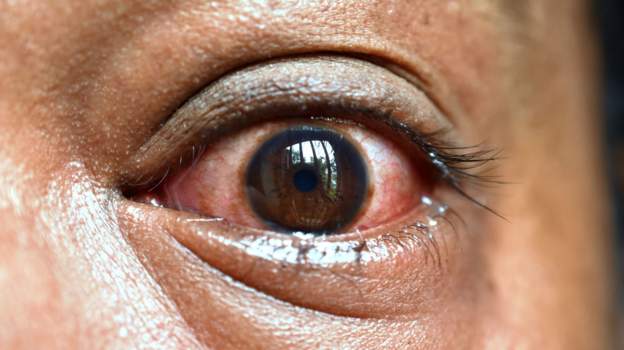
Enter Lumvoa: A Challenger Built on Broader Data
Lumvoa, known chemically as veligrotug-vvze, works through the same general mechanism as Tepezza — it, too, is a monoclonal antibody that fully blocks the IGF-1R receptor — but Viridian built its approval case on something Amgen never had: robust, statistically significant data in both active and chronic thyroid eye disease. That distinction matters enormously. It makes Lumvoa the first FDA-approved TED therapy in history with labeling that covers both stages of the disease, meaning patients who have lived with TED for years, past the acute inflammatory window Tepezza was built for, now have an FDA-backed option of their own for the first time.
The approval rests on two pivotal trials: THRIVE, which studied patients with active TED, and THRIVE-2, which studied patients with chronic TED. In THRIVE, 70% of patients treated with Lumvoa achieved a meaningful proptosis response — a reduction in how far the eyes bulge forward — by week 15, compared with just 5% of patients on placebo. In THRIVE-2, focused on chronic patients whose disease had already stabilized into its long-term phase, 56% achieved a proptosis response compared with 8% on placebo. Just as notably, Lumvoa met key secondary endpoints for diplopia (double vision) response and complete disease resolution in both trials — becoming the first approved TED therapy to demonstrate a statistically significant effect on double vision in both active and chronic disease simultaneously. Some patients began seeing measurable reductions in eye bulging in as little as three weeks.
The treatment regimen is also faster than its rival: Lumvoa is administered as five intravenous infusions over 12 weeks, given once every three weeks, an accelerated schedule compared to Tepezza’s eight-infusion course. Viridian has said it will price Lumvoa in line with Tepezza — roughly $150,000 for a full six-month course — meaning the two drugs will compete on clinical performance and side-effect profile rather than sticker price.
What the Company Is Saying
“With the approval of Lumvoa, we take a significant step forward in providing a meaningful treatment option for people living with thyroid eye disease,” said Steve Mahoney, President and Chief Executive Officer of Viridian Therapeutics, in the company’s official announcement of the approval. “Lumvoa was designed with patient needs at the forefront and is Viridian’s first FDA-approved medicine and our first commercial product.” The company said Lumvoa will launch immediately in the U.S., backed by a patient-support program called ViridianCares, which offers insurance verification, benefits navigation, and financial assistance for eligible patients — an acknowledgment that even with a rival on the market, cost remains the single biggest barrier standing between TED patients and treatment.
Not Without Risks
Lumvoa is not a miracle cure without tradeoffs. In clinical trials, infusion reactions occurred in approximately 9% of treated patients, and elevated blood sugar (hyperglycemia) was reported in about 12% of patients — including some who did not have diabetes beforehand. Regulators have also flagged a risk of hearing impairment associated with the drug, consistent with a side effect already documented with Tepezza, meaning doctors will need to monitor hearing function throughout treatment for both drugs. Patients considering either therapy should discuss their full medical history, including any preexisting hearing or blood sugar issues, with their treating physician before starting infusions.
Why Chronic Patients May Be the Real Winners Here
Perhaps the most underappreciated part of this approval is what it means for the patients who have been living with TED the longest. Because Tepezza’s original approval leaned so heavily on data from patients in the active, inflamed phase of the disease, doctors have long faced a frustrating gap when treating patients whose TED had already settled into its chronic phase — the scarring, double vision, and bulging that persists even after the initial inflammation burns out. Lumvoa’s THRIVE-2 data gives physicians, for the first time, a therapy proven in a large controlled trial to help exactly that group. For patients who assumed their disfigurement and double vision were simply permanent, that’s not a marginal improvement — it’s a door reopening that many had been told was shut for good.
What This Means for You
If you or someone you love has been diagnosed with Graves’ disease, or has noticed symptoms like bulging or protruding eyes, persistent redness or swelling around the eyes, double vision, difficulty closing the eyelids fully, or unexplained eye pain, the arrival of a second FDA-approved treatment option is worth bringing up at your next appointment with an endocrinologist or ophthalmologist — ideally one experienced in treating TED, since early treatment tends to produce better outcomes than treatment started after the disease has caused lasting structural damage. Ask specifically whether you are a better candidate for an active-disease protocol or a chronic-disease protocol, since that distinction now actually matters when choosing between therapies. And because both drugs carry list prices near $150,000 for a full course, ask your care team about patient assistance programs like ViridianCares, as well as your insurer’s prior authorization requirements, before committing to a treatment path.
The Bottom Line
For six years, thyroid eye disease patients faced a cruel choice: pay a fortune for the only approved drug on the market, or live with a disease that can steal both their appearance and their eyesight. Lumvoa’s approval doesn’t change the price tag, but it changes the equation — introducing real competition, broader clinical evidence covering chronic disease for the first time, and a faster infusion schedule, all in a single approval. With Amgen also reportedly developing a subcutaneous, on-body-injector version of Tepezza to compete on convenience, the thyroid eye disease treatment landscape that stood still for half a decade is suddenly moving fast — and for once, that’s unambiguously good news for the patients who have been waiting.



