Written By | Sports Desk
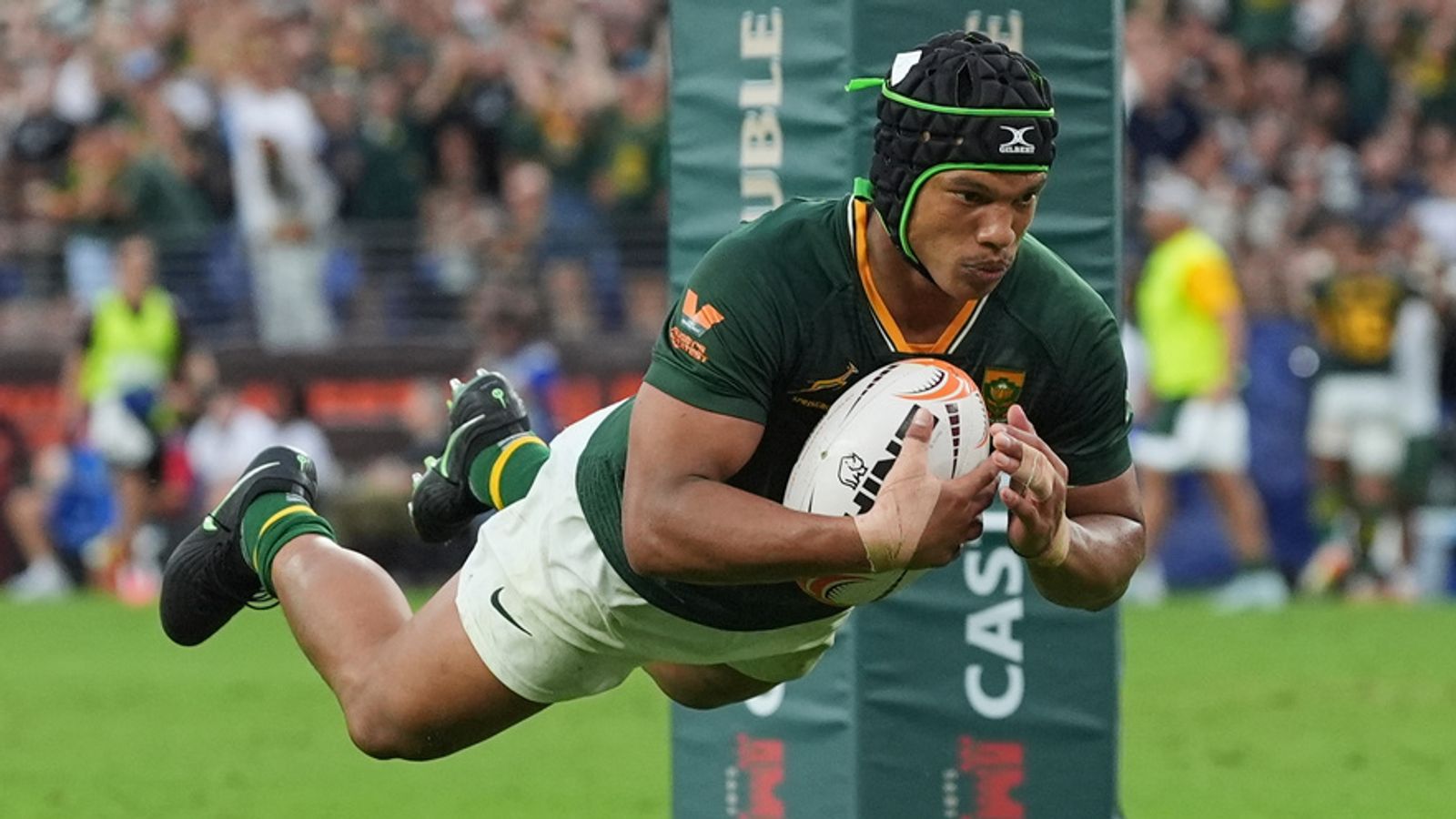
South Africa beat New Zealand 43-28 in front of 68,173 people at M&T Bank Stadium, the largest crowd ever assembled for a rugby match in North America, closing out Rugby's Greatest Rivalry 3-1
BALTIMORE
There is a specific noise an American football stadium makes when the people filling it did not grow up on American football. It arrived at M&T Bank Stadium on Saturday evening somewhere past the hour mark, when Kurt-Lee Arendse pounced on a loose ball inside his own half and ran more than fifty metres without a hand laid on him. Not the staccato bark that greets a third-down stop, but a long rolling swell — closer to a European football terrace than anything Baltimore hears in the autumn. It belonged, overwhelmingly, to South Africa.
By the final whistle the Springboks had beaten the All Blacks 43-28, six tries to four, and taken the Rugby's Greatest Rivalry series 3-1. The announced attendance was 68,173: the largest crowd ever assembled for a single rugby match in North America. By every account from inside the ground, the majority of them were expatriate South Africans, and they had turned an NFL stadium a shade of green and gold that no marketing department could have manufactured.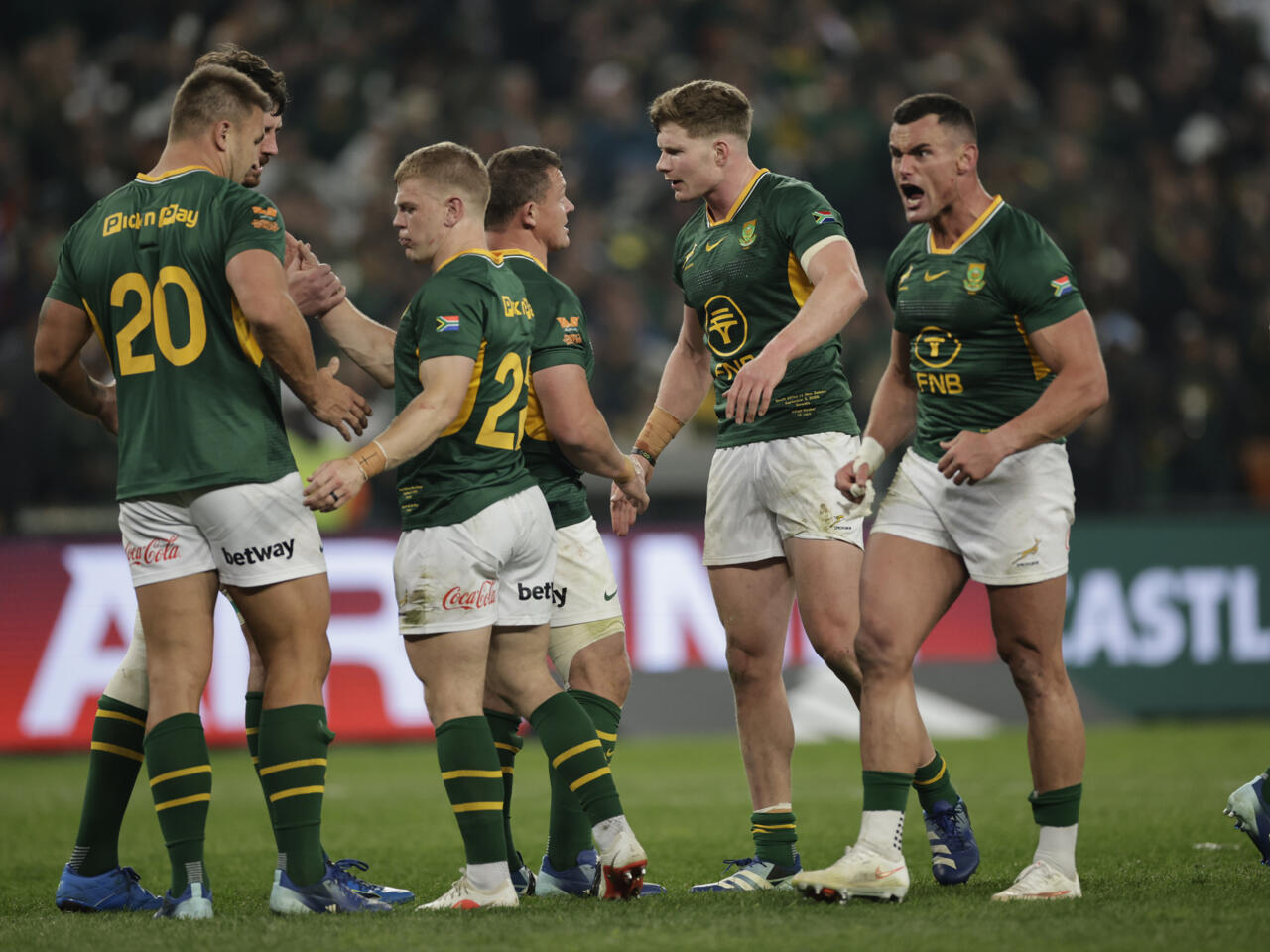
A decider that was genuinely a decider — for an hour
The scoreline flatters the ease of it. South Africa led 17-14 at the break, and for the best part of an hour this was the same knife-edge fixture the series had produced three times already: two teams who know each other's set-piece habits intimately, trading territory in five-metre increments, each side convinced the other was one error away from cracking.
What cracked, in the end, was the All Blacks' composure at the breakdown and their accuracy in the wide channels. Arendse was the direct beneficiary — his long-range score was the sort of opportunist finish that only exists because a defence has stopped talking to itself — but the architect was scrum-half Morné van den Berg, who took the man-of-the-match award for a performance built on sniping breaks around the fringes and, less glamorously, on game management that never once handed New Zealand a cheap exit.
Rassie Erasmus, characteristically, refused the coronation. The South Africa coach pushed back on the idea that his side had been comfortably the better team, pointing out that the contest was still finely poised at the 60-minute mark and that the gap between the two nations remains, in his reading, close to nothing. He was pleased. He was not prepared to call it a gulf.
Four Tests, two hemispheres, one trophy
The series will be remembered as much for its shape as its outcome. New Zealand opened it by winning 33-16 at Ellis Park in Johannesburg — a result that briefly reframed the whole tour — before South Africa answered 33-26 at DHL Stadium in Cape Town. The third Test, at FNB Stadium in Soweto, was the emotional high point: 87,976 people watched the Springboks come from behind to win 29-24, handing Siya Kolisi his record 55th victory as Springbok captain and moving him clear as the most successful skipper in the country's history.
Then everyone got on a plane. Staging the decider of a South Africa–New Zealand series roughly eight thousand miles from either country is the kind of decision that reads as either visionary or cynical depending on which passport you hold, and the ninety minutes in Baltimore did not entirely settle the argument. What it did settle is that the demand exists — at least once, at least here.
"We do it for the people"
Erasmus, asked afterwards about the crowd, was unusually unguarded. "It was awesome to see so many South Africans here; I don't know how they afford it or how they got here, but it's great," he said. Then he widened it out, in the way he tends to: "We appreciate the people who were here, but we don't forget the people who were at home; the people on the farm or the boy in the township or the people in the shopping mall."
Kolisi's version was quieter. "It is tough that one team has to win and another has to lose," the captain said. "But the respect we have for each other — we shared a prayer together." Players from both sides did exactly that on the field after the whistle, a small, unbroadcast-friendly moment that circulated faster online than any of the tries.
For New Zealand, Dave Rennie was left doing the arithmetic of a series lost. "We were confident that if we got a few things right tonight we'd have a good chance of winning," he said. "We fell short. It's disappointing from that perspective." He was warmer about the venue than the result, noting that Americans "obviously love their sports, and they got right behind rugby," before adding, with a coach's honesty, that he would have liked to see rather more black jerseys in the stands.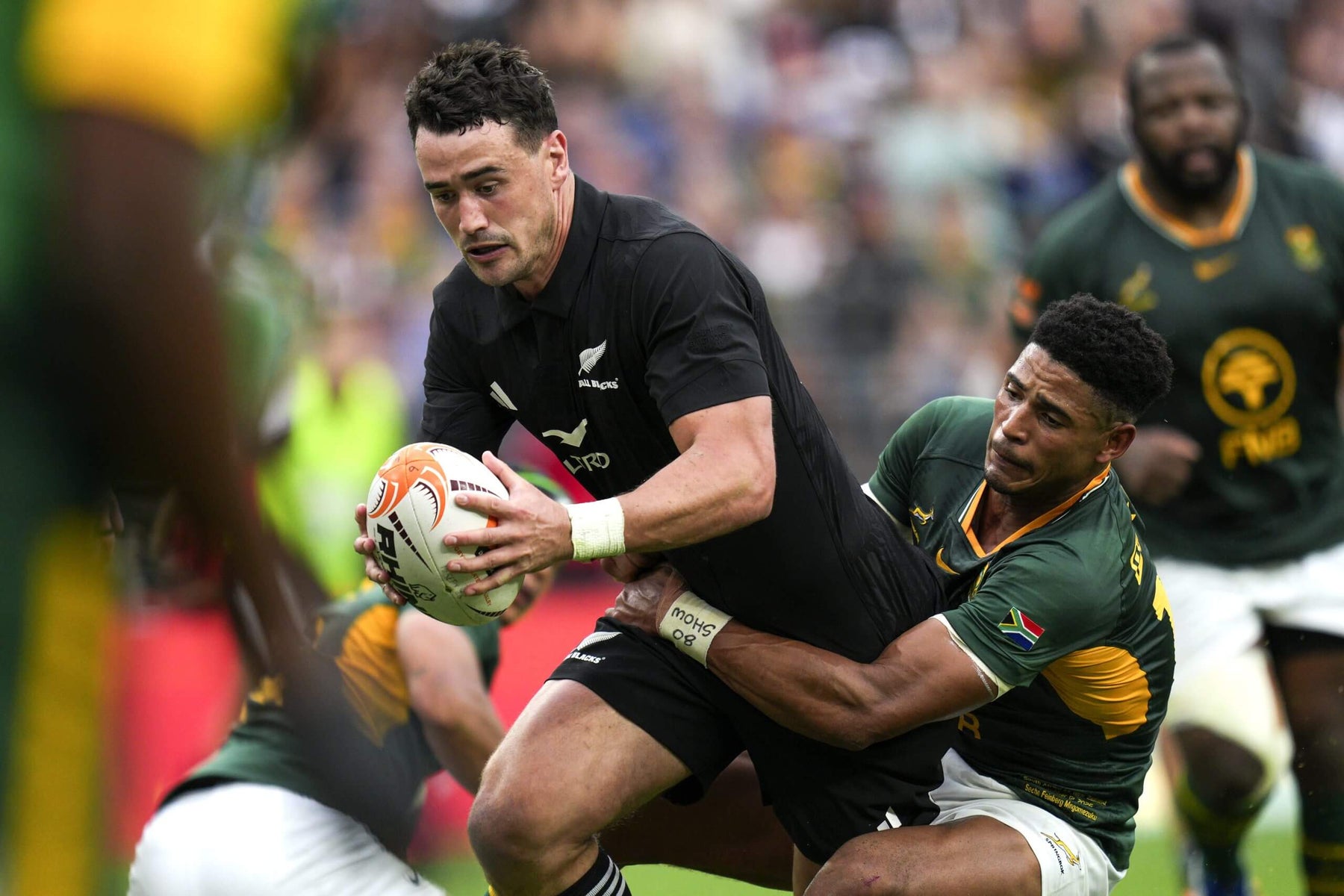
What Baltimore actually proved
It is tempting to read 68,173 as a verdict on American rugby. It is more accurately a verdict on the South African diaspora, which is large, well-organised and evidently willing to fly. The distinction matters, because the United States is due to host the men's Rugby World Cup in 2031, and the sport's governing bodies have spent years arguing that a domestic audience is waiting to be activated rather than imported.
Saturday does not prove that. What it proves is that a marquee fixture between two globally recognisable teams can fill an NFL stadium in a city with no rugby tradition, on a weekend competing with college football and the NFL's second week. That is a floor, not a ceiling, and the honest test comes when a Test in America has to sell itself to Americans.
What this means for you
If you have never watched a rugby Test and are wondering whether this is the moment: it probably is. The Springboks are the most watchable version of a heavyweight side — enormous, technically ruthless, increasingly willing to play with ball in hand. The All Blacks, even mid-rebuild, remain the most recognisable jersey in the sport. Their meetings are the fixture rugby people use to explain rugby to non-rugby people.
The calendar is friendly from here. Autumn internationals bring the southern hemisphere sides north in November, and the 2027 World Cup in Australia is close enough that squads are already being built with it in mind.
And if it did not, there is still the image from the end of it: two sets of exhausted men kneeling together on a field in Maryland, eight thousand miles from either home, while a stadium full of people who had crossed an ocean sang at them. Rugby does not always translate. On Saturday night, it did.



