For 40 years, HIV has out-mutated every vaccine thrown at it. Now two rival teams of scientists in La Jolla, California, say they've finally found the loophole — and turned the immune system's rarest weapon into something the body can make on command.
LA JOLLA, CALIFORNIA
For four decades, HIV has been the virus that broke vaccine science. It mutates faster than almost anything else on Earth, wears a disguise made of the body's own sugar molecules, and shape-shifts the instant a human antibody gets close. Every conventional vaccine strategy that has ever worked against measles, polio or COVID has, in one way or another, failed against it.
Now, in back-to-back breakthroughs out of the same tight-knit cluster of San Diego research institutions, scientists say they have cracked open the specific piece of the puzzle that has stumped the field since the 1980s: how to make an ordinary vaccine produce the ultra-rare, ultra-powerful antibodies that a small number of long-term HIV survivors make naturally — and that can neutralize dozens of different HIV strains at once.
In the most recent study, published in *Nature* on June 30, 2026, researchers at La Jolla Institute for Immunology (LJI), Scripps Research and the nonprofit IAVI report that their experimental vaccine triggered these so-called "broadly neutralizing antibodies," or bnAbs, in 44% of vaccinated primates — by far the strongest result of its kind ever recorded. Human trials of the vaccine's components are already underway.
"This feels like a huge success," said LJI Professor and Chief Scientific Officer Shane Crotty, who co-led the research with Scripps Research's William Schief. "We constructed a successful vaccine from the ground up, which required a deep understanding of the immune system."

The 40-Year Problem
To understand why researchers are this excited about a study in monkeys, you have to understand exactly how thoroughly HIV has beaten every previous vaccine attempt.
When a normal virus invades the body, immune cells called B cells go through a kind of boot camp. Early on, B cells are "naive" — they haven't seen the enemy yet. Once they detect a piece of an invading pathogen, they start cranking out antibodies shaped to grab onto it. As the infection continues, B cells refine those antibodies further, tweaking their shape generation after generation until they lock onto the pathogen's most vulnerable spot with precision. It's evolution happening in real time, inside your own bloodstream, over the course of days or weeks. This is, roughly, how essentially every successful vaccine in history has worked: show the immune system a piece of the enemy, let B cells mature, and let the resulting antibodies stand guard.
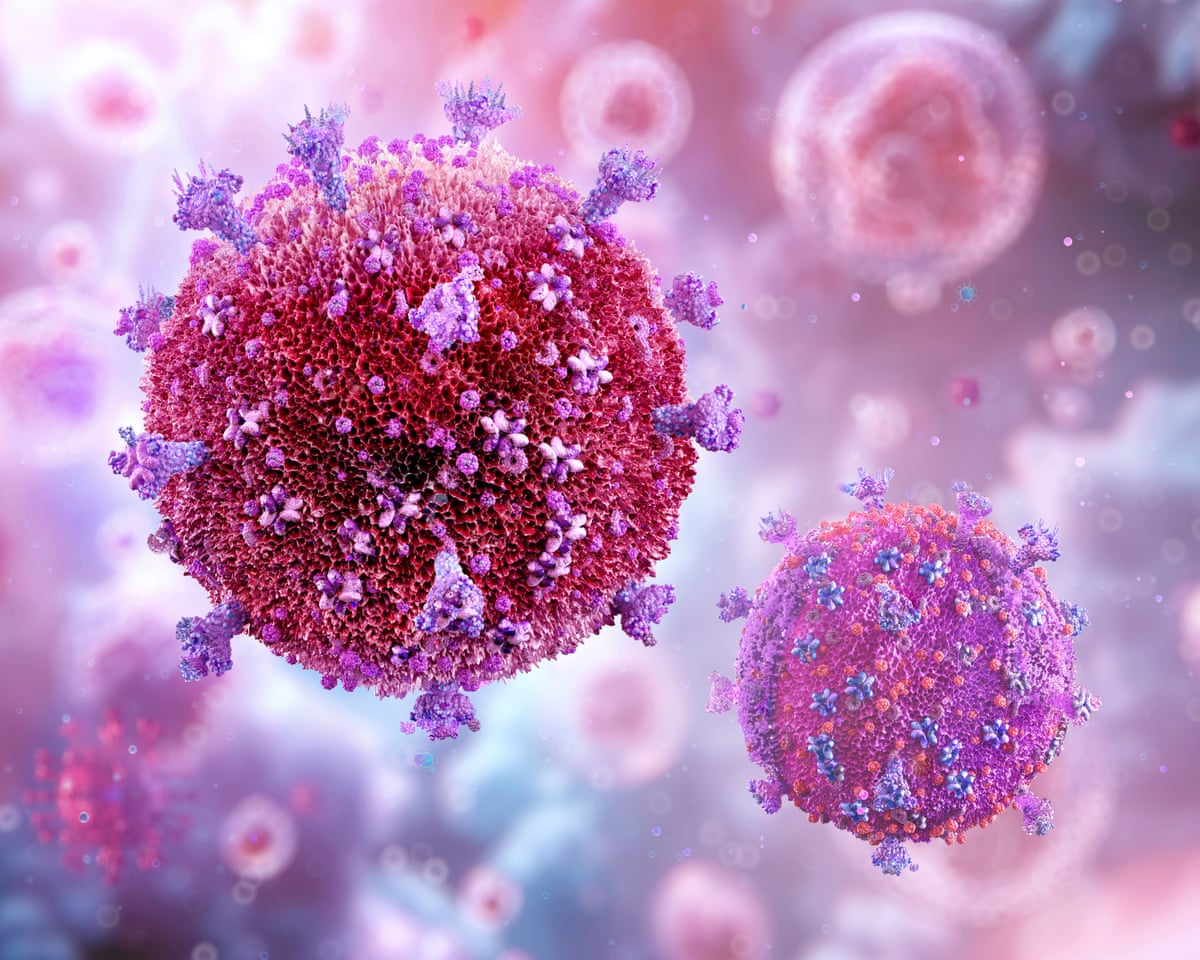
HIV doesn't play by those rules. First, the virus disguises itself in a shifting cloak of sugar molecules called glycans — camouflage that lets it slip past immune cells that are, ironically, covered in similar sugars themselves. Second, HIV mutates at a blistering rate; researchers note that the genetic diversity within a single infected person can rival the diversity across an entire flu season. And third, the virus's outer spike protein — the one structure it can't hide, because it needs it to latch onto human cells — physically changes shape the moment it starts infecting a cell, rendering any antibody trained on its old shape useless.
"The worldwide diversity of HIV mutations is extraordinary. Even the diversity within one individual person living with HIV is dramatic," said LJI Instructor Patrick Madden, co-first author of the new study alongside Scripps Research's Jon Steichen.
Put those three defenses together, and you get a virus that almost never gives the immune system a fair fight. Even the small number of people whose bodies do eventually produce broadly neutralizing antibodies — thought to be well under 1% of people living with HIV — usually take years of natural infection to get there, and by then, for them, it's too late to matter.
Turning the Rarest Antibody Into a Common One
The breakthrough at the center of the new study is a technique called "germline targeting" — essentially, reverse-engineering the maturation process that produces broadly neutralizing antibodies, and then building a vaccine that walks an ordinary, naive B cell down that exact same path on purpose.
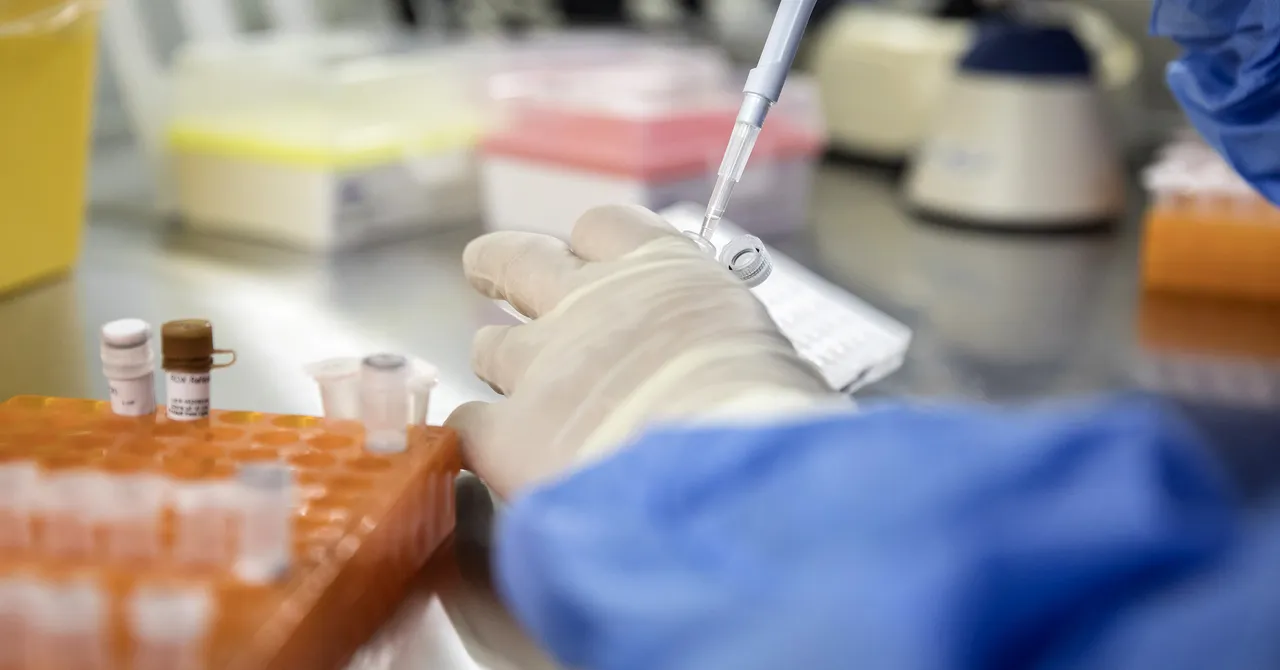
To do it, the Scripps and LJI teams first had to identify precisely which piece of HIV's outer envelope protein could catch the attention of the rare, specially-primed B cells capable of eventually producing bnAbs. Then, working with Emory National Primate Research Center, they built a sequential vaccination regimen for rhesus macaques: a "priming" shot designed to activate exactly those naive B cells, followed by a series of "shepherding" booster shots engineered to guide the maturing B cells step by step toward producing broadly neutralizing antibodies.
"This series of vaccinations will guide, or 'walk,' a B cell from its naive state to its broadly neutralizing state," Madden explained.

The results: 44% of the vaccinated primates went on to produce broadly neutralizing antibodies in their blood — and critically, those antibodies closely resembled the real bnAbs isolated from the rare humans who develop them naturally. "We succeeded in taking ultra-rare antibody responses and turning them into common responses by the end of the vaccination process," Crotty said, describing the 14-year research effort — part of the Scripps Consortium for HIV/AIDS Vaccine Development — as "one of those Apollo moon mission-type projects, where there is an exceptional goal and the team has to accomplish a myriad of discoveries and inventions along the way."
The team hasn't yet tested whether these antibodies actually prevent infection in the animals — that's a future study. But the fact that they were found circulating in the blood at meaningful levels is, researchers say, the necessary first step toward a vaccine that could someday do exactly that.
A Second Team, A Different Target, The Same Goal
Remarkably, this isn't the only HIV vaccine breakthrough to come out of the La Jolla research corridor this year. Just two months earlier, on April 29, 2026, a separate Nature paper from a Scripps Research team led by Professor Richard Wyatt — working with Sweden's Karolinska Institute — reported an even more startling number: broadly neutralizing antibodies in six out of six vaccinated primates, a perfect record.
That study targeted a different vulnerable spot on HIV's spike protein: the apex, the very tip of the spike, which stays almost identical across the hundreds of thousands of HIV strains circulating worldwide — making it, in theory, an ideal target that the virus has a harder time mutating its way around.
"The apex is a very desirable vaccine target for two reasons," said Scripps Research senior staff scientist Javier Guenaga, the study's co-first author. "It's highly conserved across all HIV strains, and very potent bnAbs from people living with HIV have been previously isolated."
Using virus-sized nanoparticles studded with hundreds of copies of HIV's spike protein, the Wyatt lab's vaccine produced what the field calls "tier-2 cross-neutralization" — antibody activity against real, wild HIV strains the animals had never even been exposed to — in every single treated animal. "Tier-2 cross-neutralization is the benchmark in the field, and we achieved it in every animal," said Scripps senior staff scientist Shridhar Bale, the study's other co-first author. "When we got those results, it was really a 'wow' moment."
Wyatt, who has spent more than a decade building the nanoparticle platform behind the discovery, was similarly triumphant: "This has been a long time coming. The fact that we see this response in all our animals tells us that we're on to something. It's better than we could have hoped for and incredibly gratifying."
Two labs, two different vulnerable targets on the same virus, two Nature papers within ten weeks of each other, both reporting results considered unprecedented in the 40-year hunt for an HIV vaccine. Researchers say the two approaches aren't competitors so much as complementary — Wyatt himself has noted that a fully protective HIV vaccine will likely need to hit multiple vulnerable sites on the virus simultaneously, combining the apex-targeting and germline-targeting strategies rather than picking one.
From Monkeys to Humans
This is where the story moves from "promising animal data" to something with a real, near-term timeline. The priming immunogen used in the LJI/Scripps/IAVI germline-targeting study has already been tested in humans in the HVTN 144 trial, run through the HIV Vaccine Trials Network, and is currently being evaluated further in a Phase 1 trial called IAVI G004. IAVI, Scripps Research, and their partners are now making plans to test the full multi-shot immunization regimen — the priming-plus-boosting sequence that produced the 44% response in monkeys — in a future human clinical trial.
The Wyatt lab's apex-targeting vaccine is further behind on the human timeline; manufacturing clinical-grade versions of its nanoparticle platform is, in Wyatt's own description, "technically demanding and costly," and his team is now exploring whether mRNA vaccine technology — the same platform behind Pfizer and Moderna's COVID shots — could deliver the same spike-protein antigens more efficiently and affordably.
Neither vaccine is close to being something you could walk into a pharmacy and receive. Both are, realistically, years away from a phase 3 trial that could determine whether they actually prevent HIV infection in humans, let alone years further from regulatory approval. But scientists in the field are treating this year's back-to-back results as a genuine inflection point — proof, for the first time in the epidemic's history, that the human immune system can reliably be trained to produce HIV's rarest and most powerful weapon against itself.
What This Means for You
If you or someone you know is at risk of HIV today, none of this changes anything about prevention in the near term — PrEP medications, condoms and regular testing remain the tools available right now, and will remain so for years while these vaccines work through human trials. Nobody involved in either study is suggesting an approved HIV vaccine is imminent.
But for the roughly 40 million people living with HIV worldwide, and the more than 1 million new infections recorded globally each year, this is the closest the science has come to a plausible end-game since antiretroviral therapy itself. A functioning vaccine wouldn't just prevent new infections — public health researchers have long argued it's the single intervention most likely to finally bend the curve of the global epidemic downward for good, in regions where access to daily medication remains inconsistent.
The Bottom Line
"The field has made more progress in the last few years than in the previous 30 combined," Wyatt said. "So now is the time to push forward with funding and research. We're eager to get this translated to humans."
That sentiment — cautious, but genuinely energized — is echoed across both La Jolla teams. After 40 years of a virus that seemed permanently unbeatable by vaccine science, researchers now have two separate, published, peer-reviewed paths that reliably produce the antibody response long considered the holy grail of HIV prevention. Whether either path leads all the way to a shot in a doctor's office is still an open question. But for the first time in a very long time, it's an open question with real momentum behind it.
Published By | Features Editor