Written By | Health News Agencies
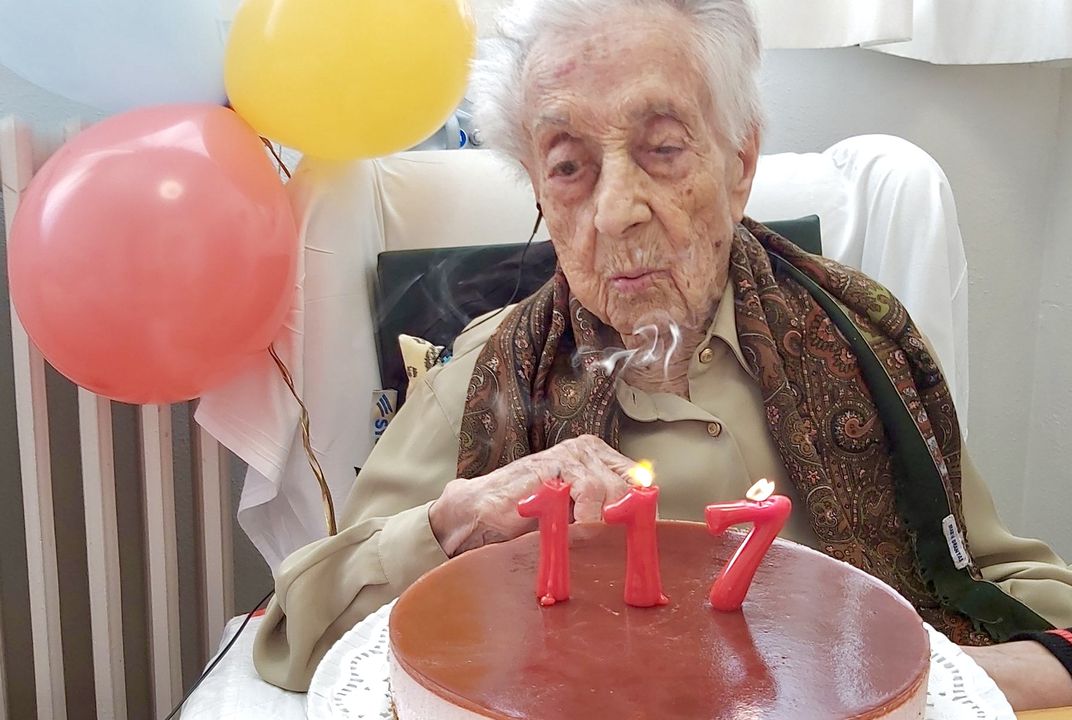
Scientists have finished the most exhaustive biological autopsy ever performed on a human being — Maria Branyas, who lived to 117 years and 168 days.
Scientists have finished the most exhaustive biological autopsy ever performed on a human being — Maria Branyas, who lived to 117 years and 168 days. What they found inside her was not a body that aged slowly. It was a body running two clocks at once: one racing, one crawling. And the gap between them may be the single most important clue in longevity science.
BARCELONA
She was born in San Francisco in March 1907, a year and a half before the first Model T rolled out of Detroit, in a country where nobody had yet flown as a passenger in an aeroplane. She crossed the Atlantic as a child on a ship on which her father died. She survived the 1918 influenza pandemic, the Spanish Civil War, two world wars, and — at the age of 113 — COVID-19, from which she recovered in a nursing home in the Catalan town of Olot with, as she later put it, not much fuss.
Maria Branyas Morera died in her sleep on 19 August 2024, aged 117 years and 168 days: the longest-lived person on the planet at the time, and one of the longest-lived human beings ever verified.
Before she went, she did something almost nobody in her position has ever done. She handed her body over to science — not after death, but while she was still very much alive, sitting up, giving interviews, running a social media account and complaining cheerfully about journalists. Researchers took blood, saliva, urine and stool. Then they took her apart, molecule by molecule.
The final peer-reviewed results, pushed into wide circulation this week by the Josep Carreras Leukaemia Research Institute in Barcelona and published in the journal Cell Reports Medicine, are the most comprehensive biological portrait ever assembled of a supercentenarian. And they are strange. Much stranger than anyone expected.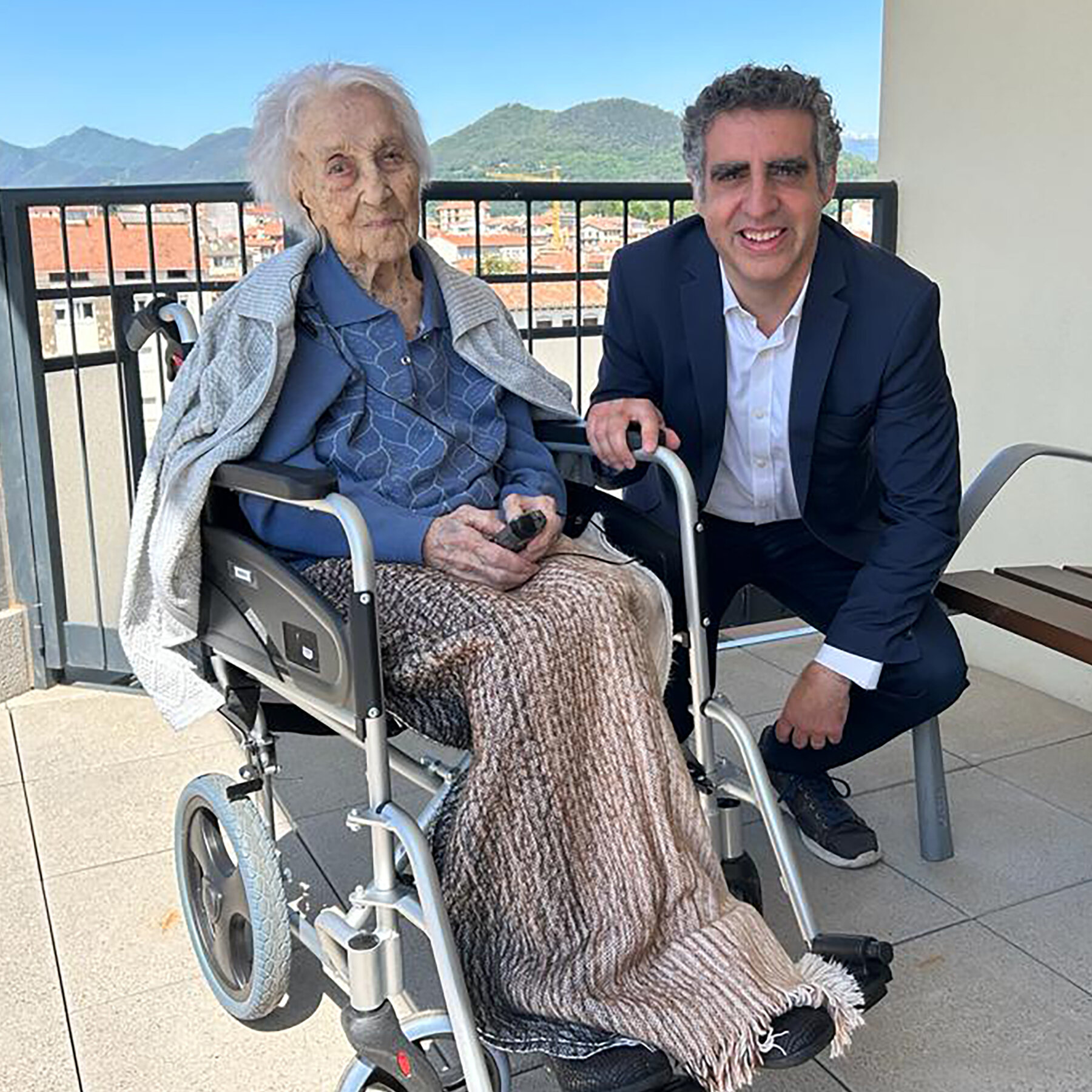
SIX LAYERS OF ONE WOMAN
The project was coordinated by Dr Manel Esteller, head of the Cancer Epigenetics group at the Josep Carreras Institute, and led by researcher Eloy Santos-Pujol, with an international team spanning dozens of laboratories.
Rather than run one test, they ran everything at once — a technique researchers call multi-omics. They sequenced her genome. They read her transcriptome, the running commentary of which genes were switched on. They profiled her proteome, her metabolome, her microbiome and her epigenome — the layer of chemical tags that sits on top of DNA and decides which instructions get followed.
Then they compared every layer against matched cohorts of ordinary people, to see where the oldest human on Earth actually differed.
The expected answer — the one everybody assumed the paper would deliver — was that Maria Branyas had simply aged more slowly than the rest of us. A biological tortoise. A woman whose cells had somehow been running at three-quarter speed since the Edwardian era.
That is not what they found.
THE CLOCK THAT RACED
By several measures, Branyas was not merely old. She was extraordinarily, unmistakably, aggressively old.
Her telomeres — the protective caps on the ends of chromosomes that shorten every time a cell divides — were very short. Not moderately shortened for a woman of 117. Very short. In the crude popular version of ageing science, that alone should have made her a wreck.
Her immune system carried a pro-inflammatory signature. Her B lymphocytes — the white blood cells that manufacture antibodies — formed an aged, exhausted population of the kind that leaves elderly people vulnerable to infection and poor vaccine responses.
And her blood showed clonal haematopoiesis: the process by which blood stem cells accumulate mutations over decades until a handful of mutant clones come to dominate the entire blood supply. Clonal haematopoiesis is a recognised risk factor for leukaemia, for myelodysplastic syndromes and, less intuitively, for cardiovascular disease.
On paper, that is the biology of someone in serious trouble.
Maria Branyas never developed cancer. She never developed dementia. She never developed major cardiovascular disease. She died, in the end, of nothing in particular — which is to say, of being 117.
THE CLOCK THAT CRAWLED
Running alongside all that damage was a second set of readings that pointed in precisely the opposite direction.
Her actual measured inflammation was genuinely low. Not low for her age — low. That is the finding that made the researchers sit up, because chronic low-grade inflammation is so reliably the engine of late-life decline that gerontologists gave it its own ugly name: inflammaging. Branyas had the inflammatory machinery primed and the inflammatory output turned down.
Her lipid metabolism was efficient, handling fats in a way more typical of a much younger person.
Her genome carried rare variants associated with neuroprotection and cardioprotection — genetic insurance policies on precisely the two organ systems that kill most people over 80. Her epigenome showed a pattern associated with chromosomal stability, the cellular equivalent of a well-maintained filing system, alongside markedly decelerated epigenetic ageing.
That last point produced the headline number. When the team ran multiple independent epigenetic clocks — the algorithms that estimate biological age from DNA methylation patterns — they placed Maria Branyas more than 23 years below her chronological age of 117.
A 117-year-old whose cells read as a very healthy woman in her nineties. With short telomeres. And mutant blood clones. And an ageing immune system.
"A fascinating duality," is how Esteller described it: "the simultaneous presence of signals of extreme ageing and of healthy longevity."
WHY THE PARADOX MATTERS MORE THAN THE RECORD
This is the part that should interest anyone who is not a supercentenarian, which is to say everyone reading this.
The dominant story in consumer longevity culture is that the goal is to slow ageing down — to keep the odometer low, to avoid accumulating damage, to be biologically younger than the date on your passport. An entire industry of supplements, cold plunges, fasting protocols and $500 epigenetic-age tests rests on that premise.
Branyas suggests a different and considerably more interesting possibility: that extreme longevity may not require escaping ageing at all. Her body accumulated damage exactly as bodies do. What she appears to have had was not immunity from the process but resilience against its consequences — a set of protective traits that kept ordinary cellular wear and tear from tipping over into the diseases that kill people.
If that is right, the therapeutic target shifts. Instead of trying to stop the clock, medicine might aim to uncouple the clock from the catastrophe.
There is a second reason researchers care. Ageing in the blood-forming system is tightly bound up with the risk of serious and frequently incurable blood cancers — leukaemia and myelodysplastic syndromes chief among them. Branyas carried the classic warning signs and never got either disease. Working out what protected her is not an abstract longevity question. It is a leukaemia question, being asked at a leukaemia institute.
THE BUGS IN HER GUT — AND THE YOGHURT PROBLEM
One finding has already broken out of the scientific literature and into the internet's bloodstream: her gut microbiome was dominated by bifidobacteria, a group of bacteria normally abundant in infants and small children and normally scarce in the very old.
Her microbial community looked, in parts, decades younger than she was. It was anti-inflammatory in character — which fits neatly beside her surprisingly low inflammation readings.
Branyas was also known to eat three yoghurts a day.
You can see where this is going, and you should resist it.
The yoghurt habit sat inside a whole life: a Mediterranean diet, daily movement, an unusually rich social calendar, good sleep, and no tobacco or alcohol. Pulling one variable out of that tangle and crowning it the secret of long life is not science, it is marketing. Several outside researchers have made the sharper point that her exceptional gut flora may have been a consequence of her exceptional health rather than a cause of it — a thriving microbiome is what a well-functioning 117-year-old body produces, not necessarily what produces one.
The research team is careful on exactly this ground. It is still too early, they say, to tie specific biological traits directly to particular behaviours or lifestyle choices. They will go no further than listing factors worth considering: a healthy diet, a stimulating and diverse social network, and the absence of toxic habits.
THE UNAVOIDABLE CATCH: N EQUALS ONE
Here is the limitation no amount of technology can engineer away. This is a study of one person.
Multi-omics on a single individual, however dazzling the instrumentation, cannot establish which of her features caused her longevity, which merely accompanied it, and which are just the ordinary noise of one human genome. Branyas came from a family with a history of long life, and the analysis does not incorporate relatives who shared much of her genetics and also lived a long time — a gap critics have flagged.
Nor can anyone say how much of the picture is Maria Branyas and how much is the twentieth century. She lived through medical revolutions that transformed what it was possible to survive. Her protective variants are also, by definition, rare — which means most readers do not carry them and cannot acquire them. As one commentator put it, you can change your gut microbiome with diet and habit; you cannot hand yourself somebody else's genes.
What the study does supply is something the field has never had: a complete, publicly available molecular reference point for the extreme edge of the human lifespan. Every future study of ageing biology now has a fixed star to navigate by.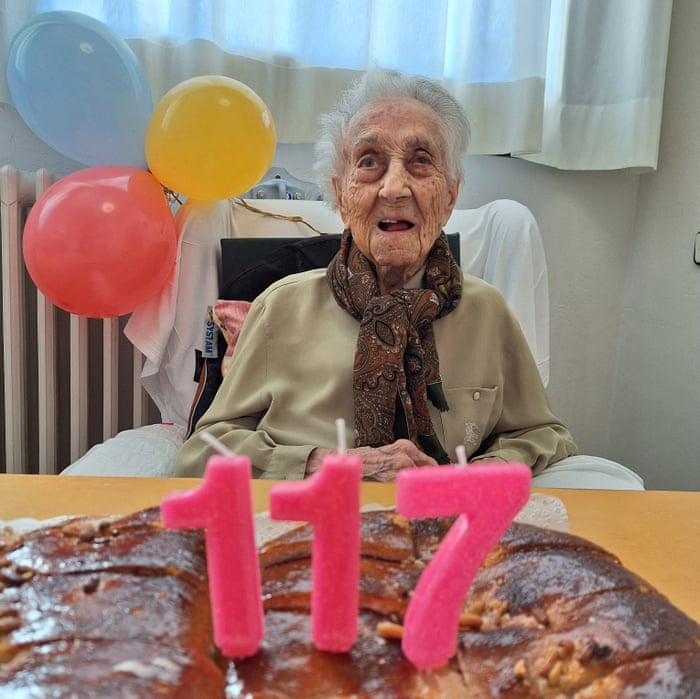
WHAT THIS MEANS FOR YOU
Nothing in this paper licenses a supplement purchase. But three things in it are worth carrying around.
First, biological age and chronological age genuinely come apart, and the gap is measurable. That is no longer a wellness slogan; it is a finding from six simultaneous molecular technologies applied to the oldest verified person on Earth.
Second, inflammation looks increasingly like the hinge. Branyas had every structural reason to be inflamed and somehow was not. The everyday levers that reduce chronic inflammation are unglamorous and free: not smoking, sleeping properly, moving daily, eating mostly plants and fermented foods, and — a point the researchers keep returning to — maintaining real social contact. Loneliness is an inflammatory state.
Third, and most usefully: the goal is not to avoid ageing. Your telomeres are going to shorten. Your immune system is going to drift. What Branyas suggests is that you can carry a great deal of cellular wear and still not get sick, and that the difference between the two is where the real medicine lies.
It is also worth saying what this study does not offer. It offers no pill, no protocol and no timeline. Epigenetic therapies and senolytic drugs — compounds designed to clear worn-out "senescent" cells — are being explored in oncology, and both fields touch closely on biological ageing. Whether either can ever be turned into a treatment for healthy ageing in ordinary people remains an open question, and an honest researcher will tell you so.
THE PLATEAU
There is a reason work like this is gathering urgency. For roughly two centuries, human life expectancy climbed steadily as sanitation, nutrition, vaccines and medicine improved. Recent analyses suggest that long upward trend may now be flattening out in wealthy countries.
If that plateau is real, the next frontier is not a new antibiotic or a better stent. It is ageing itself — treated the way medicine treats disease, with targets, mechanisms and drugs.
Maria Branyas spent 117 years and 168 days as a living argument that the ceiling is higher than we assume. She attributed her own longevity to "order, tranquility, good connection with family and friends, contact with nature, emotional stability, no worries, no regrets, lots of positivity, and staying away from toxic people." Scientists will spend the next decade arguing about whether any of that is measurable.
But she left them something better than advice. She left them a map — a complete molecular blueprint of what the far end of a human life actually looks like from the inside.
Two clocks, running at different speeds, in the same small woman in a nursing home in Olot.
Working out why is now one of the most consequential problems in medicine.