Written By |

The Uganda Peoples’ Defence Forces (UPDF) Commander Land Forces, Maj. Gen Kayanja Muhanga exercising with supporters of Gen Muhoozi Kainerugaba at Kololo Grounds. (Photo by Milton Niinga)
By Milton Niinga
The Uganda Peoples' Defence Forces (UPDF) Commander of Land Forces, Maj. Gen. Kayanja Muhanga, has challenged citizens to address the worsening climate crisis, saying it is crucial for Uganda's sustainable socio-economic development.
Gen MK supporters taking themselves pictures during the celebtations of 51st birthday run at Kololo Independence Grounds in Kampala. (Photo by Milton Niinga)
Maj. Gen. Muhanga, who represented the Chief of Defence Forces (CDF), Gen. Muhoozi Kainerugaba, at the 51st birthday 10-kilometer run organized by Muhoozi supporters at Kololo Independence Grounds on Sunday, urged Ugandans to engage in social activities that aim to mitigate climate change in the country.
“I am here on behalf of CDF Muhoozi, who had a busy national security schedule. He asked me to join you in celebrating this climate change run organized in his honor,” Muhanga said.
He called on the general public to develop a personal commitment to protecting the environment and raising awareness about sustainable practices that can help mitigate climate change.
MK Supporters Launch 10-Year Climate Change Mitigation and Adaptation Strategy (2025–2035)
Supporters of Gen. Muhoozi have launched a 10-year climate change mitigation and adaptation strategy aimed at reducing the severity of climate change by 2035.
“With our theme, ‘Run for Greening Uganda: An MK Climate Change Mitigation Plan,’ we designed a concrete approach to strengthen citizens’ adaptive capacity, increase resilience, and reduce vulnerability to the adverse effects of climate change,” said Allan Katwesigye, a supervisor at the National Forestry Authority (NFA).
Uganda has recently experienced climate-related disasters ranging from flash floods, persistent droughts, dust storms, heatwaves, wildfires, and epidemics of vector-borne diseases such as Ebola, Marburg, Rift Valley fever, and yellow fever—all of which need urgent attention.
“These disasters have caused deaths, loss of livelihoods, damage to roads, electricity and health infrastructure, mental health challenges, and have significantly impacted our annual budget plans, especially in critical sectors like agriculture and transport,” Katwesigye noted.
Under the Patriots Club, in partnership with the Patriotic League of Uganda, supporters have outlined ten fundamental pillars under which Ugandan citizens can act to address the key challenges causing global warming.
The Uganda Peoples’ Defence Forces (UPDF) Commander Land Forces, Maj. Gen Kayanja Muhangaba awarding medals to winners of 51st MK birthday run at Kololo Independence Grounds. (Photo by Milton Niinga)
Reducing Greenhouse Gas Emissions
Reducing greenhouse gas emissions is crucial for mitigating climate change, the plan states.
“We propose the consistent use of energy-efficient appliances, minimizing waste, reducing landfill emissions, investing in renewable energy, reforestation, conservation, and promoting sustainable agriculture,” Katwesigye suggested.
Veteran journalist and environmental activist Robert Turyomurugyendo Katemburura said Uganda loses about 3 million hectares of forest cover due to unplanned agriculture and haphazard construction in wetlands.
“Uganda contributes only about 0.09% to global greenhouse gas emissions, with most emissions resulting from agriculture, forestry, and other land use activities such as urbanization and recreation, which need regulation,” Katemburura said.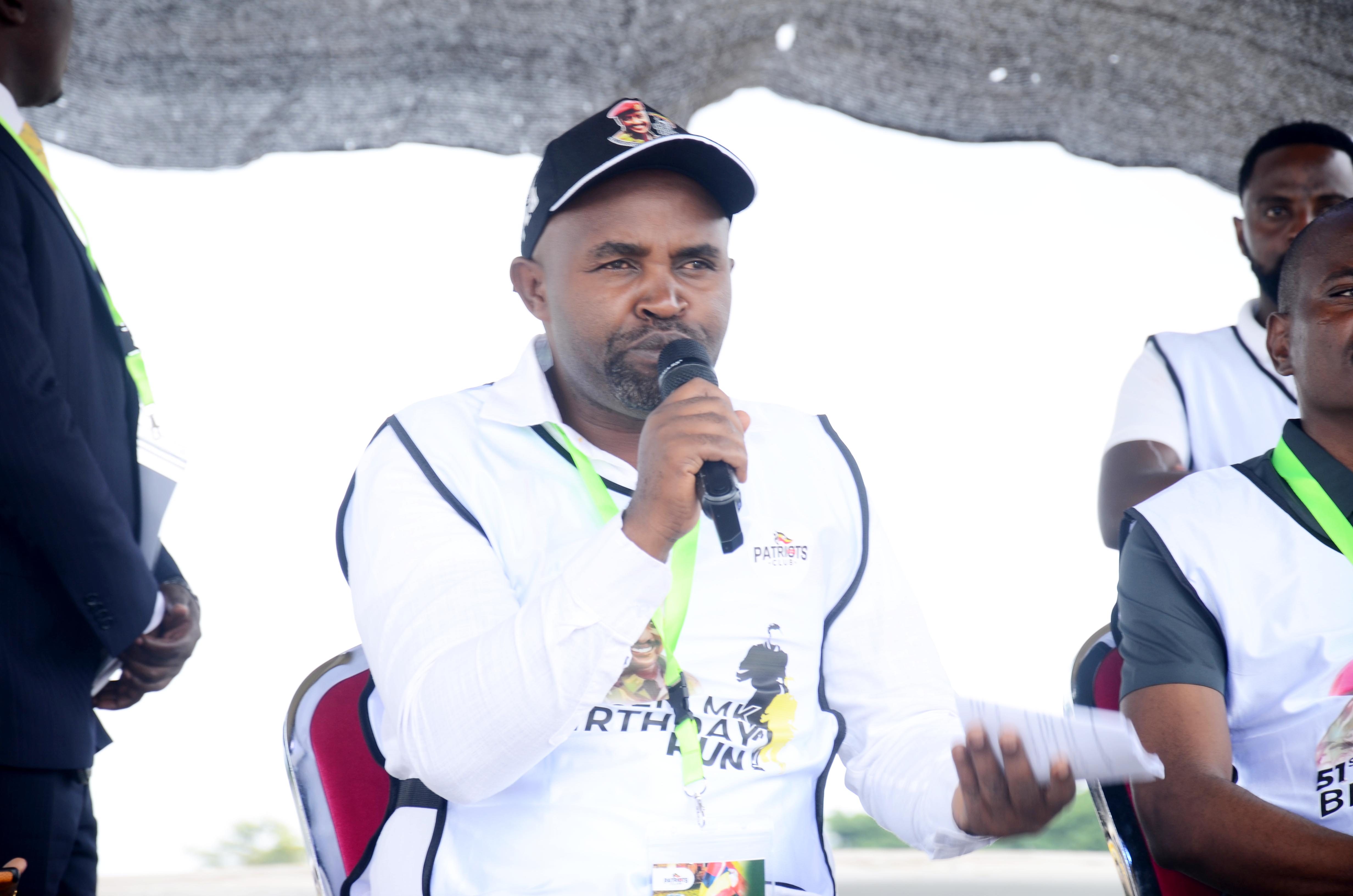
Veteran Journalist and environment activist, Robert Turyomurugyendo Katemburura elaborating climate change mitigation plan. (Photo by Milton Niinga)
He noted that Africa, as a whole, contributes around 4% of global greenhouse gas emissions, yet it suffers disproportionately from the effects of climate change.
“This run aims to reduce the severity of climate change through actions that prevent or reduce greenhouse gas emissions from human activities,” he added.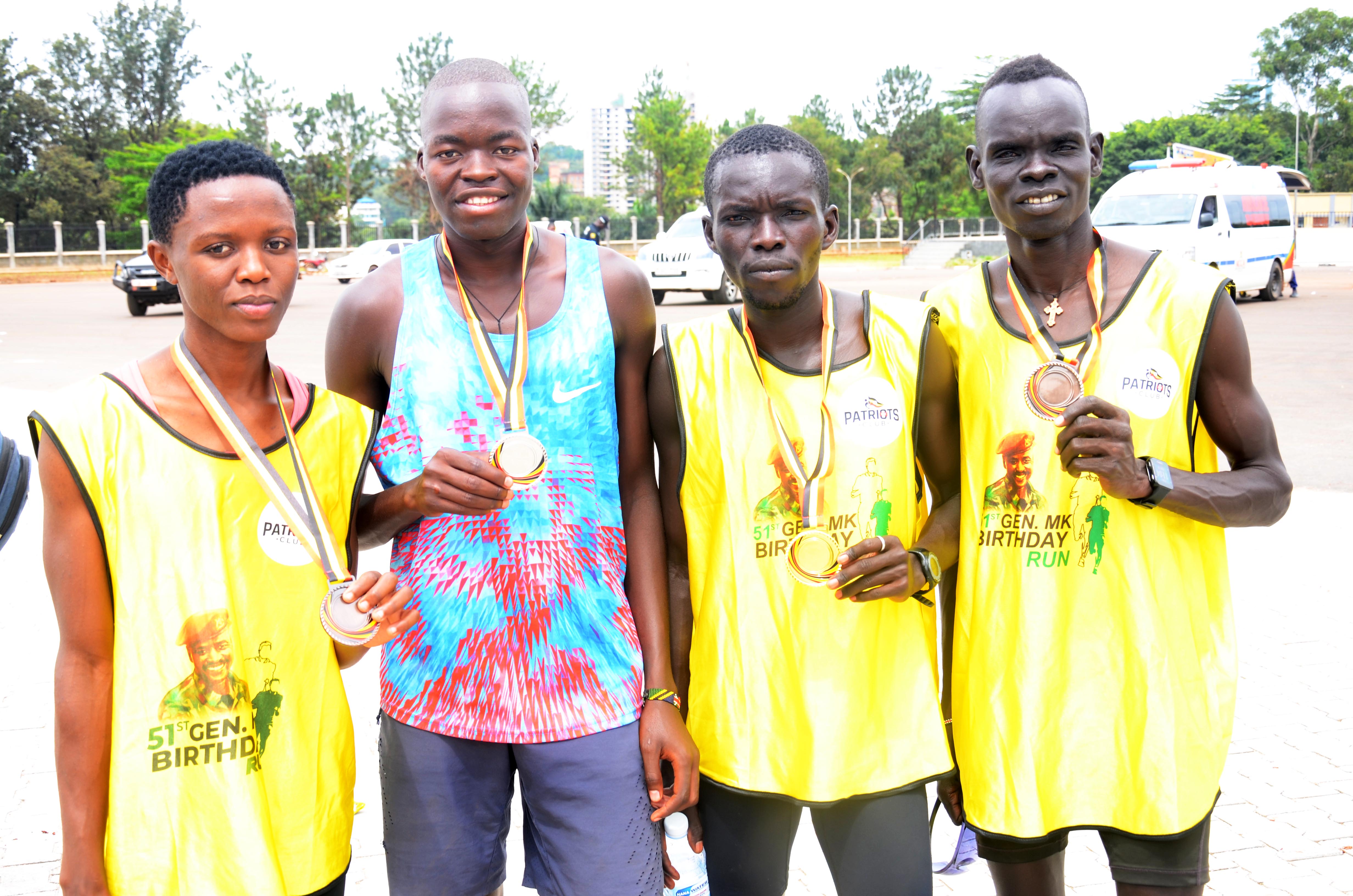
Uganda Prisons Runners who won Sarah Nabulo Khafu, William Yach, Patrick Labeja and Daniel Comboni who came the first at MK birthday run. (Photo by Milton Niinga)
Adaptation
Muhoozi’s plan emphasizes increasing Uganda’s adaptive capacity to withstand the effects of climate change—and, where possible, benefit from them. For example, stormwater from flash floods can be harvested and used for irrigation during dry seasons.
“Our plan is to simplify these scientific concepts and bring them closer to the people so they can respond effectively to global climate challenges,” Katwesigye said.
Increased Community-Based Climate Publicity
According to Minister for Kampala Capital City and Metropolitan Affairs, Minsa Kabanda, awareness will be raised through both print and digital media to demystify climate change mitigation and adaptation.
“This pillar will also promote the Climate Change Act of 2021 in public and private sectors, encouraging compliance with its guidelines before people fall afoul of the law,” she said.
Protecting and Conserving Carbon Sinks
Bob Kakuru, chairperson of the run's organizing committee, said the strategy includes planting more indigenous tree species.
“This will be done through strategic teams in the Patriots Club in collaboration with relevant ministries and agencies. We will reward individuals, communities, and institutions that protect and conserve homesteads, natural forests, and landscapes, while naming and shaming those who destroy the environment,” he said.
Environmental Activism and Patriotism
Kakuru added that many people degrade the environment due to a lack of patriotism. He said climate change patriotic clubs will be established across institutions and communities to instill environmental discipline and responsibility.
Empowering Communities
PLU Vice Chairperson for Central Uganda, Frank Gashumba, emphasized that Muhoozi’s plan involves equipping communities with survival skills to deal with extreme weather conditions.
“Our patriotic team will identify and map high-risk areas prone to hunger, floods, wildfires, and disease outbreaks, and share this data with relevant ministries and agencies,” Gashumba said.
“We’ll also champion nature-based and ecosystem-based solutions, while promoting green procurement, green infrastructure, and resilient buildings as part of a green economy strategy,” he added.
Regional and International Collaboration
Kampala Capital City Authority (KCCA) Executive Director Sharifah Buzeki stressed the importance of including a climate mitigation program in the KCCA agenda to protect green belts and trees in Kampala.
“Climate change knows no borders. We must implement cross-border environmental initiatives to conserve shared resources like lakes and rivers, and to share knowledge and best practices,” she said.
Public-Private Partnerships
The Patriots Club plans to initiate strategic partnerships with both public and private actors to achieve the goals of the climate change mitigation and adaptation strategy.
Sustainable Voluntary Climate Fund
Minister of State for Education and Sports, Peter Ogwang, announced the creation of a central collection fund for environmentally conscious Ugandans from both the public and private sectors.
“You all remember how we financially supported the COVID-19 response. Climate change is a silent monster that worsened the pandemic’s effects. We call on green-minded Ugandans to contribute to this 10-year strategy,” he said.
Participation in Global Climate Negotiations
The environmental technical team of the Patriots Club will participate in international climate negotiations, including the Conference of the Parties (COP), to ensure Uganda’s voice is heard and the nation benefits from global agreements.
Integration with National Programs
This model will align with government plans and projects such as the Parish Development Model, Operation Wealth Creation, Vision 2040, and the recently launched National Development Plan IV.
Innovation for Climate Solutions
The strategy promotes renewable energy sources like wind, solar, hydro, and geothermal to reduce greenhouse gas emissions. Innovation and research hubs will first be established in public universities and later extended to private universities during the implementation phase.
Torch Media Africa



