Written By | Staff Writer

Agriculture remains the backbone of Uganda's economy and the livelihood of most of its population, yet it is also the sector most exposed to climate volatility
Jinja
At the 2026 National Agricultural Show in Jinja, Uganda took a notable step in its push to marry science with the survival of its farms. The government officially launched the national roll-out of Skeepon Technology (SKP), a plant bio-stimulant that its backers say can help crops withstand drought, erratic rainfall and heat stress — some of the most pressing threats facing agriculture in a warming East Africa. Unveiled by Prime Minister Robinah Nabbanja, the launch has quickly become one of the country's most talked-about science stories of the season.
What is happening
Skeepon is a bio-stimulant — not a fertilizer or pesticide, but a compound that switches on a plant's own biological defenses. According to Uganda's National Agricultural Research Organisation (NARO), which validated the product, SKP activates a crop's natural drought and heat tolerance, allowing it to keep growing under water stress and high temperatures for up to three months while improving overall plant health and productivity. In effect, it primes the plant to endure conditions that would ordinarily stunt or kill it.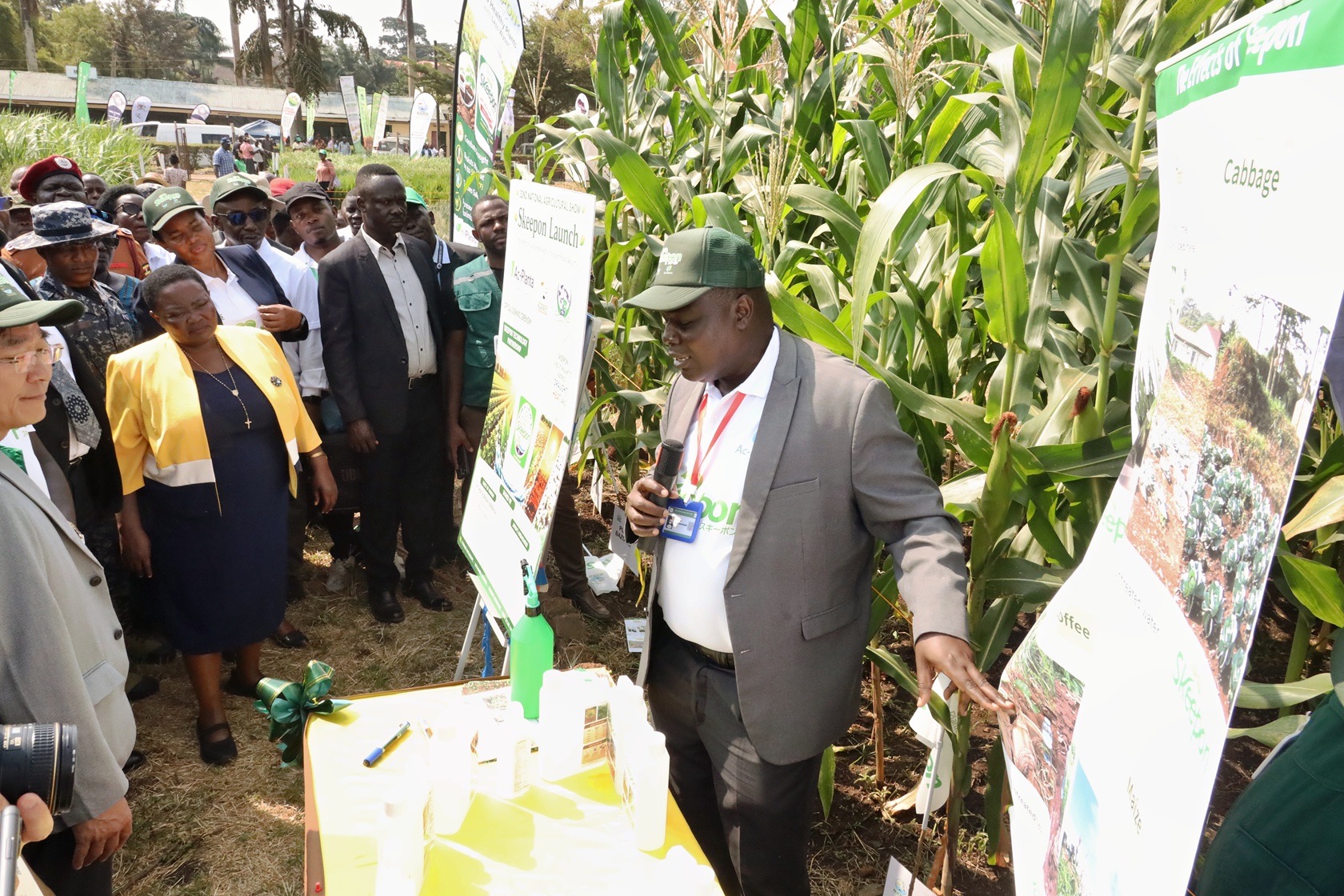
The headline results come from NARO's own field trials, conducted over two cropping seasons. Researchers reported maize yields more than 30 percent higher and vegetable yields over 45 percent higher in treated crops compared with untreated ones. They also recorded faster growth, improved plant health and markedly greater tolerance to drought and heat. NARO has put the cost at roughly 12,000 to 27,000 Ugandan shillings per acre, depending on the crop and how it is applied — a price point the government is presenting as accessible to smallholders, though affordability at scale remains to be proven.
The key players
The roll-out is a partnership between the Ugandan government and Ac-Planta, a Japanese company that developed the technology, which is already used commercially in Japan, the United States and South Korea. NARO, the country's principal agricultural science body, conducted the local efficacy testing and signed a memorandum of understanding with Ac-Planta covering research, technology transfer and human-resource development. The product has received registration approval from Uganda's Ministry of Agriculture, Animal Industry and Fisheries, a regulatory step that clears it for wider distribution. Prime Minister Nabbanja's presence at the launch signaled the political weight the government is placing behind the initiative as part of a broader 'science-for-growth' agenda.
Background and context
Agriculture remains the backbone of Uganda's economy and the livelihood of most of its population, yet it is also the sector most exposed to climate volatility. Recent seasons have brought increasingly unpredictable rainfall, prolonged dry spells and heat that undermine yields and food security. That vulnerability was underlined by the same national statistics showing agricultural growth slowing sharply in the most recent quarter — a reminder that the sector's fortunes swing heavily with the weather. Tools that can buffer crops against those swings therefore carry outsized importance.
The Skeepon launch fits into a wider pattern of Ugandan investment in science and technology. The government's Science, Technology and Innovation Secretariat has been promoting initiatives from a Deep Technology Summit focused on artificial intelligence and innovation ecosystems, to a National Science Week hackathon aimed at turning ideas into market-ready products, to a home-grown 'ClimCam' climate-monitoring camera slated for deployment toward the International Space Station in collaboration with regional partners. Officials frame these efforts as building blocks of an ambition to use science and innovation to drive the economy toward a much larger scale in the years ahead.
Why it matters
If the field results hold up in the hands of ordinary farmers, the implications are significant. A relatively low-cost input that lifts maize and vegetable yields by double digits while improving resilience to drought could strengthen food security, raise smallholder incomes and reduce the losses that climate shocks routinely inflict. For a country where farming supports the majority of households, even incremental gains in resilience can translate into meaningful improvements in nutrition and rural livelihoods.
The technology also carries a symbolic charge. It positions Uganda as an active adopter — and, through NARO's testing role, a co-developer — of climate-smart agricultural science rather than a passive recipient. The Ac-Planta partnership, with its provisions for technology transfer and training, hints at the kind of knowledge exchange that could build domestic capacity over time. In a region where climate adaptation is often discussed in terms of external aid, a locally validated, commercially available product represents a different model.
What to watch next
Several questions will determine whether Skeepon delivers on its promise. The first is real-world performance: controlled field trials are encouraging, but results across the diversity of Uganda's soils, crops and farming practices will be the true test. The second is access — whether the per-acre cost remains affordable once distribution, margins and any subsidies are factored in, and whether the product reaches remote smallholders rather than only better-resourced farms. The third is the strength of the supply chain and farmer education, since a bio-stimulant that is misapplied or unavailable at the right moment in the season will not help.
More broadly, the launch will be watched as a bellwether for Uganda's science-and-innovation strategy. If SKP demonstrably improves yields and resilience at scale, it strengthens the case that targeted investment in agricultural science can pay off quickly. If uptake falters, it will underline how hard it is to translate promising laboratory and field results into lasting change across millions of small farms. For now, Uganda has planted a marker — and the coming cropping seasons will show what grows from it.



