LONDON
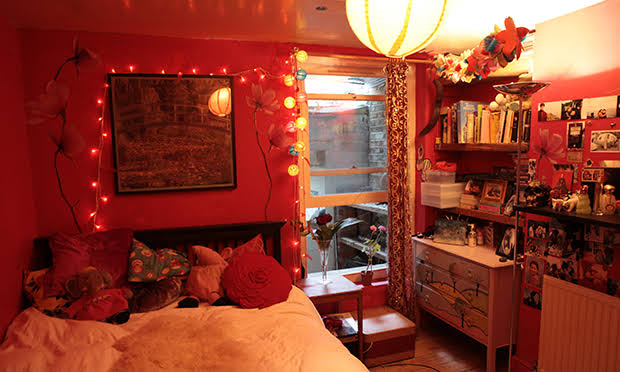
The most disarming room in the Design Museum's NIGO retrospective is not the one full of impossible-to-find A Bathing Ape jackets. It is a bedroom.
A full-scale recreation of a teenager's room in Maebashi, a city just outside Tokyo, as it stood in the 1980s. Records. Magazines. Posters. The specific clutter of a provincial Japanese adolescent assembling a picture of America from imported fragments — a mail-order catalogue here, a hip-hop record sleeve there, a photograph of a varsity jacket he had never touched.
Everything that follows in the exhibition — the brand, the empire, the resale market, the eventual appointment as artistic director of a French luxury house — grows out of that room. It is a very deliberate curatorial argument, and it lands.
The first retrospective, and why it took this long
"NIGO: From Japan with Love" runs at the Design Museum until October 4, which means it has entered its final month. It is the first-ever museum retrospective outside Japan devoted to NIGO, and it brings together more than 700 objects — garments, collectibles, furniture, music memorabilia, ceramics — of which around 600 come from the designer's own archive and have largely never been shown publicly.
That the show exists at all is the story. NIGO founded A Bathing Ape in Harajuku in 1993 and spent the following three decades doing something the fashion establishment consistently declined to categorise as design: engineering scarcity, building cult, treating the T-shirt and the sneaker as objects of obsessive craft, and collapsing the distance between clothing, music and youth subculture until the distinction stopped being useful.
Tim Marlow, the Design Museum's director and chief executive, put the omission plainly, calling NIGO "a Japanese pioneer [of] global fashion culture" and noting that his "contributions to the fashion industry as we know it today are highly significant and underexplored."
Underexplored is diplomatic. Ignored would also work.

Four rooms, one argument
The exhibition organises itself into four thematic sections — "The Future is in the Past," "Evolution," "The NIGO Effect" and "New Traditions" — tracing a line from the backstreets of Harajuku to the catwalks of Paris.
The sequencing does real work. "The Future is in the Past" is the bedroom and the source material: the vintage Americana, the baseball caps, the varsity jackets, the fixation on things made properly in another country in another decade. "Evolution" is BAPE itself, including designs that now trade for sums that embarrass their original retail prices. "The NIGO Effect" is the influence — the drop model, the queue, the collaboration as a native fashion format rather than a marketing afterthought. "New Traditions" is the present tense: KENZO, where NIGO became artistic director, and the work that followed.
Co-curator Esme Hawes has described the show as both a cultural history and a self-portrait. Both halves are visible. Alongside the archival material sit 25 ceramics hand-crafted by NIGO himself and a life-size glass teahouse designed specifically for the exhibition — objects that have nothing to do with streetwear and everything to do with a designer in his fifties reaching back past America toward Japan.
What a curator sees that a collector doesn't
Anyone who has spent time in resale culture will recognise a portion of the objects on display and will have an approximate market value attached to each. That instinct is exactly what the exhibition is designed to interrupt.
Placed in vitrines under museum lighting, with wall text and provenance, a red A Bathing Ape varsity jacket stops being a grail and becomes evidence — of a specific reading of American sportswear filtered through Japanese manufacturing standards and a very particular sense of humour. The camouflage stops being a logo and becomes a design decision with a traceable lineage.
This is the quiet violence museums do to fashion, and it is usually productive. It happened to Alexander McQueen at the Met and the V&A. It happened to Yohji Yamamoto. It is now happening to a designer whose primary output was, for years, hooded sweatshirts sold in limited quantities to teenagers.
The show also includes merchandise tie-ins — exclusive pieces at the KENZO London Bruton store — which is either a contradiction or the most honest possible acknowledgment of what the subject actually did for a living. Probably the latter.

What this means for you
If you are in London before October 4, go — and go with the sequence in mind rather than hunting for the pieces you recognise. The exhibition rewards reading it as a biography rather than browsing it as an archive.
If you are not, there is a second, more portable takeaway. NIGO's method was not invention. It was curation: taking things that already existed — American workwear, hip-hop, vintage catalogues, Japanese craft traditions — and recombining them with more attention than anyone else was paying. The bedroom in Maebashi is the thesis. He did not have access to the source material. He had access to images of it, and he studied the images harder than the people who owned the originals.
That is a usable principle for anyone building anything with limited access to the room where it is supposedly made.
And there is a broader signal in the fact that this show is happening in a design museum rather than a fashion gallery. Streetwear spent thirty years being treated as commerce rather than design. Seven hundred objects, four thematic rooms and a reconstructed teenage bedroom are the institutional correction. It arrives late, but it arrives.
Published By | Features Editor