Background
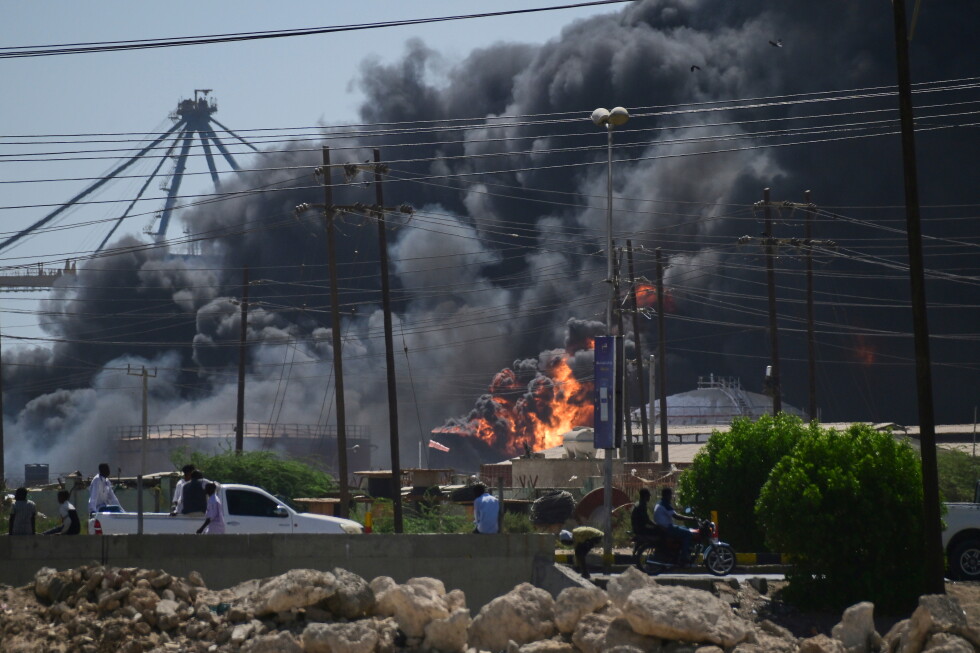
Sudan's civil war, now in its third year, pits the Sudanese Armed Forces (SAF) against the Rapid Support Forces (RSF), a paramilitary group that grew out of the Janjaweed militias notorious for the Darfur genocide. The war erupted in April 2023 amid a power struggle between the two forces' leaders, General Abdel Fattah al-Burhan of the SAF and General Mohamed Hamdan Dagalo, known as Hemedti, who commands the RSF. What began as fighting in Khartoum has metastasized into a nationwide conflict that has killed tens of thousands, displaced more than ten million, and produced what the UN describes as one of the worst humanitarian crises in the world.
Having lost effective control of Khartoum, the RSF has increasingly focused on western and central regions, particularly Darfur and Kordofan, seeking to consolidate territorial control. Earlier in 2026, the RSF's siege and assault on el-Fasher produced mass atrocities, drawing international condemnation and intensifying fears the group would repeat its playbook elsewhere.
That fear has now shifted to el-Obeid, the capital of North Kordofan, a city of strategic importance sitting at the crossroads linking Darfur, Kordofan, and central Sudan. Roughly half a million people are estimated to be trapped there. Control of el-Obeid would allow the RSF to connect its territorial holdings across a vast swath of the country. The city is also home to the Sudanese army's 5th Infantry Division, making it a significant military prize. For months, el-Obeid has been effectively cut off by sustained drone attacks, and the UN Office of the High Commissioner for Human Rights has repeatedly warned the city could become "the next el-Fasher."

Key Developments
The past week has brought a sharp escalation in drone strikes on civilians in and around el-Obeid. On Monday, a guided drone struck a civilian vehicle traveling to a wedding in al-Shaatout, killing thirteen people, including five women. The next day, another drone strike hit a second vehicle carrying wedding guests on a road west of Omdurman, killing ten people, including five women from the same extended family. Sudan's Doctors Network said the Omdurman strike "was deliberate and carried out using a guided drone."
A separate strike hit a transport vehicle near a water facility in North Kordofan, killing two more people, underscoring how strikes have targeted not only civilian gatherings but also basic infrastructure. In just the few days leading up to July 8, the documented attacks killed at least twenty people, though local sources suggest the true toll may be considerably higher.
These recent killings sit within a larger statistical picture. Volker Türk, the UN High Commissioner for Human Rights, told the UN Human Rights Council in Geneva that drone strikes had killed more than 1,000 civilians across Sudan in the first five months of 2026 alone. By early July, his office reported that in just three weeks in June, it had documented fifteen separate drone strikes on el-Obeid and surrounding areas, killing at least forty-five civilians. Officials describe the strikes as "relentless," with weapons launched by both the RSF and, to a lesser extent, the SAF repeatedly hitting markets, schools, water infrastructure, and civilian vehicles rather than exclusively military targets.
Beyond el-Obeid, the broader trajectory of the RSF's Kordofan offensive continues to alarm observers. Despite renewed U.S. diplomatic pressure for a nationwide truce, both sides remain entrenched in pursuit of military victory rather than a negotiated settlement.
Reactions
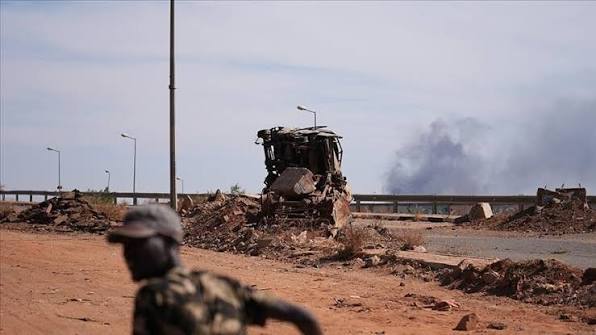
At the UN Human Rights Council, Britain's representative condemned the deliberate targeting of schools, markets, and hospitals. The UAE, whose alleged support for the RSF has been a persistent point of controversy, told the council there was "no military solution" and called for a civilian-led political transition. Russia urged an end to fighting while emphasizing Sudan's unity, avoiding directly assigning blame.
Humanitarian organizations describe a trapped population: unable to safely evacuate el-Obeid given the risk of drone strikes on roads, and unable to rely on city infrastructure given repeated strikes on water facilities and markets. Local medical networks have taken on an outsized role in documenting attacks, and their characterizations of strikes as "deliberate" carry significant weight in shaping the international narrative around potential war crimes.
Within Sudan, the attacks on wedding convoys have generated intense public anguish, echoing a grim pattern in which social gatherings have become targets. The repeated loss of multiple women from the same extended families has underscored how the war's toll falls on entire family networks.
What's Next
The immediate question is whether el-Obeid will suffer the same fate as el-Fasher: a prolonged siege followed by a ground assault accompanied by mass atrocities. The UN's human rights office has explicitly framed the situation in these terms, warning of an impending "catastrophe."
Diplomatically, renewed U.S. pressure for a nationwide truce faces the same obstacle that has undermined previous efforts: neither Burhan nor Hemedti appears to believe a negotiated settlement serves his interests better than continued fighting. Any durable de-escalation would require concerted pressure from the external governments and networks supplying arms to both factions, a step that has so far proven elusive.
In the near term, humanitarian organizations are expected to intensify calls for protected corridors to allow civilians to leave el-Obeid and for accountability mechanisms targeting the use of drones against civilian infrastructure and gatherings. Absent a shift in the military calculus of either side, the pattern of the past week — drone strikes on markets, water systems, and civilian convoys — appears likely to continue, with el-Obeid's half-million trapped residents facing an increasingly narrow set of options for safety.
Sources: Al Jazeera, The National, Washington Post, Arab News, Asharq Al-Awsat, UN News, PBS NewsHour, U.S. News & World Report, Darfur24
Published By | News Editor