PARIS
Some acquisitions are announced with fanfare. Chanel's purchase of Charvet arrived instead the way the shirtmaker itself has always operated: quietly, with the actual substance of the deal doing the talking. Confirmed on July 3, the acquisition ends 188 years of independent ownership for Charvet, the Paris label founded in 1838 by Joseph-Christophe Charvet and widely regarded as the world's first dedicated shirtmaker.
Charvet's headquarters and boutique on Place Vendôme — the same address it has occupied for generations, steps from the Ritz and the great jewelry houses — are now part of Chanel's holdings, though the label will maintain its operational independence and continue running as its own house within the larger company. Financial terms of the deal were not disclosed.
A Deal Born on the Runway
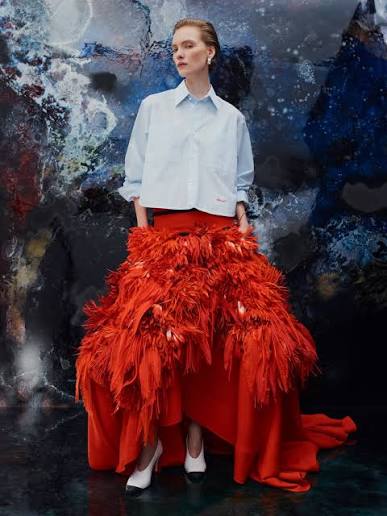
The path to this acquisition runs directly through Chanel's most closely watched moment of the past year: Matthieu Blazy's debut collection as the house's creative director, unveiled last October. For that show, Blazy — poached from Bottega Veneta in an appointment that signaled Chanel's most significant creative shake-up since Karl Lagerfeld's death — commissioned Charvet to produce three oversized cotton button-up shirts, reviving a historic dialogue between the two houses that had lain dormant for years.
That single creative collaboration evidently rekindled something bigger. According to Bruno Pavlovsky, President of Fashion Activities at Chanel, the acquisition reflects a much deeper philosophical alignment between the two maisons rather than a simple supply-chain play. "We share the same approach to savoir-faire: with exacting standards, respect, and the conviction that such skills only truly flourish when rooted in longevity," Pavlovsky said. "With Charvet, this resonance is even stronger, as it forms part of a shared story."
A Story That Predates Both Men
That "shared story" isn't marketing flourish — it has real historical roots. Charvet's relationship with the house of Chanel stretches back to founder Gabrielle "Coco" Chanel herself, who was known to buy Charvet shirts as gifts for her lover, the English-born businessman Arthur "Boy" Capel, in the early twentieth century. Nearly a hundred years later, that personal connection has become a corporate one, with Pavlovsky drawing the throughline explicitly: "Now we have a name, Chanel, for women, and a name for men, Charvet."
It's a framing that hints at Chanel's broader ambitions here — not merely absorbing a heritage name for prestige's sake, but positioning Charvet as the menswear counterpart to Chanel's century-defining womenswear identity, inside a single corporate structure for what may be the first time in either house's history.
Why Buy a Shirtmaker at All
On its surface, a shirt label might seem like a modest acquisition for a house of Chanel's scale. But the strategic logic tracks with a broader pattern across luxury conglomerates in recent years: buying up the small, hyper-specialized ateliers and craft workshops that supply their runway collections, both to secure that expertise exclusively and to prevent rival houses from tapping the same resource. Charvet's reputation for shirting — its fabric sourcing, its made-to-measure tailoring, its command of a category that most fashion houses treat as an afterthought — makes it a particularly strategic piece of infrastructure to control outright, especially as Blazy's Chanel leans further into cross-gender tailoring silhouettes.
Industry watchers have also noted the acquisition secures high-level tailoring talent for Chanel at a moment when such craftsmanship is increasingly scarce and competed over across the luxury sector — a resource, much like rare leather tanneries or embroidery ateliers, that has become as valuable to protect as a design vocabulary itself.
What Stays the Same
For Charvet's existing clientele — a famously discreet, largely bespoke customer base that has included heads of state and old-money Parisian families for generations — the reassurance from Chanel has been that Charvet will continue operating independently, with its own boutique, its own ateliers, and, presumably, its own famously unhurried approach to made-to-measure shirting. Nothing about the acquisition announcement suggested an imminent rebrand or a folding of Charvet's identity into Chanel's broader retail apparatus.
What This Means for Shoppers
For most fashion consumers, Charvet was never an accessible brand to begin with — its shirts run into the hundreds of dollars, with bespoke commissions costing significantly more, and its clientele has always skewed toward old-guard luxury rather than trend-driven shoppers. What this acquisition more realistically signals is a shift worth watching for anyone who follows Chanel's ready-to-wear: expect Blazy's tailoring-forward vision for the house to deepen, potentially with Charvet-produced pieces becoming a recurring, rather than one-off, feature of future collections. It's also a reminder of how consolidated the ownership behind "heritage" luxury labels is becoming — worth knowing next time a treasured, family-run name quietly changes hands.
Conclusion
Charvet outlasted two World Wars, a French Revolution's worth of political upheaval that came after its founding, and generations of changing menswear tastes, all while remaining independently owned. That it took a single collaborative shirt order from Matthieu Blazy to finally bring it under Chanel's roof says as much about the enduring power of a good creative idea as it does about the economics of modern luxury — proof that in fashion, sometimes the biggest business deals really do start with a single well-made garment.
Published By | Features Editor