Written By | Staff Writer
Fuel costs, a sliding currency and capital outflows have pushed prices to a three-year high and forced the central bank's biggest rate rise in over a decade.
Uganda's annual inflation rose to 5.8 percent in October 2026, up from 4.6 percent in September and 4.1 percent in August, according to the Uganda Bureau of Statistics (UBOS). It is the fastest pace since June 2023. Food-crop prices rose 10.7 percent year on year, up from 4.5 percent a month earlier, while core inflation, which excludes volatile items such as raw food and fuel, rose to 4.4 percent from 3.7 percent. That remains below the central bank's 5 percent medium-term core target.
UBOS official Samuel Echoku, head of macroeconomic statistics, said currency depreciation and higher fuel prices contributed to the rise. The Bank of Uganda has blamed the Middle East conflict for higher oil prices and shipping costs and for capital leaving frontier markets. Uganda's current account deficit widened by US$1.4 billion to US$4.6 billion.
An emergency rate hike
The inflation figures followed an unusual intervention. At a special meeting on Wednesday 14 October, the Bank of Uganda raised its Central Bank Rate (CBR) by 225 basis points, from 9.75 percent to 12 percent. According to UgBusiness, it is the largest single hike since 2011, the highest rate since early 2017, and the first change since October 2024. The seven-day interbank rate climbed from 10.63 percent on the Tuesday to 13.25 percent by Friday.
Regular reviews were cut from six to four a year in 2025, and the next is scheduled for 12 November. The bank justified acting early by pointing to a sharper fall in the shilling, a persistent oil shock and forecasts above target, and said it stood ready to take further measures. It had already raised the cash reserve requirement from 11 percent to 13.5 percent effective 24 September.
The bank now forecasts headline inflation averaging 7 to 7.5 percent over the next 12 months and core inflation of 5.5 to 6 percent, up from 4 to 4.5 percent projected in August. It also cut its growth outlook for the year to June 2027 to 6 to 6.5 percent from 7 to 7.5 percent, and said risks to inflation are tilted to the upside.
Fuel and the shilling
Fuel is the main driver. In September, petrol was 30.9 percent more expensive than a year earlier and diesel 42.5 percent more expensive; transport prices rose 9.8 percent, the fastest annual rate since July 2021. Because Uganda imports most of its petroleum and pays in dollars, a weaker shilling raises pump prices even when oil prices are unchanged. Governor Michael Atingi-Ego noted that nearly 80 percent of imports are intermediate goods such as raw materials and machinery, so the effect spreads well beyond fuel.
As an illustration, UgBusiness calculated that US$100 cost about Shs362,000 at the end of 2025 and about Shs415,000 at the opening rate on the Tuesday before the hike. Absa linked the weakness to dollar demand from energy, manufacturing and telecoms importers and to offshore investors leaving. Non-residents held $2.7 billion of Ugandan government debt in June, up from $878 million at the end of 2024, and Citigroup estimated about $200 million left Ugandan markets in the two weeks before the decision.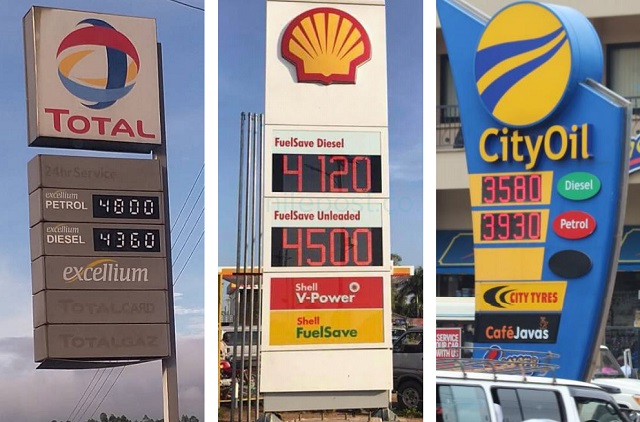
Did the hike steady the currency?
The early evidence is mixed. The dollar fell 4.3 percent on the day of the decision, then rose 4.7 percent between that day's close and Friday's close, erasing the gain. Analysts Stephen Kaboyo of Alpha Capital Partners and Richard Nsubuga of Absa Uganda told Bloomberg that the central bank had intervened, with Kaboyo estimating up to $30 million in dollar sales. The bank did not confirm this. Precedent is unclear: after a 2015 special hike the dollar rose 11 percent over two months, while after a March 2024 increase it eased about 1 percent within a month. President Museveni said on 9 October that selling reserves to push down the dollar would waste them. Gross reserves were $6.52 billion in August, about 3.6 months of imports.
What it means for borrowers and savers
The CBR guides interbank lending; it does not directly set what customers pay. An IMF Economic Review study published in July 2026 found each one-point CBR rise was historically associated with roughly a 0.63-point rise in household lending rates within a quarter, although pass-through has been uneven. In 2022 the CBR rose from 6.5 to 10 percent while average lending rates barely moved. The average shilling loan rate in August was 17.9 percent. Fixed-rate loans keep their agreed rate, while variable-rate borrowers could face higher repayments. About a third of bank lending, Shs9.1 trillion in August, is in foreign currency, so a weaker shilling raises costs for borrowers who earn in shillings. Under the Mortgage Act, lenders must give at least 15 working days' written notice of a mortgage rate change.
For savers, ordinary shilling deposits paid an average of 2.3 percent in August, while deposits held for 7 to 12 months paid 10.2 percent. Treasury bill yields averaged 9.5 to 10.1 percent in September, below the new CBR, and may rise.
What to watch
The 12 November monetary policy meeting is the next test; a further move above 12 percent is possible if the shilling slides again. Other variables include oil prices and shipping costs, whether fuel-driven price rises spread to other goods, harvest conditions that could ease food prices, and how quickly banks reprice loans and deposits. The Rio Times and UgBusiness both stress that it is unclear whether the shilling will hold and how much tighter credit will slow growth.



