A report that President Museveni has endorsed his son for the presidency, and a Law Society demand that the Judicial Service Commission chair resign over a visit to a pro-Muhoozi group, have opened a new front in the politics of succession.
Less than ten months after a disputed general election, Uganda’s politics has turned toward 2031. This week a ruling-party legislator said President Yoweri Museveni had endorsed his son, General Muhoozi Kainerugaba, the serving Chief of Defence Forces. The next day the Uganda Law Society (ULS) demanded the resignation of the chairperson of the Judicial Service Commission (JSC), Dr Douglas Singiza, over his reported appearance at the headquarters of a group campaigning for the general. The two developments bring together three sensitive questions: who will succeed a president who has ruled since 1986, whether the army should be involved in partisan politics, and whether the judiciary can be seen as neutral.
The claims below come from statements by political actors and from reporting that quotes them. Several are allegations or legal positions, and no court has made findings on them.
What has happened
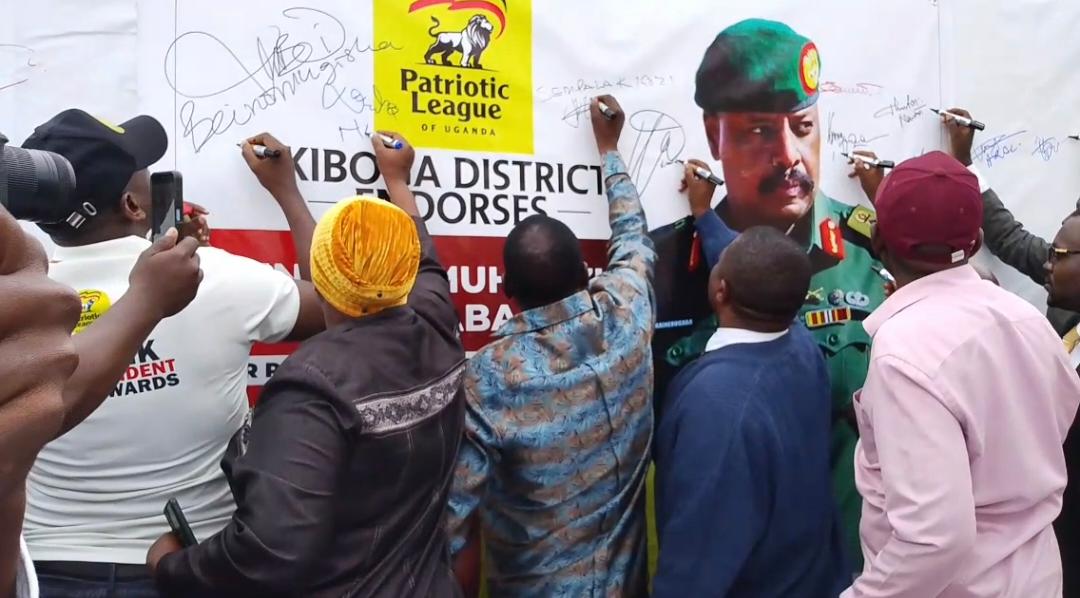
According to reporting carried by allAfrica, on Tuesday Daudi Kabanda, an official of the Patriotic League of Uganda (PLU) and the Member of Parliament for Kasambya County, announced that Museveni had endorsed his son during a meeting of the National Resistance Movement (NRM) Central Executive Committee at State House, Entebbe. Mr Kabanda did not explain the scope of the endorsement, and the report does not say whether the president or the party has confirmed it. It should therefore be read as a claim by a PLU official.
On Wednesday, 28 October, the ULS, led by its president Isaac Ssemakadde, issued a statement saying that Dr Singiza had appeared at the PLU headquarters in Kampala and endorsed General Kainerugaba for political leadership. Photographs circulating online show Dr Singiza being received at the PLU offices by Mr Kabanda and others. According to the report, Dr Singiza had not confirmed or denied the visit, and the PLU described it as a normal visit to a Ugandan organisation. The ULS statement itself said he had endorsed the general, which is the point still in dispute.

The Law Society’s case
The ULS argues that a judicial officer of Dr Singiza’s seniority cannot take part in the activities of a political organisation without damaging public confidence in the judiciary, whose independence is protected under Article 128 of the Constitution. It stresses that the JSC chair has a particular responsibility because the commission recommends judicial appointments and deals with judicial discipline. It also cites judicial conduct standards, including the Bangalore Principles, which require impartiality and restraint from political activity.
The society also questions the PLU itself. It describes the group as an unregistered political organisation led by a serving military officer and cites Article 208(2) of the Constitution, which requires the Uganda People’s Defence Forces (UPDF) to remain non-partisan. It asks whether the group’s activities breach restrictions on the political involvement of serving officers. It wants the Electoral Commission, the Attorney General and the Director of Public Prosecutions to act against what it calls the PLU’s illegal operations, and it urges Speaker Jacob Oboth and Deputy Speaker Thomas Tayebwa to distance themselves from the group.
In addition, the ULS is asking the Chief Justice to state publicly the judiciary’s position on judicial officers attending the premises or functions of political organisations. It also wants the Uganda Judicial Officers Association to condemn the conduct and support a resignation.
A dispute with a court date
The call for resignation is not new ground for the ULS. Constitutional Petition No. 12 of 2025, filed on 4 July 2025, challenges Dr Singiza’s appointment. The society argues that he lacks the “high moral character and proven integrity” the post requires and that, under the Administration of the Judiciary Act, he should have retired after holding a full-time outside appointment for more than three years. An urgent application filed on 8 July 2025 asks the court to stop the JSC operating under his chairmanship while the petition is pending.
The ULS wants both matters heard when the Constitutional Court sits on 3 and 4 November 2026. That timetable is the most concrete thing to watch in the coming week. Earlier this year the society also criticised Dr Singiza over the detention of opposition figure Dr Kizza Besigye, so the relationship between the two sides was already strained before this week.
The PLU and the wider succession push
The Patriotic League of Uganda has been gathering endorsements for General Kainerugaba in several regions. In October, Agriculture Minister Frank Tumwebaze led a group of Tooro MPs to the PLU offices in Kampala to back the general for 2031. On 24 October, former government spokesperson Ofwono Opondo criticised ministers for endorsing a presidential aspirant so soon after the general election. He suggested it could signal low confidence in the incumbent.
That criticism is notable because it comes from a long-standing supporter of the government. The NRM has not, in the material reviewed for this article, issued a formal position on the PLU’s campaign, and the party’s Secretary General, Richard Todwong, was quoted this week on a different subject: the state of the opposition.
The opposition context
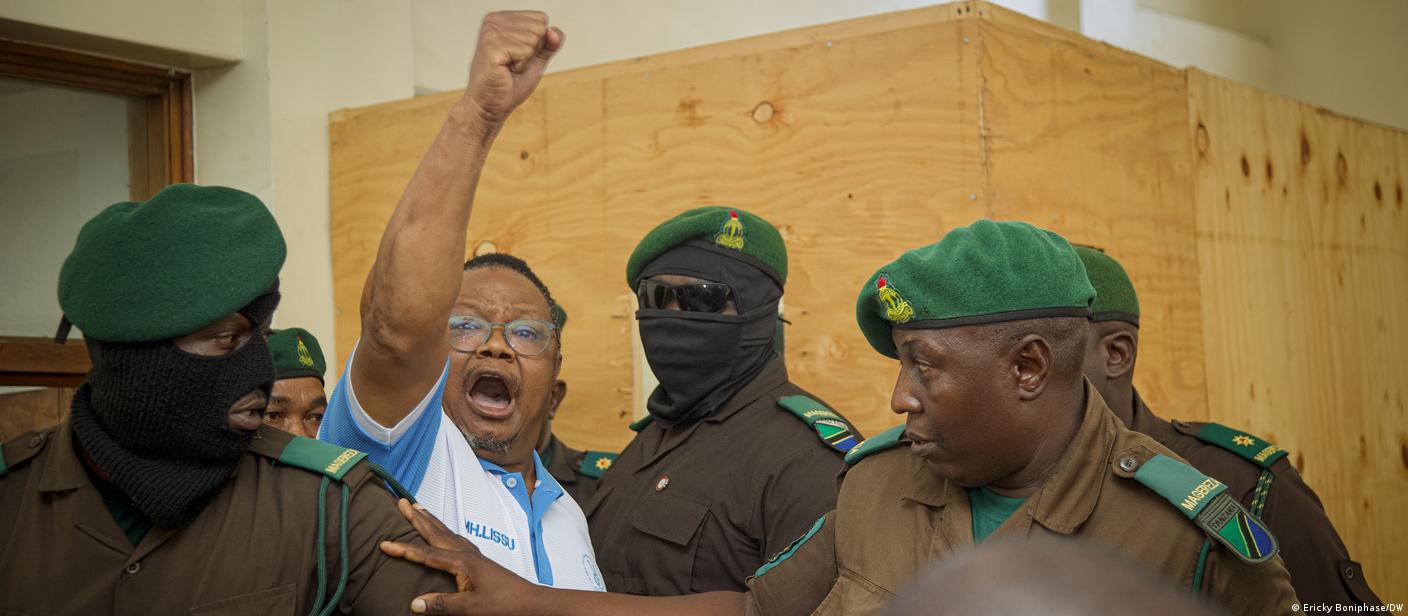
The endorsement row is unfolding against a weakened opposition. Nile Post reported on 26 October that two of the opposition’s best-known figures are out of the picture. Dr Besigye, a former Forum for Democratic Change president, remains in detention on treason-related charges that his supporters call politically motivated. He collapsed during a court appearance in July and was hospitalised, and associates said in October that he was undergoing rehabilitation. Robert Kyagulanyi, known as Bobi Wine, who leads the National Unity Platform (NUP), left Uganda in March after weeks in hiding following the disputed January presidential election. He has said he went abroad for engagements and will return.
Opposition figures quoted by Nile Post disagreed about what the absences mean. Alice Alaso of the Alliance for National Transformation said mobilisation is unsafe while the leaders are out of reach. Political analyst Gerald Karyeija argued the deeper problem is that opposition parties have not built institutions that can function without their founders. Mr Todwong said a stronger opposition would benefit the NRM by forcing it to defend its policies.
The courts have offered little relief to losing candidates. The Daily Monitor reported on 20 October that several post-election petitions have collapsed on procedural grounds, with petitions or key affidavits struck out as late. In one Kampala Central case, 97 affidavits were struck out. The judiciary’s position, as reported, is that electoral justice remains available but that statutory deadlines are mandatory. For critics, this adds to the impression that politically significant disputes are decided before any evidence is heard, which is part of why the question of judicial neutrality carries so much weight.

Why it matters
Three issues meet in this story. The first is succession. Museveni has held office since 1986, and the public discussion of a hereditary handover, though not formally decided, is now being conducted openly by ministers and MPs. The second is the role of the army. General Kainerugaba holds the most senior post in the armed forces while a group named after him recruits political support. Article 208(2) is the legal yardstick the ULS has chosen, and how the Electoral Commission and the Attorney General respond will show how seriously they treat it.
The third is the judiciary’s standing. The JSC chair helps decide who becomes a judge and who is disciplined. If the allegation is accurate, it supports the argument that the institution is not insulated from political pressure. If it is inaccurate, or if Dr Singiza’s visit was routine, the dispute risks becoming a test of how quickly photographs and statements can damage public confidence. Either way, the lack of a response from Dr Singiza leaves the allegation unanswered in public.
What to watch next
The first marker is whether Dr Singiza, the Judiciary or the Chief Justice responds publicly to the ULS demand. The second is the Constitutional Court session on 3 and 4 November and whether the petition and the urgent application are actually heard or adjourned. The third is whether the President or the NRM leadership confirms, qualifies or disowns the reported endorsement. A fourth is any move by the Electoral Commission or the Attorney General on the PLU’s legal status. Finally, observers will look at whether more ministers and MPs visit the PLU, or whether the criticism voiced by Mr Opondo spreads inside the ruling party.
Published By | News Editor