Written By |
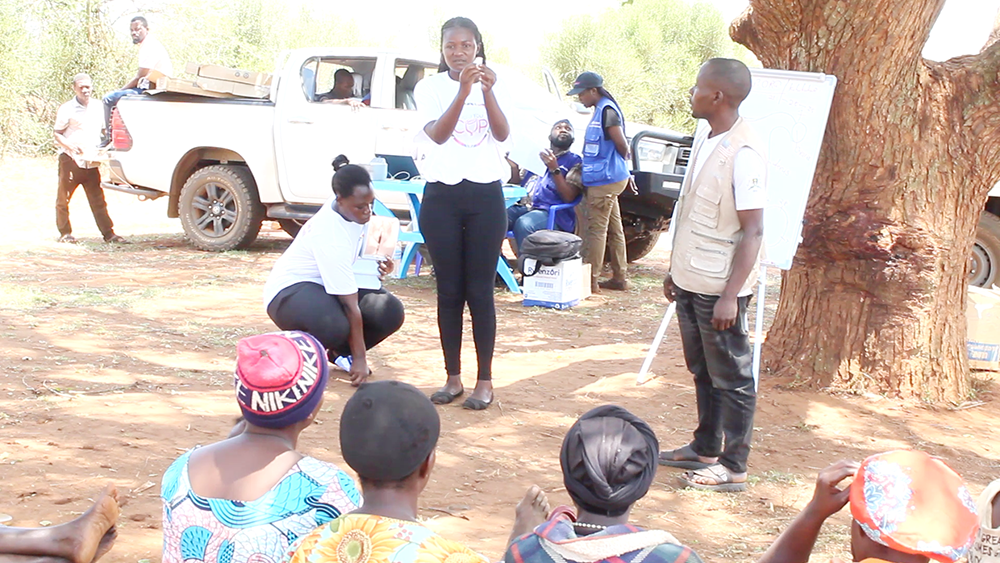
A lady engages women on how to use a menstrual cup in the refugee settlement. [Photo: Jovita Hasto]
By Jovita Hasto
Due to the lack of access to affordable and safe menstrual products, women refugees in the Nakivale Resettlement Camp have long struggled to manage their menstrual hygiene, facing the harsh reality of period poverty. Their stories tell of the daily challenges they endure — from using old clothes and torn kitenge fabric as makeshift pads to dealing with constant water shortages — all of which cause great discomfort and compromise their dignity during menstruation.
However, hope is slowly being restored through the introduction of menstrual cups by Could You?Cup, an organization that promotes menstrual health among disadvantaged communities in refugee settlements across Nakivale, Isingiro District.
Ms. Francine Kyikuru, a refugee from the Democratic Republic of Congo who has spent four months in the camp, says she initially found it extremely difficult to manage her monthly periods hygienically. She relied on sanitary towels made from old clothes, but the lack of water made it hard to clean them.
“Getting water to clean our towels was difficult. It’s a two-hour journey to and from the water source, which affected our hygiene,” she said.
Ms. Kyikuru explains that the process of washing the makeshift towels often made her feel unwell and disrupted her daily routine.
“When it came to washing sanitary towels, I would feel nauseated and uneasy for the rest of the day. But after I started using a menstrual cup, everything became easier to use and clean.”
She added, “A menstrual cup has brought me relief because it prevents staining, and I can now walk long distances even during my period. When I used towels, I was never comfortable — I was always worried about leaks.”
Another refugee, Ms. Rehema Jantie, also from Congo, shares similar experiences. She says her four months in the refugee camp have been difficult due to the challenges of maintaining reusable sanitary pads in an environment with limited water.
“Washing reusable pads requires a lot of water, yet we fetch it from dams, which takes long hours. It’s difficult because you can’t keep dirty pads — they start to stink,” she explained.
Rehema notes that back in Congo, women could cultivate crops and earn money to buy sanitary pads. However, life in Uganda has been different, forcing her to adopt new methods for menstrual hygiene.
“We received menstrual cups from an organization and were taught how to use them. We are thankful because even with little water, we can stay clean. Cleaning the cup is easier than washing reusable pads,” she said.
Ms. Moris Ninsiima, Rotary President of Kitukutwe, said the initiative to provide flexible menstrual cups is supported by ALIGHT and Could You?, aimed at empowering reproductive-age women and girls to regain confidence and participate in daily activities.
“We believe that by supporting these women and girls, we can end menstrual stigma. They no longer have to move around with stains that cause shame. We are also sensitizing communities to end the stigma around menstruation,” she said.
Ms. Ninsiima added that their mission is to help women in disadvantaged communities overcome menstrual poverty. “We want vulnerable women to survive the stigma caused by menstruation. We aim to reduce menstrual poverty and engage men to play a role in supporting women and girls, especially when mothers are away,” she explained.
Ms. Sharon Asiimwe Musimenta, a team leader from Could You?, said their intervention was driven by the urgent need to improve menstrual health among women in the camp.
“Most women here have been using old pieces of cloth because they cannot afford sanitary pads,” she said. “The menstrual cup can last up to ten years and uses very little water compared to reusable pads.”
Ms. Asiimwe added that the initiative has restored hope among vulnerable women and girls.
“We are happy to see these women now using menstrual cups that will sustain them for many years. We shall continue engaging them on menstrual health to ensure they remain confident and comfortable,” she said.
Torch Media Africa



