World Politics
Overview
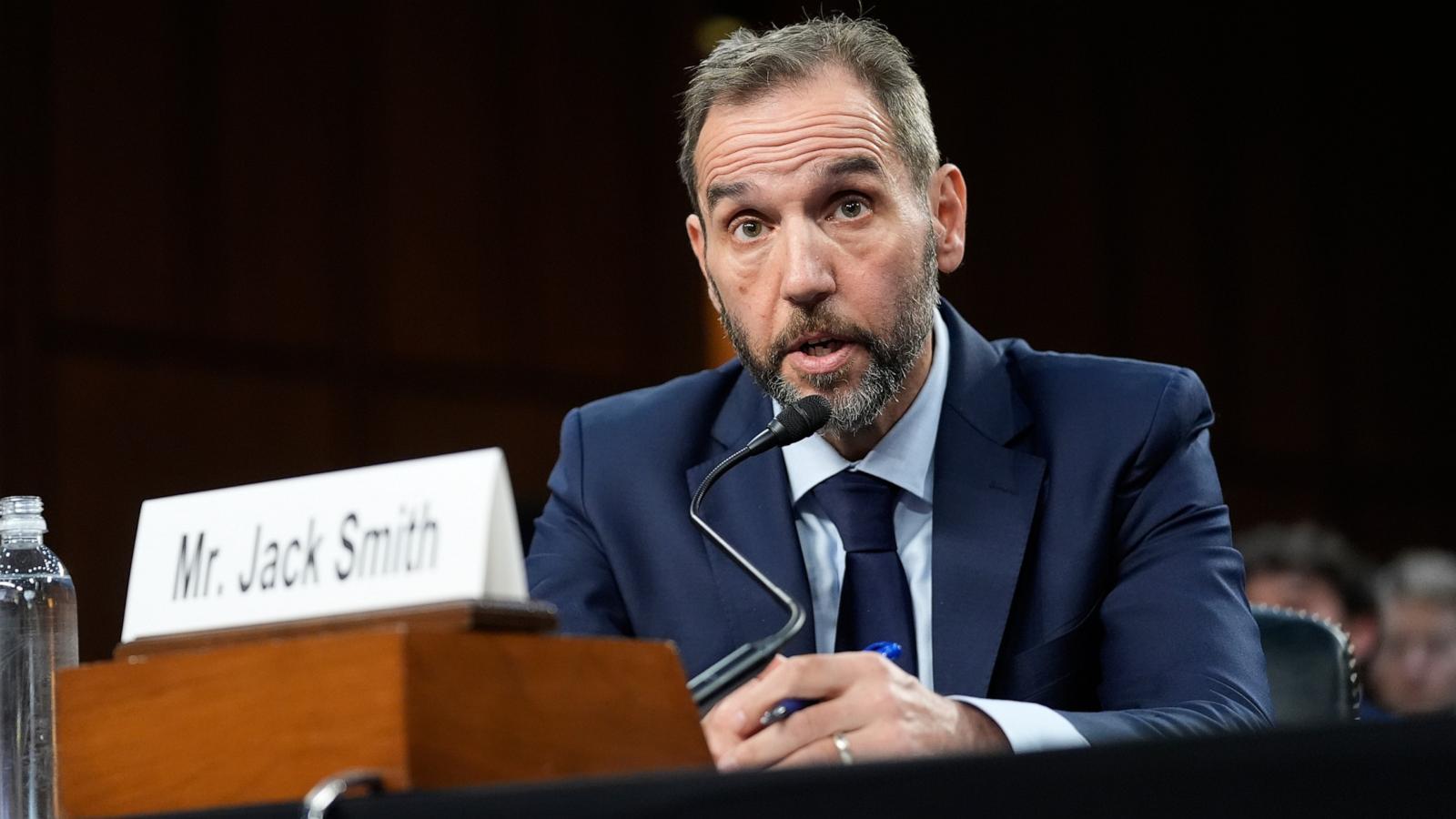
Former Special Counsel Jack Smith returned to public view on Tuesday, September 29, 2026, testifying before the Senate Judiciary Committee in a hearing that revealed how sharply the country remains divided over the two criminal cases he brought against Donald Trump. Smith, who led the Justice Department's investigations into the 2020 election aftermath and the handling of classified documents at Mar-a-Lago, told senators, "I stand by my decisions as special counsel, including my decision to bring charges against President Trump." He added that he would have pursued the same course "regardless of whether that President was a Republican or a Democrat." CNN's live coverage led with his assertion that the evidence gathered proved, beyond a reasonable doubt, that Trump engaged in serious crimes.
The hearing was convened by the Republican majority under Chairman Chuck Grassley of Iowa as part of an oversight effort that the GOP calls "Arctic Frost," a reference to an FBI investigation approved in April 2022 that Republicans say grew into a politically motivated dragnet. Democrats, led by ranking member Dick Durbin of Illinois, viewed the session very differently, as an attempt to relitigate and whitewash the events of January 6 and to discredit the prosecutor who pursued them. The result was a long, combative day that produced sharp exchanges, at least one memorable blunder by a Republican questioner, and few signs that either side moved the other. One note on the record: a summary from PBS gave the hearing date as September 28, while CNN, the Senate Judiciary Committee and other outlets place it on September 29, and this article uses the latter.
Background: Two Cases That Never Reached a Jury
Smith was appointed special counsel in November 2022 and brought two federal indictments against Trump: one over efforts to overturn the 2020 election result, and one over the retention of classified documents after he left the White House. Neither case ever reached trial. After Trump won the 2024 presidential election, Smith moved to dismiss both, citing the longstanding Justice Department policy against prosecuting a sitting president. He has since become one of the most polarizing figures in American public life, a villain to Trump's allies and a symbol of accountability for his critics.
In the months since, Republicans in Congress have turned their attention to how Smith's team gathered evidence. Representative Jim Jordan of Ohio previously referred Smith for potential prosecution, alleging that he misled Congress about the acquisition of phone records, a claim that Smith's attorneys have disputed. Grassley has meanwhile released a series of documents under the Arctic Frost banner that he says raise questions about Smith's conduct and candor. Tuesday's hearing was the first time Smith answered these accusations directly and publicly before senators.
The Republican Case
Grassley opened the hearing by arguing that the committee had needed to collect records first and hear from Smith later. Had the panel followed what he called Democrats' "misguided and dangerous demand" for an earlier hearing, he said, "we wouldn't have had most of the necessary records needed to show how Jack Smith's corrupt operation undermined the rule of law." The chairman then laid out a series of figures. According to his statement, Smith's team obtained toll records, which show the dates, times and durations of calls but not their content, for 16 members of Congress, compared with four obtained by earlier prosecutors in comparable circumstances. Grassley also said investigators obtained communications content involving 44 members of Congress through the subpoena of 87 phones tied to the Trump White House, and that the broader inquiry sought records tied to hundreds of Republican groups and to more than a dozen news organizations, including Fox News, CNN, the Associated Press and the Washington Post.
Grassley accused the team of violating the Constitution's Speech or Debate Clause, of using non-disclosure orders to keep lawmakers in the dark, and of leaving classified facilities unsecured while prosecuting Trump over classified records. He also raised allegations about surveillance warrants connected to an FBI agent. These are the chairman's claims, presented in a partisan setting, and several of them were contested by Smith and by Democrats on the panel; they should be read as allegations rather than established findings.
Other Republicans went further in tone. Senator Ted Cruz of Texas told Smith, "You have done an enormous damage," and called his work "the most egregious abuse of power in the history of the Department of Justice." Coverage described a hearing filled with GOP insults, with one senator reportedly calling Smith a "villain" and a "dirtbag," and Senator Josh Hawley of Missouri was described by conservative outlets as confronting Smith in an explosive exchange. Some Republicans argued openly that Smith should himself face prosecution.


Smith's Defense
Smith, described by CNN as a confident witness, did not give ground. He defended the legal basis of both prosecutions and said that anyone who had worked with him knew he would not let politics play a role in his decisions. He characterized the current environment as an "unprecedented assault on the rule of law," and, according to MS NOW's account, he sharply criticized what he called the "illegal" firings of Justice Department prosecutors, a reference to the dismissal of lawyers who worked on the Trump investigations.
On the phone records at the center of the Republican complaint, Smith explained that toll records are a standard investigative tool. His team, he said, obtained them with Justice Department approval, and the numbers in question were those of lawmakers whom Trump himself contacted around January 6, 2021. That last point was echoed by Durbin, who told the committee that Smith "did not choose those Members, President Trump did." Smith's position, in short, was that the investigators followed the evidence to the people Trump was trying to recruit into his effort to overturn the election.
The Democratic Response and a Notable Stumble
Democrats used their time to revisit the evidence of January 6 and the pressure campaign on state officials. Durbin accused Republicans of spreading "baseless conspiracy theories" and called their attacks "petty, personal and political," adding that the subpoenas were a "legal procedure created by Congress and regularly deployed by federal prosecutors." He argued that the committee's time would be better spent on present-day threats to democracy, including election interference and federal enforcement actions. Senator Cory Booker of New Jersey said Republican efforts amounted to "gas lighting the American people" about the 2020 election.
The hearing also produced an unexpected moment of levity. Senator Eric Schmitt of Missouri questioned Smith about his attendance at a basketball game, apparently attempting to catch him in an inconsistency. It later emerged that Schmitt had confused two different events: the game in question was an Iowa Hawkeyes women's game in Maryland, not an Atlanta Hawks game in the NBA. CNN cast the mix-up as a lesson in how not to set a perjury trap, and it quickly circulated as the hearing's most quotable episode.
The Wider Legal Backdrop
The hearing did not occur in isolation. The same day's political news, as compiled by the Mueller, She Wrote newsletter, a partisan outlet that should be read accordingly, noted that the full DC Circuit heard arguments over Judge James Boasberg's contempt inquiry, that the Eleventh Circuit declined to block sanctions against the Justice Department in a separate case, and that a Trump-aligned lawyer, Kurt Olsen, withdrew from a so-called grand conspiracy investigation. NBC News framed the hearing itself in terms of a Justice Department that is targeting investigators who pursued Trump. Taken together, these developments show how the legal fights of the last several years have moved from courtrooms to oversight hearings, appellate arguments and the personal fortunes of the officials involved.
Reactions and Implications
For Republicans, the hearing served as a platform for a narrative that has grown steadily in conservative politics: that the Trump prosecutions were the product of a weaponized Justice Department and that lawmakers were collateral damage. For Democrats, it was an opportunity to remind voters of the underlying conduct that prompted the investigations, only five weeks before the November 3 midterm elections. Neither party appeared to have expected to persuade the other. Analysts watching the session noted that its real audience was the electorate, and that both sides sought material they could use in campaign messaging.
The practical stakes are nevertheless significant. If the Justice Department were to pursue a case against Smith, it would mark a striking moment in which a prosecutor is prosecuted for the cases he brought. Republican calls for such action are growing, though no charges have been announced, and Smith's lawyers maintain that the allegations against him are unfounded. The dispute over congressional toll records also raises legitimate legal questions about the boundaries of the Speech or Debate Clause, which courts may eventually be asked to settle.
What Comes Next
Grassley has signaled that the Arctic Frost oversight effort will continue, and further document releases are likely. Jordan's referral remains a live threat, and the broader fight over the firing of prosecutors is heading toward judicial rulings. For Smith, the testimony delivered a defense on the record, one that he can point to should he face any further legal action. For the country, it was a reminder that the events of 2020 and 2021 remain unresolved political territory, and will likely remain so through the midterms and beyond.
Published By | News Editor