Hong Kong
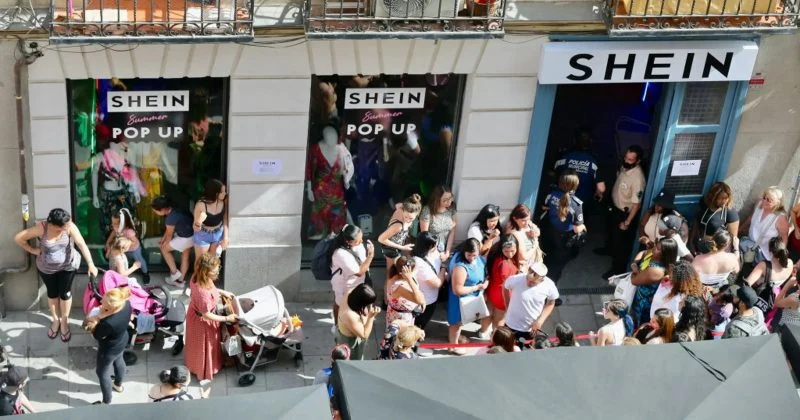
For a company that built its empire on speed — churning out thousands of new clothing styles a day, shipping them from Chinese factories to teenagers' bedrooms in a matter of days — Shein's long walk toward the public markets has been anything but fast. This week, the fast-fashion giant confirmed what industry watchers had been bracing for: its already-delayed Hong Kong initial public offering is being pushed back again, this time to September 1, alongside a valuation target that has been cut dramatically from where the company once stood.
According to reporting from the South China Morning Post and confirmed by multiple outlets, Shein delayed the start of investor order-taking for its IPO, shifting its planned listing date from August 28 to September 1. The company now intends to begin formal book-building — the process where institutional investors place orders and help set the final share price — from August 24. It is a small delay in calendar terms, but a significant one symbolically: another postponement in a listing saga that has now stretched across multiple markets, multiple years, and multiple valuation resets.
From $100 Billion to Roughly a Quarter of That
The headline number tells the real story. Shein is now targeting a valuation of somewhere between $26 billion and $27 billion for its Hong Kong debut — a steep drop from the $30 billion to $40 billion range investors were told to expect when pre-IPO meetings first began, and a staggering collapse from the $100 billion valuation the company achieved during a private fundraising round back in 2022, at the height of pandemic-era e-commerce enthusiasm.
That trajectory — from $100 billion aspirational value to a listing target roughly a quarter of that size — reflects one of the more dramatic valuation resets in recent retail history, and it hasn't happened in a vacuum. Shein's IPO journey has been a study in market rejection: the company first pursued a U.S. listing, before regulatory and political pressure over its Chinese supply chain and labor practices made that path untenable. It then turned to London, where similar scrutiny — plus concerns from UK regulators about forced-labor allegations in its supply chain — stalled progress there too. Hong Kong became, in effect, the fallback option, and even there, the road has been rocky.
Why Investors Have Cooled
The valuation cuts track closely with a sharp deceleration in Shein's underlying business. According to figures reported by financial outlets, the company's revenue growth has fallen off a cliff over the past three years: 41.1% growth in 2023, down to 20.7% in 2024, down further to just 8% in 2025, and a mere 1.1% in the first quarter of 2026 — essentially flat growth for a company that built its reputation, and its valuation, on relentless expansion.
The primary culprit, according to analysts, is trade policy. U.S. customs duties and tariffs imposed on low-cost Chinese imports since May 2025 have directly squeezed Shein's core business model, which for years relied on shipping huge volumes of inexpensive individual packages directly to American consumers, often exploiting duty-free thresholds for low-value shipments. As those thresholds and exemptions have tightened — a policy shift a U.S. trade court recently declined to reverse — Shein's cost structure has been upended, forcing price increases that cut against the ultra-low-cost positioning that made the brand a phenomenon in the first place. A parallel dispute over apparel tariffs, this time hitting Canadian imports at a rate of 50%, has added further pressure across the broader fast-fashion and textile trade, even for companies not directly targeted by it.
A CEO Exodus and a Communications Vacuum
Compounding investor unease, Shein has seen a wave of executive departures in the run-up to its listing, including its top communications officer, who is leaving the company amid a broader wave of leadership changes ahead of incoming CEO Heidi O'Neill's arrival. For a company already facing intense scrutiny over labor practices, environmental impact, and product safety, a thinning communications and leadership bench during the most closely watched financial event in its history is, to put it mildly, an unusual look — and one that has done little to reassure institutional investors weighing whether to place orders during the newly compressed book-building window.
Industry Perspective
"Shein's three-year IPO delay cost it the golden time to go public," one financial analysis noted, capturing a sentiment widely shared across the investment community: that the company missed its optimal window during the peak of pandemic-fueled e-commerce growth, and has spent the years since trying, and repeatedly failing, to recapture that momentum in front of public markets. Each additional delay, and each additional valuation cut, has made the eventual listing look less like a triumphant debut and more like a company settling for whatever terms the market will currently bear.
What This Means for Shoppers and the Fashion Industry
For everyday consumers, Shein's IPO drama may seem like distant financial-page noise, but it has real implications for the fast-fashion ecosystem millions of shoppers rely on for cheap, trend-driven clothing. A company under this much investor and regulatory pressure typically responds in one of two ways: raising prices to protect margins, or doubling down on volume and speed to defend market share — both of which shape what's available, and at what cost, to the shoppers who built Shein into a household name in the first place. The broader tariff environment squeezing Shein is also reshaping pricing across the fast-fashion sector more broadly, from direct competitors like Temu to traditional retailers now competing with a wounded but still-massive rival.
Conclusion
Shein's September date is unlikely to be its last delay-free milestone. With book-building now scheduled to begin August 24 and the listing targeted for September 1, the company faces a narrow window to convince skeptical institutional investors that a $26 billion to $27 billion valuation — a fraction of its once-lofty ambitions — represents a floor rather than just another waypoint on the way down. For an industry watching closely, Shein's IPO has become less a celebration of fast fashion's staying power and more a real-time case study in what happens when hypergrowth meets tariffs, scrutiny, and a market that has finally learned to ask harder questions.
Published By | Features Editor