Written By | Health News Agencies
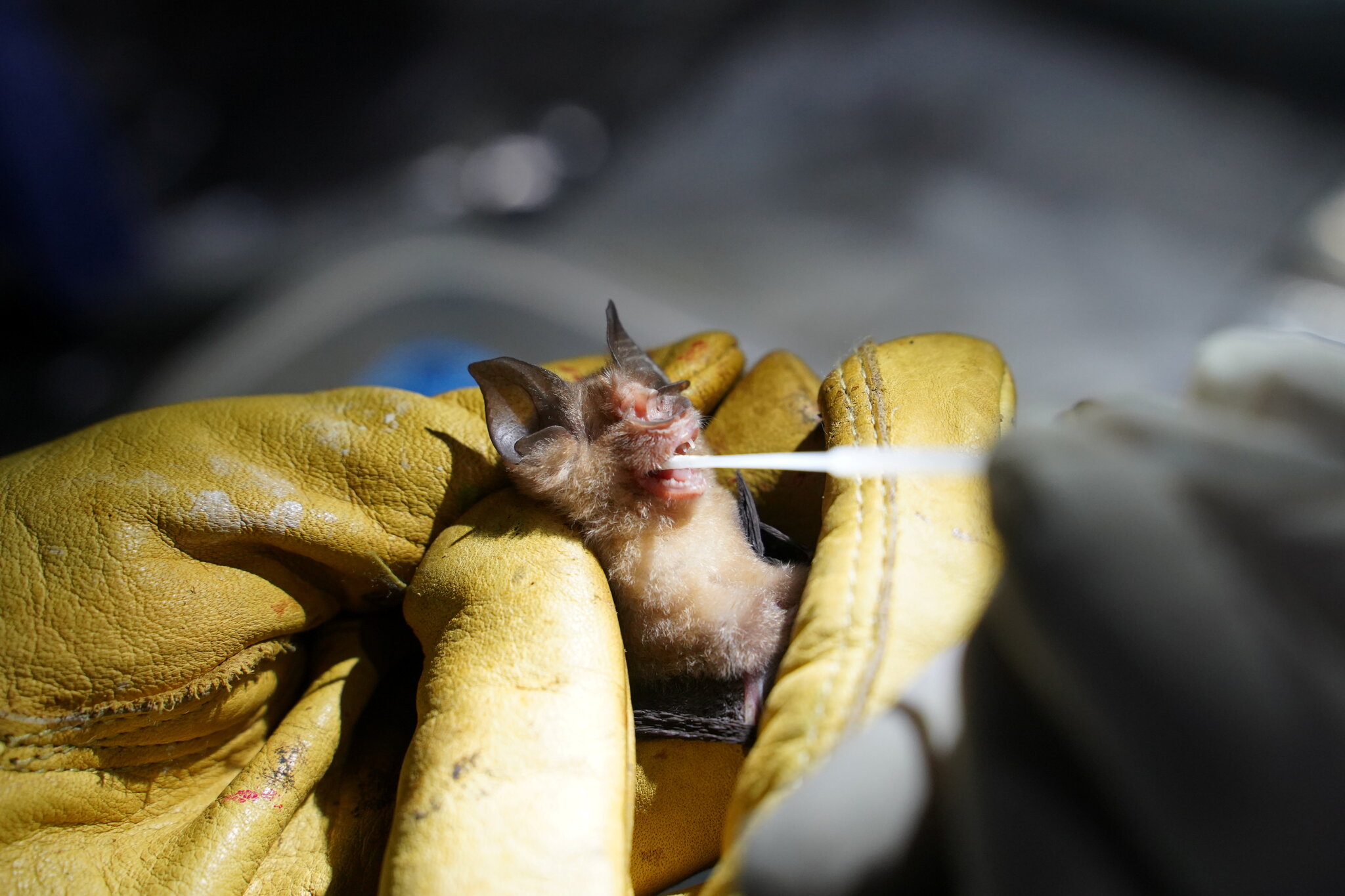
A 9-year-old boy on a ventilator. A virus with no vaccine and a kill rate up to 75%. And a health department that has now done this dance six times since 2018. Welcome to Nipah season.
KOZHIKODE, INDIA
Somewhere in the humid backwaters of Kerala's Kozhikode district, a fruit bat took a bite out of a date palm, or a mango, or simply flew low enough over an open well. That single, invisible moment — one nobody has been able to trace, even a month later — is now the reason a 9-year-old boy is lying in an intensive care unit hooked to a ventilator, and the reason 104 people across southern India are being watched twice a day for a fever that could turn into a death sentence.
This is Nipah virus. It has no cure. It has no licensed vaccine. And for the sixth time since 2018, it has found its way back to the one corner of the world that seems unable to shake it.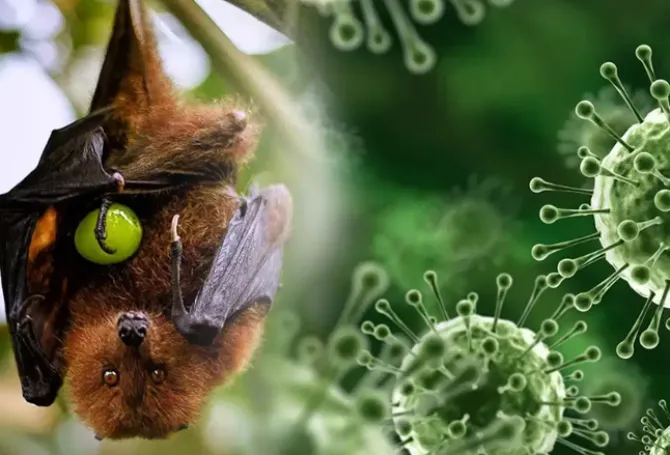
A Virus That Keeps Finding Its Way Home
On June 11, 2026, Kerala's State Health Department confirmed what local doctors had feared the moment the patient's symptoms turned neurological: a laboratory-confirmed case of Nipah virus infection, caught not by a routine screening but by clinicians sharp enough to recognize a pattern they have now seen too many times.
The patient, according to the World Health Organization's Disease Outbreak News bulletin, is an adult male resident of Kozhikode who first developed symptoms on May 30 — fever, headache, the kind of dull muscle aches that get waved off as flu. By June 10 he was admitted to hospital. By the time doctors got a positive PCR result, he was already sliding into the disease's most dangerous phase: encephalitis, the brain-swelling complication that turns a bad fever into a fight for survival. He was intubated and placed on ventilatory support in the ICU, where — as of this week — he remains.
Separately, Kerala Health Minister Veena George confirmed that a 9-year-old boy hospitalized with Nipah in Kozhikode was also placed on a ventilator in intensive care, and that officials had ordered monoclonal antibody therapy in a bid to save him — an experimental treatment that has shown promise in lab settings but has never been formally proven effective in a large clinical trial. It is, quite literally, the best shot doctors have, because there is nothing else.
Confirmation came fast, and so did the machinery of a state that has, tragically, gotten good at this. Initial positive results from local labs were sent for confirmation to the National Institute of Virology in Pune. A National Centre for Disease Control team and an Indian Council of Medical Research expert team were on the ground in Kozhikode within two days. Isolation wards were stood up at Kozhikode Government Medical College Hospital. A control room went live to field public panic calls. And contact tracers fanned out to build what is now a list of 104 people under active monitoring — four classified "very high-risk," 14 "high-risk," and 86 "low-risk," including 45 healthcare workers who treated the patient before anyone knew what they were dealing with.
As of this week, WHO reports zero secondary cases. That is the one piece of good news in an otherwise grim update — and it's the number everyone in Kozhikode is watching most closely, because if it changes, everything changes with it.
The Deadliest Virus You've Probably Never Worried About
Here is why doctors don't relax around Nipah the way they might around, say, a norovirus outbreak: the case fatality rate sits between 40% and 75%, depending on how fast a patient reaches intensive care. That range — comparable to Ebola, and in some outbreaks worse — comes from decades of data across Bangladesh, India, Malaysia and Singapore, the only four countries that have ever recorded human Nipah cases since the virus was first identified in 1998 during an outbreak among Malaysian pig farmers.
Nipah's natural reservoir is the fruit bat — specifically bats of the genus Pteropus, commonly called flying foxes, which roost across huge swaths of South and Southeast Asia and, crucially, love the same fruit trees and date palm groves that rural communities in Kerala depend on. The virus spreads to humans mainly through contact with bat saliva, urine or droppings — most infamously via raw date palm sap, a seasonal delicacy across the region that bats are drawn to at night and often contaminate before it's collected the next morning. From there, once a human is infected, the virus can spread person-to-person through close, unprotected contact — which is exactly why 45 healthcare workers are now on Kerala's watch list.
Symptoms start deceptively mild: fever, headache, muscle pain, vomiting, sore throat. Within days, some patients begin to spiral — dizziness, drowsiness, altered consciousness, and finally the seizures and encephalitis that can drop a patient into a coma within 24 to 48 hours. Others develop severe respiratory complications instead of, or alongside, the neurological symptoms. There is no antiviral drug approved to treat it. There is no vaccine to prevent it. Medicine's entire toolkit against Nipah amounts to supportive care — fluids, oxygen, seizure management — and, in this outbreak, an unproven monoclonal antibody therapy that Kerala health officials are using because the alternative is doing nothing at all.
That combination of high lethality and zero specific treatment is exactly why the WHO placed Nipah virus (formally Henipavirus nipahense) on its priority pathogen list under the R&D Blueprint for Epidemics — the same watchlist reserved for diseases considered most likely to cause a serious international public health emergency, alongside the likes of Ebola, Marburg and Disease X.
Kerala's Uncomfortable Pattern
If this all sounds oddly familiar, it should. Kerala has now recorded Nipah outbreaks in 2018, 2019, 2021, 2023, 2025 and again in 2026 — a pattern so consistent that local health officials have designated April through September as an official "Nipah high-alert period" every single year. The 2018 outbreak, the state's first and deadliest, killed 17 of 19 confirmed patients — a fatality rate above 89%. Nothing since has come close to that scale, largely because Kerala built out serious surveillance and rapid-response infrastructure in the years after. But "not as bad as 2018" is a low bar when the disease in question still kills close to half the people it infects.
This is also not India's only Nipah event this year. In January 2026, two healthcare workers in West Bengal state were confirmed infected and subsequently died — a separate, epidemiologically unlinked cluster nearly 2,000 kilometers from Kerala that triggered enhanced airport screening across Indonesia, Malaysia, Nepal, Pakistan, Singapore, Thailand and Vietnam. That outbreak was declared contained by late January. This Kozhikode case is, per WHO, the second distinct Nipah notification from India in 2026 alone.
Scientists studying the pattern increasingly believe it isn't random. A recent analysis published in the journal npj Viruses noted that recurrent Nipah spillover in Kerala — geographically distinct from the historical Bangladesh outbreak pattern — likely reflects a mix of bat ecology, land-use change pushing human settlements closer to bat roosting sites, and Kerala's unusually high consumption of fresh fruit and date palm products compared to other Indian states. In response, Kerala's Health Department has now formed a State High-Power Committee for Epidemic Control — a multi-sectoral group pulling in clinicians, veterinarians, food safety officials and even practitioners of Ayurveda and traditional medicine systems — specifically tasked with figuring out why this keeps happening and what, structurally, might stop it.
Animal Husbandry officials have already collected bat specimens and fecal samples from roosting sites within a 5-kilometer radius of the presumed epicenter, all shipped to the National Institute of High Security Animal Diseases in Bhopal for testing. Results are still pending. Meanwhile, door-to-door health surveys covering 320 households and 1,047 residents in the surrounding municipality have so far turned up zero additional Nipah-compatible symptoms — another cautiously reassuring sign, though officials are careful to note the incubation period can stretch as long as 45 days in rare cases, meaning it's too early to fully exhale.
What The Experts Are Watching
WHO's official risk assessment, updated June 25, describes the current event as "geographically limited," with no evidence of international spread and no secondary human-to-human transmission confirmed. The global risk, in WHO's words, "remains low." But the agency is notably more cautious about the local and national picture, describing an "ongoing moderate sub-national risk, driven by recurrent zoonotic spillover, limited clinical specificity during the early stages of disease, and the absence of licensed vaccines or specific therapeutics."
Translated out of health-bureaucrat-speak: the virus could still be circulating in the local bat population, nobody has found where this particular patient caught it, and because early Nipah symptoms look exactly like a hundred other common illnesses, there's a real chance a second case could slip through before anyone recognizes what they're looking at.
Kerala Health Minister Veena George has repeatedly emphasized that the state's strategy hinges entirely on speed: "The focus is on tracing contacts of infected persons early and isolating anyone with symptoms," she said, underscoring that with no drug or vaccine to fall back on, early detection is the only lever public health officials actually have to pull. It's a blunt admission of how little modern medicine can currently offer against a virus first identified nearly three decades ago.
What This Means for You
Unless you live in or are traveling to Kerala, Bangladesh, Malaysia or parts of the Philippines and Singapore, your personal risk from this outbreak is essentially zero — WHO is not recommending any travel or trade restrictions, and there is no evidence of the virus spreading beyond a tightly contained cluster in one Indian district. This is not a repeat-of-COVID scenario; Nipah does not transmit anywhere near as efficiently between humans, and every outbreak since 1998 has been successfully contained through old-fashioned isolation and contact tracing rather than global spread.
But if you are planning travel to the region during Nipah season (April through September), health officials have simple, practical advice: avoid raw or unpasteurized date palm sap, a delicacy sold seasonally at roadside stalls across Bangladesh and Kerala; wash and peel all fruit thoroughly, and discard anything showing signs of bite marks; and avoid areas where fruit bats are known to roost. If you or anyone you know develops a sudden high fever with confusion or altered consciousness after visiting an affected region, doctors stress that seeking care immediately — not waiting it out — is the single biggest factor in surviving a disease this dangerous.
The Bigger Picture
Nipah virus won't dominate global headlines the way Ebola or a new pandemic strain might — its outbreaks tend to stay small, contained by geography and by the kind of aggressive, boots-on-the-ground public health response Kerala has now practiced six times over. But that containment comes at a real human cost each time it happens, measured in ICU beds, in families under quarantine, and now in a 9-year-old boy whose survival may hinge on a therapy nobody has proven actually works.
Researchers are pushing on vaccine candidates — several are in early development, spurred in part by WHO's priority-pathogen designation — but none has yet reached the finish line. Until one does, Kerala's playbook will remain the same every spring: watch the bats, watch the fevers, and hope this is the year the case count stays in the single digits.



