Written By |
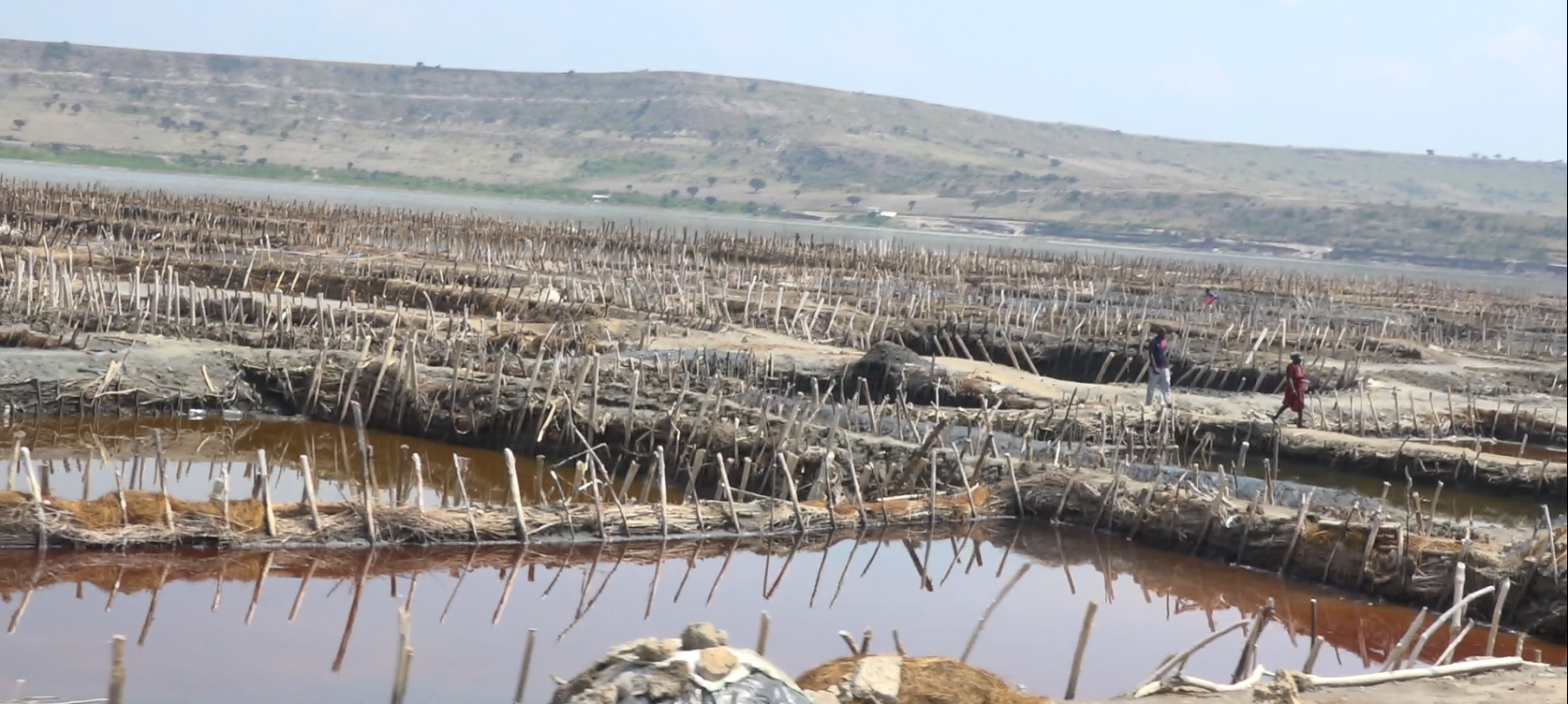
Lake Katwe stands as a testament to the harmony between people and nature. (Photo by Kapimpina Moris)
By Kapimpina Moris
Tucked within the heart of Queen Elizabeth National Park—where vast savannahs stretch toward distant horizons and elephants roam freely—lies a lake that glistens under the Ugandan sun, not with fresh water, but with salt. This is Lake Katwe, a mysterious crater lake born of volcanic fire, now quietly shaping the lives of those who call it home.
My journey to Lake Katwe began along a dusty road winding through the countryside of Kasese. As I approached the lake, the scent of minerals carried by the breeze greeted me. A shimmering, greyish-blue body of water lay calmly before me, ringed with hundreds of square salt pans that looked like checkerboards laid across the landscape. Lake Katwe is no ordinary lake. Formed over 10,000 years ago by violent volcanic eruptions, this crater lake now serves a peaceful yet powerful purpose—salt mining.
I was welcomed by a local guide, Mr. Nicholas Kagongo, who has worked in these salt pans for many years. “Here,” he said, scooping up crystallized salt from one of the pans, “our people have harvested salt for generations. This is how we survived long before roads or money.”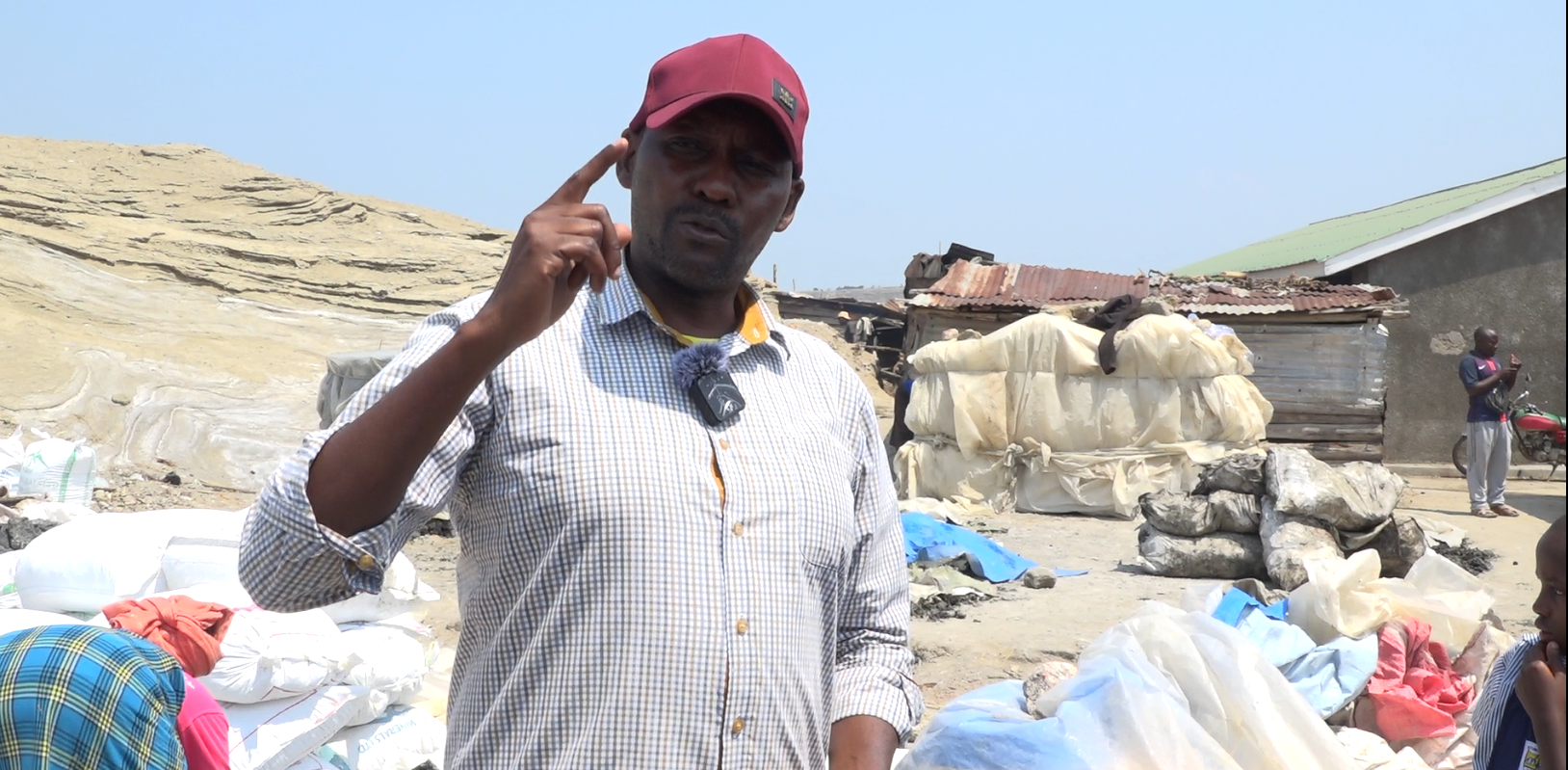
Mr. Nicholas Kagongo –Director Katwe Tourism Information Centre (KATIC). (Photo by Kapimpina Moris)
The salt pans are managed by local families and passed down like heirlooms. Men and women in wide-brimmed hats moved gracefully through the shallow waters, harvesting salt with practiced ease. It’s demanding work under a relentless sun, but it carries pride—the pride of heritage, survival, and resilience.
Mr. Nicholas explained that three types of salt are extracted here:
“Even the ancient kings of Buganda and Tooro knew the value of Katwe salt,” he told me. “It was our currency.”
Beyond its economic significance, Lake Katwe stands as a testament to the harmony between people and nature. Although the lake itself is too salty for fish, it is surrounded by wildlife-rich habitats. Nearby is Lake Munyanyange, a seasonal bird sanctuary where we spotted migratory flamingos and African spoonbills, their vibrant plumage reflected in the still waters.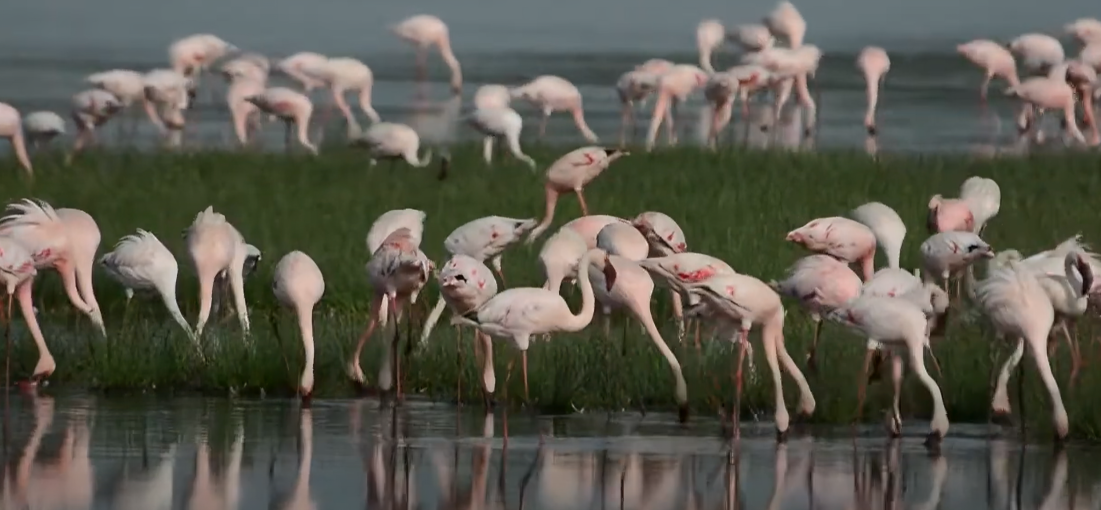
Some of the migratory flamingos at Lake Munyanyange
Tourism here is community-led and authentic. Visitors are guided by local residents who share their deep knowledge and cultural pride. Activities include salt harvesting (boots and all!), cultural storytelling, and traditional dance performances. It’s one of Uganda’s most enriching cultural tourism experiences.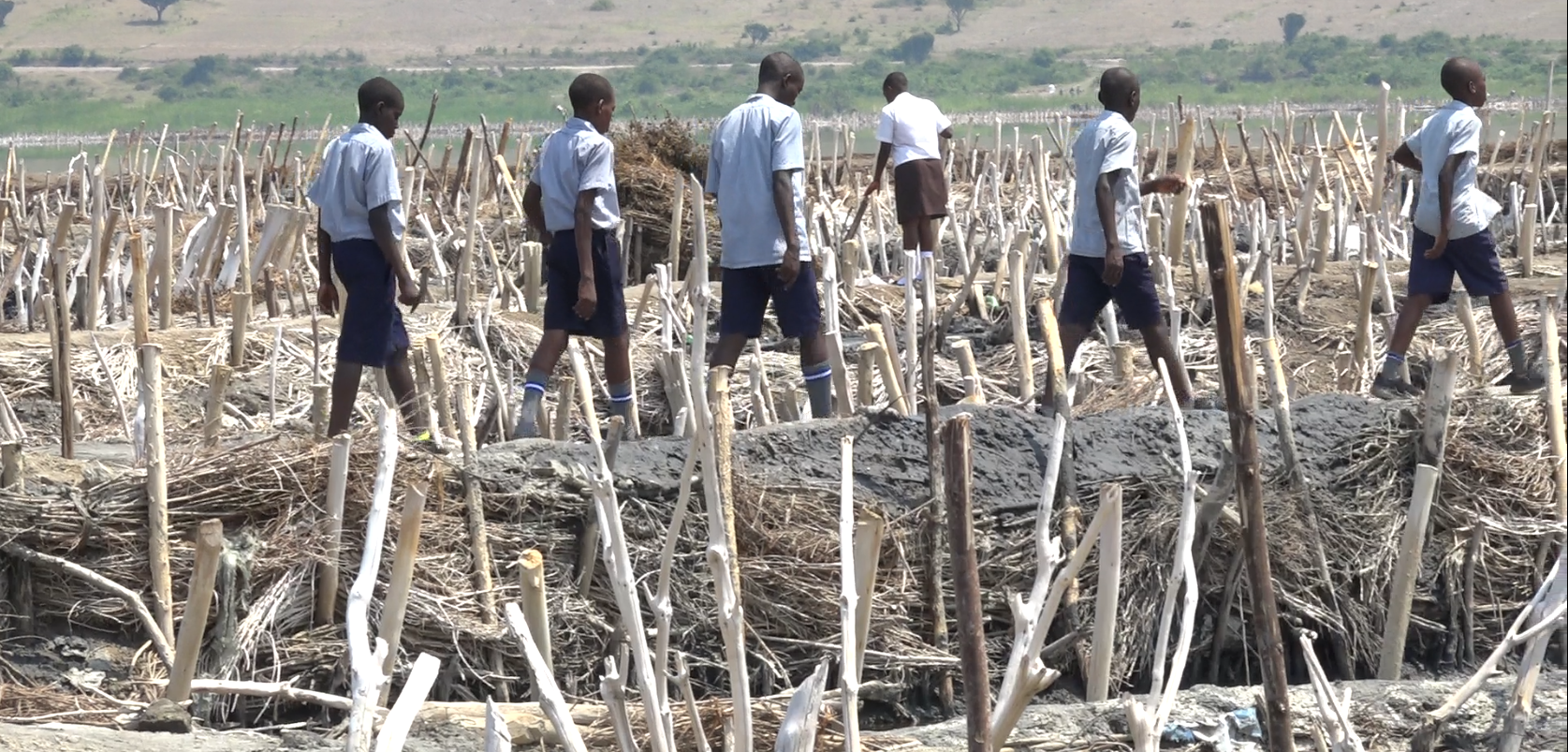
Learners from Butsibo Primary School-Sheema Kabwohe. (Photo by Kapimpina Moris)
Standing at the rim of the crater and looking down, I felt like I had discovered one of Uganda’s most underrated living museums—a place where ancient practices still shape modern livelihoods. Lake Katwe offers a rare blend of ecological wonder, cultural depth, and resilient community spirit.
As the sun dipped behind the crater, casting golden light across the salt pans, Mr. Akiiki’s words echoed in my mind: “This lake is the salt of our land and the soul of our people.”
For those looking to go beyond the guidebook, Lake Katwe offers a rare opportunity to walk among living traditions, shaped by salt, sun, and centuries of resilience.
Torch Media Africa



