Written By | Health News Agencies
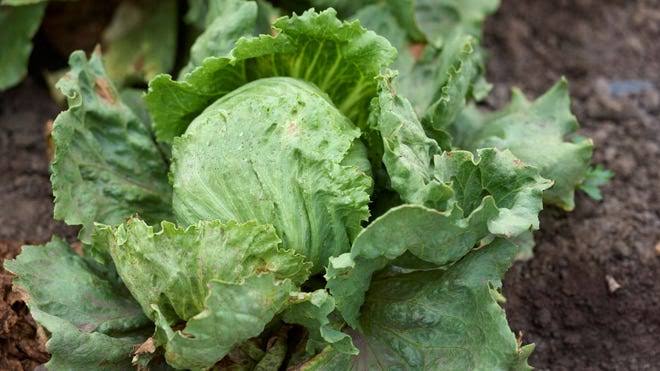
Cyclospora found in a wastewater tank and a farm drainage ditch in Mexico after a summer outbreak that sickened 12,883 people, put 570 in hospital and killed two.
WASHINGTON, D.C.,
For months it was the mystery on everyone's plate. Now federal food detectives say they have found the culprit's fingerprints, in a tank of dirty wastewater and a muddy drainage ditch more than a thousand miles south of the Michigan taco counters where the misery began.
On Friday, October 2, the US Food and Drug Administration (FDA) announced that its inspectors had detected Cyclospora, a microscopic parasite spread through human faeces, at two sites in Mexico tied to shredded iceberg lettuce from Taylor Farms de Mexico. That lettuce was behind the largest outbreak of cyclosporiasis in US history.
The final toll is staggering. According to the Centers for Disease Control and Prevention (CDC), 12,883 laboratory-confirmed illnesses were reported from 21 states. At least 570 people were taken to hospital. Two people in Michigan died.
And yet, in the same breath as it announced the discovery, the FDA closed its investigation with an admission that will leave many victims cold: "there is currently not enough evidence to conclusively determine how contamination occurred in this outbreak."
The smoking gun: a wastewater tank and a ditch
According to the FDA, investigators found the parasite in two environmental samples collected during on-site inspections in Mexico, carried out in coordination with Mexican officials.
One positive sample came from a tank holding outgoing wastewater from the Taylor Farms de Mexico processing facility. The second came from a drainage ditch belonging to an iceberg lettuce grower that the FDA had identified through its traceback investigation, the painstaking process of following the lettuce backwards from sick diners' plates to the field it grew in.
"The positive samples show that Cyclospora was present in the environment where lettuce was grown and processed," the FDA wrote in its notice closing the case. "This adds to the strong epidemiological data and traceback convergence supporting the link between this outbreak and recalled shredded iceberg lettuce from Taylor Farms de Mexico."
The agency did not say when the samples were taken. Scientists are still comparing the genetic fingerprints of the parasites from those samples with those taken from people who fell ill. That comparison could firm up the link, or complicate it.
As the Washington Post reported, the findings are the strongest physical evidence yet behind the government's conclusion that the shredded lettuce was to blame.
How a summer salad turned into a national nightmare
The outbreak first surfaced in early summer, with illnesses concentrated in Michigan and neighbouring states. On July 14 the CDC said more than 400 people in Michigan, Ohio, West Virginia and Kentucky had been infected. Within days that number had exploded.
By July 17, investigators had pinned the illnesses on shredded iceberg lettuce served at Taco Bell restaurants. The Michigan Department of Health and Human Services had analysed the meals of 190 sick Taco Bell customers and found that 90% of them reported eating iceberg lettuce. The FDA's traceback zeroed in on a single supplier: Taylor Farms de Mexico, a processor based in central Mexico.
That same day, Taylor Farms de Mexico recalled all iceberg lettuce sourced from central Mexico. The recall notice included Marketside-brand product sold at Walmart.
But the lettuce had already travelled far beyond the drive-through. Federal enforcement records analysed by the Washington Post show that recalled lettuce went to major restaurant, retail and food-service operations in more than 30 states, packaged for nine different food-service and retail operations.
The records list 236,192 cases of product, from bags of shredded and chopped iceberg to salad mixes combining iceberg with romaine, carrots and red cabbage. At least 3.1 million pounds of lettuce linked to the farm were recalled. The previous record for a Cyclospora-related recall was nearly 31,000 pounds of parsley in September 2025. This year's figure is roughly 100 times bigger.
At the peak, before the recall, the CDC says more than 1,000 people were being infected in a single day. Case counts climbed week after week as test results caught up: 1,947 on July 24, 6,358 on August 5, 9,481 on August 13, 10,930 on August 20, 11,458 on August 27, and finally 12,883 when the CDC declared the outbreak over on September 11.
Even that may be an undercount. The CDC itself warns that "the true number of sick people in this multistate outbreak was likely higher than the number reported," because many people recover without seeing a doctor and are never tested.
What Cyclospora does to your body
Cyclospora cayetanensis is not a bacterium like E. coli or Salmonella. It is a single-celled parasite, so small it can only be seen under a microscope. It spreads when food or water becomes contaminated with human faeces.
Once swallowed, it attacks the small intestine. Symptoms typically begin about a week after eating contaminated food and can include:
Without treatment, symptoms can drag on for weeks, or go away and return. The good news is that it is treatable: doctors usually prescribe a common antibiotic combination, trimethoprim-sulfamethoxazole. But you have to be tested to get it, and routine stool tests do not always look for this parasite.
Part of what makes Cyclospora such a menace for investigators is that delay. By the time someone feels ill, the salad they ate is long gone, and they may struggle to remember what they ate a week or two earlier. The parasite is also notoriously hard to detect in food and in the environment.
The company responds
Taylor Fresh Foods, the parent company, has pushed back on how the FDA findings are being read.
"The independent grower where a positive sample was found is no longer part of our supplier program," a spokesperson said. "The sample FDA referenced came from discharged waste and sewer water outside of our processing facility. As FDA noted in its report, there is currently not enough evidence to conclusively determine how contamination occurred or how results for these samples relate to ongoing genotyping of clinical specimens."
The Taylor Farms de Mexico facility remains closed while the company says it works to "implement enhanced safety protocols from the field to the facility."
"We remain concerned for the people and families impacted by this outbreak," the statement added. "Millions of families rely on the safety of Taylor Farms produce and we take that responsibility seriously. We know trust is earned by what we do."
Taco Bell has said it is no longer using lettuce from Taylor Farms de Mexico at any of its restaurants.
Expert perspective: "Begs the question how to mitigate"
Susan Mayne, a former director of the FDA's food safety centre, the office that oversees outbreak investigations, told the Washington Post the water results matter.
"Finding the parasite in water months after the initial contamination event occurred highlights the importance of regular testing of water from the agricultural and processing site," she wrote.
But she warned that knowing the parasite is lurking in farm water "begs the question how to mitigate." Research into treating agricultural water "must be a priority," she said, pointing to the treatment for bacteria in farm water that the FDA and the Environmental Protection Agency have already registered.
Mayne also wants more detail on how the FDA plans to sample for the parasite in future. She suggested the agency consider stationing a produce-safety expert in Mexico so inspectors are not delayed, and consider testing lettuce before it is allowed across the border next summer.
Delay is a sore point. FDA investigators did not arrive in Mexico until nearly a month after the agency publicly linked the outbreak to Taylor Farms, a gap criticised at the time by some former FDA officials and food-safety experts, who said evidence can disappear or change as time passes.
Not the only parasite on the loose
The lettuce outbreak was only the biggest part of what the Washington Post called "an extraordinary surge" of cyclosporiasis this summer. Multiple outbreaks drove nearly 20,000 illnesses nationwide.
In other parts of the country, authorities looked at parsley and cilantro as possible culprits in smaller outbreaks, but federal investigators have not identified those sources. In some of the hardest-hit areas, shoppers avoided lettuce and other leafy greens for weeks.
The FDA says its work is not over even though the case is closed. Before the 2027 growing season it plans extra prevention efforts focused on likely contamination routes: agricultural water, wastewater and the hygiene of farm workers.
What this means for you
Health officials say they are confident all recalled lettuce linked to this outbreak is off the market. The best-by dates on the recalled products, which were distributed from June 29 to July 16, ran only to early August. So there is no need to throw out today's salad because of this outbreak.
But Cyclospora season comes back every year, usually peaking in late spring and summer, and this outbreak is a reminder that a clean-looking leaf can hide a microscopic threat. Here is what experts advise:
The bottom line
More than 12,000 confirmed illnesses, hundreds of hospital stays, two deaths and more than three million pounds of lettuce pulled from the market: this was the worst Cyclospora disaster America has ever recorded.
The FDA now says it has found the parasite where the lettuce was grown and where it was processed. What it cannot yet say is how it got onto the leaves, and without that answer, nobody can promise it won't happen again.
With the next growing season months away, the pressure is on regulators and growers to fix the water, the wastewater and the gaps in testing before the parasite returns.



