TORONTO / NEW YORK
Fashion supply chains rarely make front-page news, but at one minute past midnight this morning, one did. A sweeping 50 percent tariff on Canadian apparel and textile imports took effect across the United States, the culmination of a trade dispute that had been simmering since a presidential proclamation was signed on July 20 and that negotiators on both sides of the border spent the past month trying, unsuccessfully, to defuse.
For an industry that already operates on notoriously thin margins, the number is not a rounding error. It is, by multiple accounts, existential for some brands.
What Exactly Changed at Midnight
The tariff applies to goods classified under Chapters 50 through 63 of the Harmonized Tariff Schedule — a category that captures nearly the entire universe of knit and woven apparel, along with a wide range of other finished and semi-finished textile articles. Crucially, the duty makes no exception for goods that are otherwise compliant with the Canada–United States–Mexico Agreement, the successor to NAFTA that was supposed to guarantee largely tariff-free trade between the two countries. Customs authorities have confirmed that the determining factor is a shipment's entry date into the US, not the date it was ordered or shipped, meaning goods already in transit when the clock struck midnight are not exempt.
The White House has framed the move as retaliation for what it calls Canada's "discriminatory treatment" of American products; Canadian officials have called it the latest "unilateral breach" of CUSMA and signaled they are prepared to respond with countermeasures of their own, though no retaliatory tariff package had been finalized as of this morning. Negotiators from both governments were, according to Business of Fashion, still working through "sticking points" as recently as Tuesday, but could not reach a deal in time to avert the deadline.
Who Gets Hit Hardest
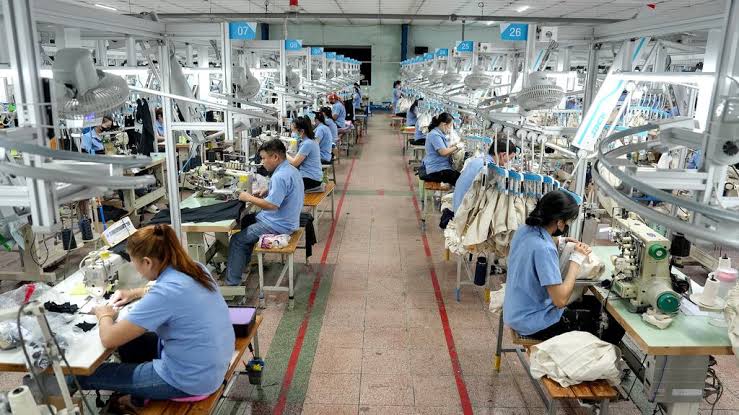
Not every Canadian apparel company is equally exposed, and the divide comes down to a simple question: where is the garment actually made? Canada Goose, the Toronto-based luxury outerwear brand famous for its coyote-fur-trimmed parkas, manufactures the bulk of its product domestically in Canada — which made it one of the first companies to feel the market's verdict. Williams Trading downgraded Canada Goose stock from Hold to Sell this week specifically citing tariff exposure, and the company's shares slipped as investors priced in a warning that the new duties could shave nearly 200 basis points off its fiscal 2027 operating margin. By contrast, Lululemon and the outdoor brand Arc'teryx — both headquartered in Canada but manufacturing the majority of their goods in other countries — are comparatively insulated, though Lululemon is dealing with the tariff hit at an already difficult moment, layering onto softer demand in the Americas and a recent leadership transition.
Smaller players face a starker calculus. Toronto menswear brand Outclass, cited by Business Examiner as representative of the vulnerable middle of the Canadian garment industry, builds its identity around domestic manufacturing — precisely the trait that now makes it a target of the tariff. Independent Canadian exporters in this category typically lack the balance-sheet flexibility to eat a 50 percent cost increase, and industry analysts warn many will face a binary choice between passing the full cost to American customers, a move that risks pricing them out of their largest export market, or reworking supply chains toward US or third-country manufacturing on a timeline measured in months, not years.

The broader Canadian garment and textile sector is, according to trade group data reported by FashionUnited, especially exposed because its competitive advantage has always rested on high-value, specialized categories — technical winter outerwear, performance apparel, uniforms and premium direct-to-consumer labels — rather than low-cost mass production that could simply relocate to cheaper markets overnight.
A Two-Way Street
The pain is not confined to one side of the border. Canada imports roughly $1 billion annually in synthetic fibers, yarns and finished fabrics from American textile suppliers to feed its own garment assembly lines. If Canadian manufacturers slow production in response to falling US retail demand, American yarn spinners and fabric weavers — many of them in Southern textile hubs already squeezed by years of offshoring — are likely to see their own order books shrink almost immediately. Fibre2Fashion estimates roughly $801 million in Canada-US textile trade is now directly at risk.
Expert Perspective
"These are companies operating on typical fashion margins, and there is no version of a 50 percent tariff that a typical fashion margin can absorb," one industry analyst told Sourcing Journal, describing brands' options as effectively limited to canceling wholesale orders outright or passing through price increases severe enough to test customer loyalty. Trade lawyers following the dispute note that because the tariff bypasses CUSMA protections entirely, it represents a more aggressive posture than prior rounds of trade friction between the two countries, and one that Canadian officials are treating as a direct challenge to the trade agreement's credibility.
What This Means for Shoppers
For American consumers, the most immediate effect will likely show up gradually rather than overnight, as retailers work through existing inventory before repricing new shipments. But anyone who buys Canadian-made outerwear, knitwear or technical apparel — think parkas, performance fleece, or specialty workwear — should expect to see list prices climb in the coming months, particularly at brands like Canada Goose that manufacture predominantly at home. Shoppers loyal to Canadian brands that already manufacture abroad, meanwhile, are less likely to see dramatic shifts, at least in the near term.
Conclusion
Trade disputes tend to unfold in the background of daily life until, suddenly, they don't — and today marks that pivot point for a significant slice of the apparel industry. With retaliatory measures from Ottawa still unresolved and negotiators reportedly still talking even after the deadline passed, the fashion industry now finds itself in a familiar but uncomfortable position: waiting to see whether a trade dispute settles quickly, or whether this is the opening chapter of a much longer, costlier story for the brands — and the shoppers — caught in the middle.
Published By | Features Editor