POLITICS
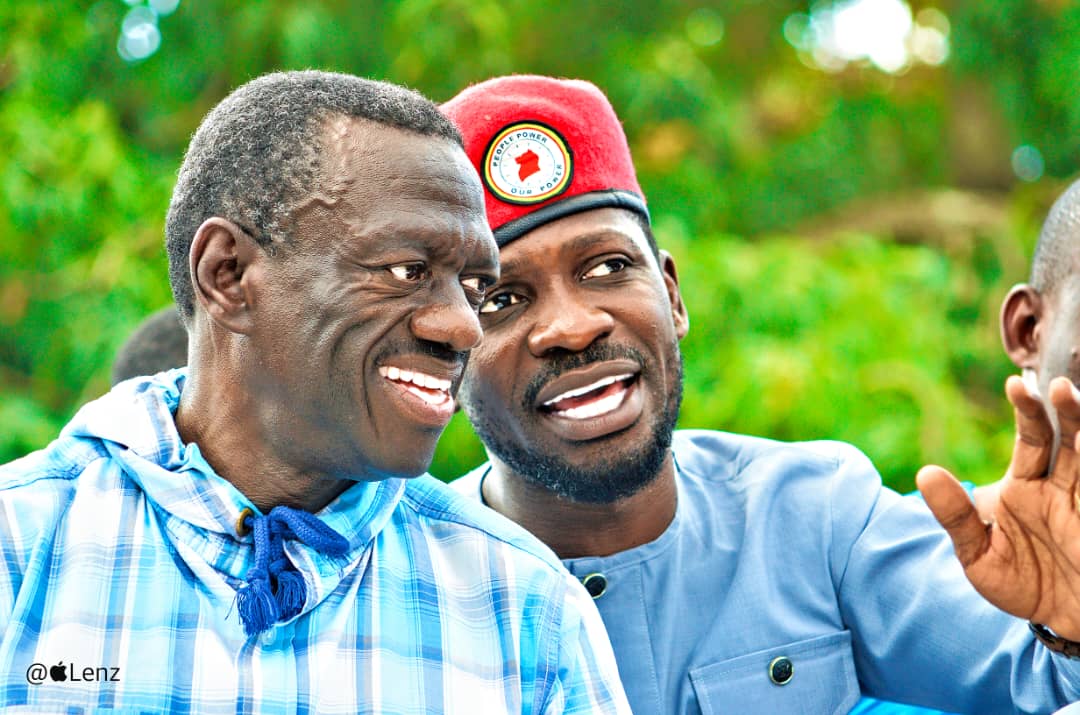
Nine months after a disputed general election, Uganda’s opposition is facing a question it has avoided for years: what is left of it when its two most recognisable figures are not in the room? Dr Kizza Besigye, the veteran opposition leader, remains in detention on treason-related charges. Robert Kyagulanyi, better known as Bobi Wine, the leader of the National Unity Platform (NUP), has been outside the country since March. Over the past week, both men have been at the centre of a debate about whether the opposition is being held back by pressure from the state, by its own structural weaknesses, or by both.
The latest round of discussion was prompted by a Nile Post report on 26 October, in which opposition figures, an analyst and a senior member of the ruling National Resistance Movement (NRM) offered competing explanations for the opposition’s low profile. It was followed on 30 October by a rally in Washington, DC, where Bobi Wine and Besigye’s wife, Winnie Byanyima, marked International Day of Political Prisoners and called for Besigye’s release.
Where the two leaders stand
Besigye is a former president of the Forum for Democratic Change (FDC) and was a key figure in forming the People’s Front for Freedom (PFF). According to Pulse Uganda, he has been held since November 2024, when he was seized in Nairobi, Kenya, and taken to Uganda. He faces treason charges alongside his aide Obeid Lutale and Captain Denis Oola. All three deny the charges, and Besigye’s supporters describe the case as politically motivated. Besigye has been denied bail.
His health has become a major concern. He collapsed during a High Court hearing in Kampala on 29 July 2026 and was treated at Mulago National Referral Hospital before being returned to prison medical care. In October, associates said he was in rehabilitation to recover his ability to speak and walk, while prison authorities said his condition was improving. Speaking in Washington, Byanyima said: “His body is weakened. But his spirit is unbroken.”
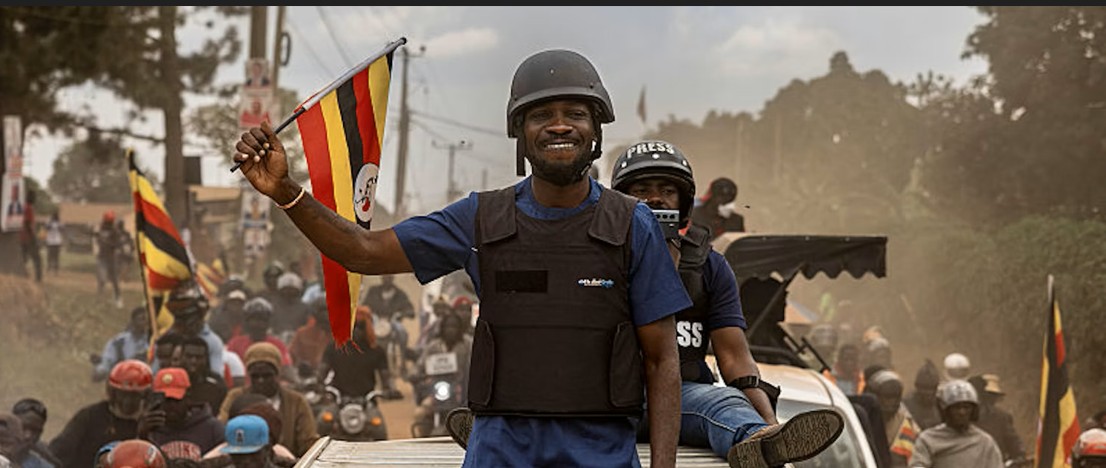
Kyagulanyi led NUP in both the 2021 and 2026 general elections. Nile Post reports that he left Uganda in March 2026 after weeks in hiding following the disputed January presidential election. He says he left for engagements abroad and will return, and he has also said that security agencies were pursuing him. The Nile Post report notes that this claim is disputed. He has remained outside the country since, and was announced to perform at the 30 October gathering at the Lincoln Memorial, organised by the National Endowment for Democracy and the October 30 Coalition.

Competing explanations
The Nile Post piece lays out two broad readings of the opposition’s predicament. The first is that external constraints are the main problem. Alice Alaso, secretary general of the Alliance for National Transformation, argued that mobilisation is unsafe while the two leaders are detained or kept out of the country, and that their absence has cost the opposition leadership, ideas and experience. Opposition figures also report restrictions on party activity, saying that supporters wearing party attire, even at religious services, can attract security scrutiny. The article notes that the NRM-linked Patriotic League of Uganda has continued to mobilise while opposition visibility has been limited.
George Musisi, the Member of Parliament for Kira Municipality, said the circumstances behind Besigye’s detention and Kyagulanyi’s exile remain unresolved, which makes it hard to assess what role either man can play in future. He called for a return to the rule of law and for political leaders to operate within a multiparty framework.
The second reading is that the weakness is internal. Political analyst Gerald Karyeija described a structural problem: opposition parties have not built institutions capable of surviving without their founders or charismatic leaders. Richard Todwong, the NRM’s Secretary General, made a related argument from the ruling party’s side, blaming the opposition’s struggles partly on weak ideological foundations and institutions. He added that a stronger opposition would benefit the NRM by holding it to account on policy, including education, health, poverty and public debt.
The Washington event
The Washington gathering brought together the families of detainees, former political prisoners and human rights defenders. Pulse Uganda reports that former political prisoners from Rwanda and Cuba, Paul Rusesabagina and Luis Manuel Otero Alcántara, were invited to speak. The campaign used the hashtags #FreeKizzaBesigye and #FreeAllPoliticalPrisoners, and the demands included the release of Besigye and other political prisoners, remembrance of those who died in detention, and justice for detainees’ families.
Byanyima framed the issue in historical terms, saying of the movement that brought President Yoweri Museveni to power: “We won that war. But tragically, the liberators became the oppressors.” She also said of her husband: “He cannot be bought. He cannot be frightened into silence.” The event gave the opposition international visibility at a time when its domestic activity is limited, although it is not clear what practical effect it will have on the case in Uganda.
Why it matters
Uganda’s politics have long been shaped by the contest between the NRM and an opposition built around a small number of well-known personalities. If those personalities are detained, unwell or abroad, the opposition’s ability to organise, to put forward alternative policies and to hold the government to account in a period of economic strain is reduced. This matters beyond the opposition itself. The same week that these debates took place, the government was urging households to cut back on spending as the shilling weakened, and policy choices of that kind are normally subject to political scrutiny.
There is also a legal and institutional dimension. Besigye’s treason case, now in its second year, is likely to remain a test of how courts handle politically sensitive cases. The question of his health adds urgency, and his family has made it central to their appeal. Reports in the Ugandan press this month also show continuing debate about judicial conduct and political activity, although this article does not rely on those reports for its account of events.
What to watch next
Several developments could change the picture. The first is whether Kyagulanyi announces a date for his return and, if so, how the authorities respond. The second is any ruling on bail or any movement in Besigye’s trial, together with further information about his recovery. The third is whether opposition parties act on the internal critique, by investing in institutions, policy platforms and leadership succession rather than relying on individual figures. Finally, observers will watch whether the NRM’s stated interest in a stronger opposition leads to any easing of restrictions on opposition activity, or whether the current pattern continues.
For now, the opposition’s position is defined by an unresolved argument: whether its difficulties come mainly from pressure on its leaders or from the way it is organised. The evidence reported this week suggests both factors are in play, and that neither is likely to be resolved quickly.
Published By | News Editor