Written By | Sports Desk
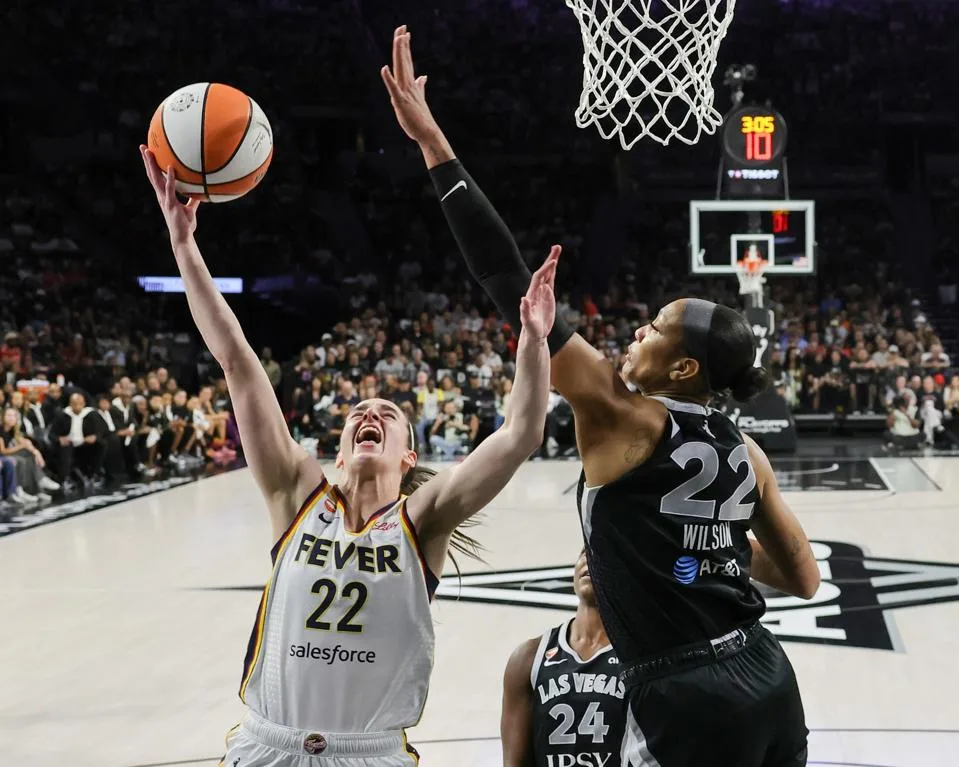
A record-setting first round and a semifinal that opened 10 percent ahead of last year show how far the league's audience has moved, even as star-power questions hang over the bracket.
NEW YORK
The numbers arrived in two waves this week, and both told the same story. First came the opening round of the 2026 WNBA playoffs, which averaged 1.3 million viewers across ten games, a record for the league. Then came the semifinals, whose two Sunday openers averaged 1.15 million viewers, according to figures reported by Front Office Sports on Oct. 7. For a league that spent much of its history fighting for a place on the schedule, the postseason is now behaving like a television property in its own right.
A record first round
The first round, carried by ESPN, Prime Video and USA Network, averaged 1.3 million viewers, up 37 percent from last year. The previous record was 1.1 million across eight games in 2024, the year Caitlin Clark made her playoff debut. The 2026 round surpassed it with more games and a bigger average, a combination that suggests growth in the underlying audience rather than a one-series spike.
Indiana's games drove the biggest crowds. Game 3 of the Fever's series against the Las Vegas Aces, shown on USA Network last Thursday, drew 2.3 million viewers, the second-most-watched first-round game ever. The record still belongs to Game 2 of the Fever's 2024 series against the Connecticut Sun, which drew 2.5 million. This year's round also served as Clark's postseason return and as the playoff debut for Angel Reese, Olivia Miles and Paige Bueckers, a cohort of young stars whose arrival has been one of the league's central storylines.
Semifinal openers: up 10 percent
On Sunday, Oct. 4, the semifinals began with a doubleheader, and both games aired against the NFL's Week 4 slate, historically the most punishing competition in American sports television. Liberty–Dream on ABC, which tipped at 2 p.m. ET, one hour into the NFL's first set of games, drew 1.17 million viewers. Aces–Valkyries followed at 4 p.m. ET on NBC and Peacock and drew 1.12 million. Together the two averaged 1.15 million, up 10 percent from the first two games of last year's semifinals.
The comparison needs context. In 2025, ESPN held all WNBA playoff rights, and those semifinal Game 1s averaged about 1.05 million viewers. The most-watched semifinal opener in league history came that year, when Aces–Fever on ABC drew 1.4 million viewers with Indiana playing without the injured Clark. This year's two openers rank second and third on the all-time list. The other 2025 opener, Lynx–Mercury on ESPN, drew 716,000, a reminder that broadcast-network placement still matters.
A new home on NBC
One detail stands out for television watchers. Aces–Valkyries was the first WNBA playoff game on NBC since 2002. The network acquired WNBA rights under the league's new media deal, reported as worth more than $3 billion, and its first playoff window opened to 1.12 million viewers while competing with football. Peacock streaming adds a second door to the same game. For the league, the strategy behind the new deal, spreading games across several broadcast and streaming partners, is now producing a public test of whether audiences will follow.
Sports Media Watch characterised the semifinal openers as near highs, following a record-setting first round. That phrasing is worth taking seriously: a league can set records in early rounds and then lose audience as the field narrows, particularly when popular teams are eliminated. Whether the later games hold the line is the open question of the coming days.
The star-power question
The Fever's presence in the first round is a clear part of the explanation for the record, and the team's games were the most-watched of the round. Whether the semifinals can sustain similar numbers without Indiana in the field is something the league will learn over the coming games. At the same time, the openers that did air without the Fever still drew more than a million viewers apiece on the broadcast networks, a sign that the audience is not tied to a single franchise. We have not independently verified why individual viewers tuned in; the ratings alone cannot tell us that.
Why the schedule matters
Television executives have long argued that the WNBA's best audience-building tool is exposure on broadcast networks, where casual fans can stumble onto a game. The semifinal openers support that view. The two broadcast-network games drew 1.17 million and 1.12 million viewers against the NFL, while the cable-only game in last year's comparison drew far less. The new rights structure, with ABC, NBC, ESPN, Prime Video and USA Network all carrying postseason games this year, is built to put games in front of different audiences at different times.
What this means for you
If you are a casual fan, the practical takeaway is that the playoffs are easier to find than they used to be. Games are spread across ABC, NBC and Peacock, ESPN, Prime Video and USA Network, so check the schedule rather than assuming a single channel. If you subscribe to one streaming service, find out which round or game it carries before the next tip-off. If you are watching with friends who usually skip women's basketball, a Sunday-afternoon broadcast game is the lowest-friction way to bring them in. And if you follow sports business, these ratings are the number to watch: they feed directly into advertising rates, sponsorship decisions and the leverage the league brings to future negotiations.
The road ahead
Records in January or in the first round do not guarantee records in the finals. Football will keep competing for Sunday windows, baseball is deep in its own postseason, and individual team results can swing audiences quickly. But the early evidence is encouraging: a first round up 37 percent, semifinal openers up 10 percent, and a new network partner delivering more than a million viewers on its first try. Those are the figures of a league whose postseason has become appointment viewing for a wider audience than the one that existed a few years ago.
Sources: Front Office Sports (Colin Salao, Oct. 7, 2026); Sports Media Watch.



