Written By | Staff Writer
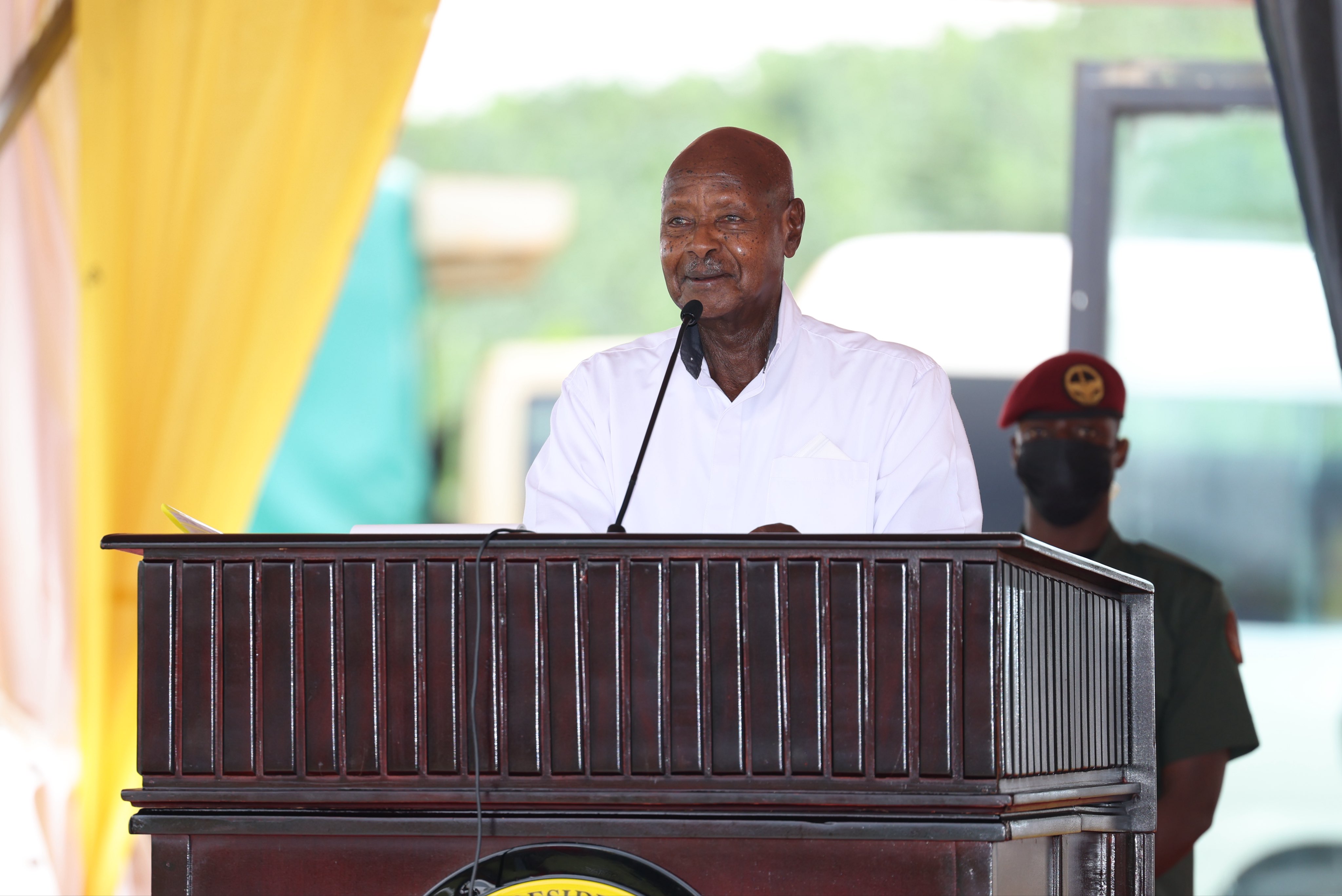
Museveni was reported to have joked that he likes his son's often controversial social media posts
What happened
On Tuesday, 27 October 2026, President Yoweri Museveni presented a paper on succession to a meeting of the ruling National Resistance Movement (NRM) Central Executive Committee (CEC) at State House Entebbe, according to Nile Post. Within hours, a claim began circulating online that the president had endorsed his son, Chief of Defence Forces Gen. Muhoozi Kainerugaba, as the party's future leader.
The claim originated with Daudi Kabanda, the Kasambya County MP who serves as executive secretary in the office of the national chairman of the Patriotic League of Uganda (PLU). Kabanda posted on X that Museveni had endorsed Muhoozi. Local blogs repeated it, and Watchdog Uganda reported that as of Tuesday evening neither State House nor the NRM Secretariat had confirmed or denied it. Nile Post reported that the nature of any endorsement, and whether the CEC adopted a formal resolution, remains unclear.
What is known and what is not
The reporting is careful on one point: there is a difference between a president tabling a paper on succession and a party formally choosing a successor. Nile Post says the paper, according to sources, set out the case for Muhoozi's leadership, citing his military record, his anti-corruption rhetoric and his nationwide mobilisation. The same report says CEC members asked for the paper to be circulated and proposed a retreat to discuss it, which suggests the matter is at the start of a party process rather than the end of one. The outlet stresses that the meeting did not necessarily produce a collective endorsement and that the details have not been independently verified.
Museveni was reported to have joked that he likes his son's often controversial social media posts. He was also reported to have urged leaders to leave the matter to him while discussions continue about how the NRM and the PLU might work together. Anita Among, the former Speaker and the NRM's second national vice chairperson for women, was reportedly present. Politically, her attendance drew attention because Nile Post's politics pages noted it as her first public appearance since May, when a State House meeting between her and the president over the Speaker race was reported as tense.
The main players
Muhoozi Kainerugaba is the most visible figure. As a serving army officer he is subject to the UPDF Act, which, Watchdog Uganda notes, bars serving officers from partisan politics and from contesting political office. Published lists of the current CEC do not include him. Any path to a 2031 candidacy would therefore involve questions about his military status, which none of the reports so far address.
The Patriotic League of Uganda is the group driving the campaign. Watchdog Uganda says it has run signature drives, public barazas and processions positioning Muhoozi as a potential successor, and that in September Kabanda told a PLU press conference that Muhoozi intends to contest in 2031 and that Museveni had promised support. That claim also lacked official confirmation. Nile Post reports some party members worry the PLU could compete with or weaken the NRM.
NRM Secretary General Richard Todwong told Nile Post he would respond after consulting the CEC. State House website editor Nelson Bwire wrote on X that Muhoozi's ambition is being pushed by people who believe he qualifies and is not imposed on Ugandans by Museveni. That framing, a bottom-up movement rather than a dynastic handover, is likely to be the line supporters maintain.
Why it matters
Museveni has historically avoided naming a successor publicly, a point Nile Post makes in describing the reported paper as a significant development in the debate over the party's future leadership. Succession is the central unanswered question in Ugandan politics, and the way it is settled affects the stability of the security services, the cohesion of the NRM and the investment climate. Even an unconfirmed endorsement shifts expectations among party members, rivals and external observers.
The episode also shows how the debate is being conducted: through social media posts by allied figures, party-affiliated pressure groups and sourced accounts of closed meetings, rather than through official statements. That makes it hard for the public to separate signal from advocacy, and it is why the verification gaps flagged by both Nile Post and Watchdog Uganda matter.
What to watch next
Several developments will clarify the picture. The first is whether the NRM Secretariat or State House issues a statement confirming, qualifying or disowning the endorsement claim. The second is whether the CEC retreat proposed by members is convened, and whether a formal resolution follows. The third is how the relationship between the PLU and the NRM is defined, given the concerns about competition. The fourth is whether anything changes in Muhoozi's status as a serving officer, since the UPDF Act restrictions are the most obvious legal hurdle to a political candidacy.
Reaction from opposition parties, which earlier this year formed new alliances ahead of the electoral cycle, and from NRM figures who may be uneasy about a dynastic framing, will also indicate how contested the issue is inside and outside the ruling party. For now, what is established is that succession was formally put before the CEC; what the committee decided, if anything, is not.
This article reflects reporting available as of 28 October 2026; several key claims are unverified and may change as official statements emerge.




