Kampala, Uganda
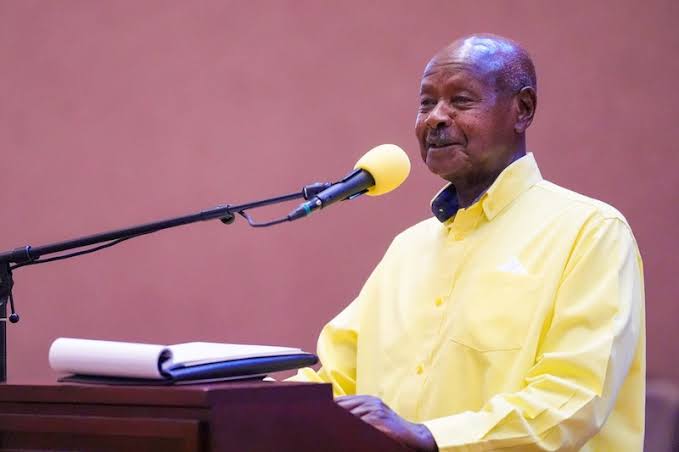
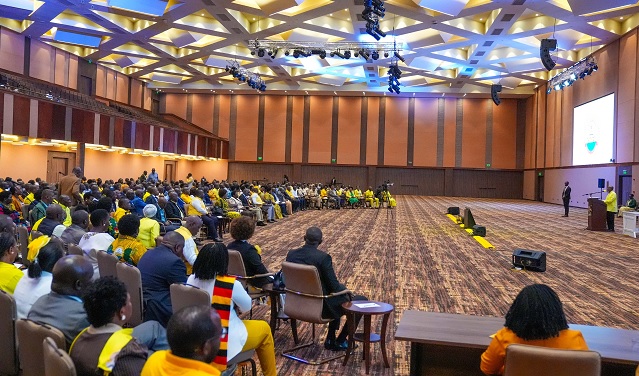
President Yoweri Museveni used the third NRM Parliamentary Caucus of the 12th Parliament, held at Speke Resort Munyonyo on August 9, to deliver a pointed warning to his own party's legislators: root out corruption in government programmes or watch public trust in the ruling National Resistance Movement erode further. The address, delivered seven months after Museveni secured a seventh term in office, put a spotlight on a governance problem that has become increasingly difficult for the NRM to explain away now that campaign season is over and delivery is the only currency that matters.
Museveni told MPs to strengthen oversight of government programmes in their constituencies and to expose practices undermining service delivery, according to a readout of the caucus carried by The Independent and distributed via AllAfrica. He singled out two specific complaints reaching his desk: the alleged sale of jobs by District Service Commissions, and reports that officials implementing the Parish Development Model, the flagship anti-poverty programme meant to move households out of subsistence farming, have been demanding money or kickbacks from intended beneficiaries.
"PDM was established to help households move out of poverty and should not be turned into an avenue for officials to enrich themselves," Museveni told the caucus, according to the readout. He went further on healthcare, directing MPs to monitor attendance of medical personnel at government health facilities and the handling of medicine supplies, warning that the government is considering dismissing habitually absent doctors and replacing them with staff willing to serve consistently. Theft and diversion of medicines from public facilities, he said, has undermined confidence in a health system already strained by this year's Ebola outbreak.
The timing is notable. Museveni's remarks came four days after a separate, unrelated episode in Parliament exposed exactly the kind of service-delivery failure he was describing in the abstract. On August 5, the State Minister for Energy, Sidronius Okaasai Opolot, appeared before Parliament to update MPs on the $608 million World Bank-funded Electricity Access Scale-up Project, a five-year programme meant to connect households, refugees, industrial parks and businesses to the grid. Okaasai told legislators the rollout has been slower than planned, blaming local contractors who failed to deliver connection materials on schedule and a funding shortfall for compensating people whose land is needed for distribution lines — the Ministry of Finance had released only 18 billion Uganda shillings of the 40 billion shillings required for that compensation.
MPs were not satisfied. "In our constituencies, you find electricity poles rotting without wires. People remain in darkness, yet we were told this project would connect them. How do we talk about industrialisation when villages have no power?" one legislator said during the debate, according to Nile Post's account of the session. Deputy Speaker Thomas Tayebwa ordered the Energy Ministry to return with a full accounting — how many people have been connected, where, and at what cost — the following Tuesday.
The electricity complaints did not end there. Days earlier, the Public Accounts Committee had pressed the Uganda Electricity Distribution Company Limited, the state utility that took over distribution from the private concessionaire Umeme in 2025, over more than 400,000 Ugandans who paid for connections that were never completed and remain unconnected more than a year later. UEDCL's acting managing director, Jocelyn Rwakakooko, told MPs the backlog stemmed from limited funding to maintain substations inherited from Umeme and delays procuring meters, even though UEDCL has received more than 500 billion shillings in funding since the buyout. Parliament ordered the company to either connect the outstanding customers or refund them. Separately, reporting compiled by UG Standard found that power outages have nearly doubled and average restoration time has climbed from roughly 12 hours to nearly 20 hours since UEDCL took over, undercutting the promise that ending Umeme's concession would improve reliability.
Taken together, the electricity saga functions as a live case study of the exact dynamic Museveni described to his caucus: money allocated, promises made publicly, and outcomes that lag far behind both. Whether the underlying cause in any given case is corruption, contractor failure, underfunding or bureaucratic inertia, the political effect is the same — a widening gap between what the NRM promises during election season and what citizens experience afterward.
That gap carries particular weight this year. Museveni was declared winner of the January 2026 presidential election with 71.65 percent of the vote against opposition leader Robert Kyagulanyi Ssentamu, known as Bobi Wine, who took 24.72 percent. The vote was held amid a nationwide internet blackout imposed in the days before polling, heavy security deployments, and opposition allegations of fraud; Kyagulanyi called the results "fake" and urged non-violent protest. He later left the country after roughly two months in hiding, resurfacing in the United States by mid-March. Museveni's own son and army chief, General Muhoozi Kainerugaba, drew international criticism for a series of social media posts threatening violence against opposition figures in the vote's aftermath. Independent monitors, including the Africa Center for Strategic Studies, have described a political environment marked by shrinking civic space and rising repression heading into and following the poll.
Against that backdrop, delivery failures on bread-and-butter issues like electricity access carry more political risk for the NRM than they might in a less contested environment. Uganda's population skews overwhelmingly young — an estimated 33 million of its roughly 46 million people are under 30 — and surveys cited by regional analysts consistently find unemployment and corruption top the list of voter concerns. A government that has just won a mandate through a disputed process has less room than usual to absorb visible failures in flagship programmes like PDM or the electrification drive without feeding public cynicism.
Museveni's own framing acknowledged the stakes. He reminded NRM legislators that the party's "political strength and longevity depend on its ability to address the needs of citizens, improve livelihoods and promote sustainable socioeconomic development," and urged MPs to remain "disciplined, people-centred and guided by the NRM's ideological principles." The subtext is hard to miss: after nearly four decades in power, the NRM's implicit argument for continued rule rests less on electoral competition than on the state's ability to visibly perform, and Museveni is telling his own caucus that performance is currently falling short in ways ordinary Ugandans can see and feel.
What happens next will be a test of whether the caucus warning translates into anything beyond rhetoric. The Energy Ministry owes Parliament a detailed accounting of the electrification project's progress, promised for the week following the August 5 session. Parliament's Public Accounts Committee has demanded UEDCL either connect or refund the 400,000-plus Ugandans left waiting, a resolution that will be watched closely given the utility's own admission that funding has not been the constraint it claims. And Museveni's threat to dismiss chronically absent doctors, if acted on, would be an unusually direct enforcement step in a health sector where accountability for individual non-performance has historically been rare. For now, the caucus meeting has put corruption and service delivery squarely back on the national agenda barely half a year into the NRM's new term — a sign that the honeymoon period, if there was one, is already over.
Published By | News Editor