Written By | International News Agencies
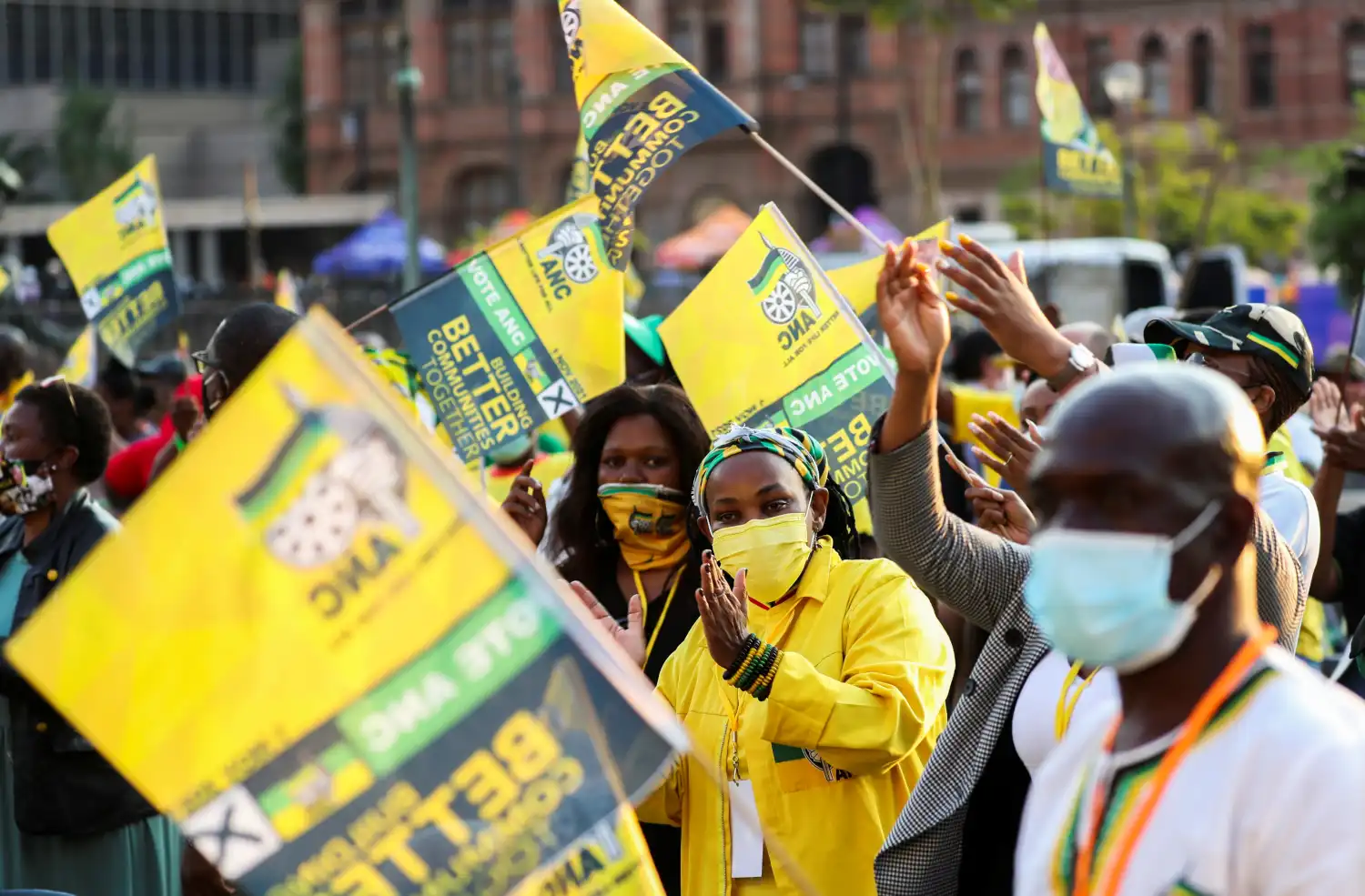
The Electoral Commission of South Africa (IEC) has confirmed 4,488 voting districts and ruled out electronic voting for this cycle. Some 620 parties are registered.
JOHANNESBURG
Thirteen days before South Africans vote in municipal elections on Nov. 4, the contest has become a test of whether the African National Congress can arrest its slide, whether the Democratic Alliance can convert its urban strength into governing power, and whether any party can win a clear majority in the country's biggest cities. Recent polls disagree sharply on who leads in Johannesburg, a Constitutional Court ruling last week forced the electoral commission to restore hundreds of ANC candidates, and the commission has now enlisted the world's largest technology platforms to police online falsehoods. Together, those developments point toward an election whose result may be less decisive than its consequences.
What is at stake
President Cyril Ramaphosa announced the election date on April 30. Voters will choose councils in all eight metropolitan municipalities, all 205 local municipalities and 40% of the seats in the 44 district municipalities, for a total of 10,526 seats, according to the summary of the contest compiled on Wikipedia. About 29 million people were registered as of August, and two registration weekends, in June and August, added roughly 754,000 new voters, about half of them under 29. Women make up 55% of the roll.
The Electoral Commission of South Africa (IEC) has confirmed 4,488 voting districts and ruled out electronic voting for this cycle. Some 620 parties are registered. The Rio Times reported that 136,790 candidates have been certified, including 621 independents, up from 95,427 in 2021. The IEC also approved a record 2,655,067 special-vote applications, with that voting set for Nov. 2 and 3. By law, results are due within seven days of polling, or by Nov. 11.
The stakes are practical as well as political. Municipal councils run water, electricity distribution, refuse collection and local roads. An Ipsos survey in March found that only 38% of South Africans believed their local government was doing a good job, a figure that explains why service delivery dominates the campaign.
The weight of 2021
The benchmark is the 2021 municipal election, in which the ANC took 45.59% of the popular vote, its worst showing in a municipal election since universal suffrage. The DA won 21.62% and the Economic Freedom Fighters 10.32%. The Inkatha Freedom Party took 5.65%, and the Freedom Front Plus and ActionSA each won 2.34%. The ANC won an outright majority in only one metro, Buffalo City.
The consequence was years of unstable coalition government. The Rio Times reported that 66 councils had no party in control after 2021 and that five metros lacked a majority. The pattern has since been mirrored nationally: the ANC lost its parliamentary majority in the 2024 national election, and the country is now run by a Government of National Unity of 10 parties. Local coalitions, however, follow no such framework. They can be negotiated only once results are in, which means some metro mayors may not be known for weeks.
Lawmakers have tried to respond. The Municipal Structures Amendment Bill, introduced in Parliament on Aug. 18, aims to strengthen coalition governance, though it is unclear whether it will pass before voters go to the polls.
A poll picture that does not agree with itself
The most striking feature of the campaign is how widely the polling diverges, especially in Johannesburg, the country's economic hub and the prize both major parties most want.
A MarkData survey reported by TimesLIVE and Business Day on Oct. 18 found the DA leading the ANC in Johannesburg by 13.2 percentage points: DA 35%, ANC 21.8%, the Jacob Zuma-led uMkhonto weSizwe (MK) Party 12.5%, the EFF 11.9% and ActionSA 10.3%. The poll was conducted from Aug. 10 to Sept. 14, with 1,011 respondents in Johannesburg and 1,004 in Cape Town, mostly by telephone and supplemented by in-person interviews. It carries a margin of error of about 3% and modeled turnout at 48%. In Cape Town, the same survey put the DA at 52.6% and the ANC at 23.6%. Wayne Sussman, an election analyst who worked on the polling for eNCA, said: "Our urban politics is certainly fragmenting."
An Ipsos "Pulse of the People" survey of 3,500 people, released Sept. 4, told a different story. It put the ANC at 31% and the DA at 27% in Johannesburg, with the ANC slightly ahead. In Tshwane, Ipsos found the DA at 31% and the ANC at 22%. In eThekwini, which includes Durban, it found MK at 55%. Nationally, Ipsos measured the ANC at 31%, the DA at 25%, MK at 14%, the EFF at 11%, ActionSA at 6%, the IFP at 3% and the Patriotic Alliance at 2%. Its margin of error was up to 1.77% for registered voters overall, and larger for metro subsamples that Ipsos itself describes as "indicative" or to be used with caution.
A third source, the Social Research Foundation, used a smaller phone survey of urban residents. According to Wikipedia's polling table, its July survey put the DA at 42% in Johannesburg and the ANC at 18%. Ipsos's release acknowledged that the foundation found the DA polling higher in Johannesburg but stressed that it used a smaller phone survey of urban residents.
Differences in method, sample and timing can explain some of the gap, and pollsters caution that these are snapshots rather than forecasts. Even so, the spread, from an ANC lead of four points to a DA lead of 24, shows how uncertain the picture is. Mari Harris, an Ipsos analyst, said party contestation "over the next two months in almost every province will be fierce." On the MarkData figures, no party comes close to the 50% a single party would need to govern Johannesburg alone, and eNCA concluded that the DA lead is "not large enough to avoid another coalition government in Johannesburg," as the Rio Times reported.
The parties and their problems
The DA elected Geordin Hill-Lewis as its leader in April and has named Helen Zille as its Johannesburg mayoral candidate. ActionSA's Herman Mashaba is running for the same office, and the EFF has named Tlaleng Mofokeng. The ANC, by contrast, had not announced final mayoral candidates by late summer; on Aug. 23 it published a "shortlist" instead, which it attributed to factional disputes, according to the Wikipedia summary.
The MK Party has performed strongly in KwaZulu-Natal but faces financial trouble. In August, Zuma appointed his son Duduzane as first deputy president of the party. The South African Communist Party is contesting the elections independently of the ANC for the first time, which could siphon support from the governing party's traditional left flank.
The campaign is also unfolding against governance scandals. Johannesburg's finances drew a rebuke in July, when Finance Minister Enoch Godongwana withheld national transfers over the city's financial management. The Madlanga Commission's findings involving EFF leader Julius Malema, and controversies around the Phala Phala affair and Deputy President Paul Mashatile's properties, are further complicating the ANC and EFF messages on integrity.
The court ruling that reshaped the ballot
The most consequential recent legal development came on Oct. 15, when the Constitutional Court, by majority, upheld an ANC appeal and ordered the IEC to restore 181 ANC candidates in six municipalities, including Mangaung, the Rio Times reported. On Oct. 16 the IEC said that 32 similarly placed parties must be treated as having lawfully submitted their lists, which means party and candidate totals may rise further. The court has not yet published its written reasons, leaving election lawyers and smaller parties to guess at the legal test it applied.
The ruling restores the governing party to the ballot in those municipalities, and it shows how a dispute over candidate lists can threaten even the largest party. It also leaves the IEC with the task of updating its lists in the final two weeks of the campaign.
The disinformation front
The commission is also racing to protect the integrity of the information environment. Bedfordview Edenvale News reported on Oct. 20 that the IEC has signed a partnership with Google, Meta, Microsoft, TikTok and the nonprofit Moxii Africa, building on a framework used in the 2024 national and provincial elections. On Sept. 4 the IEC gazetted an Electoral Code of Conduct Countering Disinformation, which binds parties, candidates and their representatives and carries the same sanctions as the broader Electoral Code of Conduct.
Chief Electoral Officer Sy Mamabolo said the partnership gives the commission tools for "instantaneous remedial action" and warned that "a technically flawless election can still lose public trust if citizens are overwhelmed by disinformation." Real411, an independent platform, will assess public complaints in all 11 official languages before referring them to the IEC and the companies. Severe violations can be referred to the Electoral Court. IOL reported on Oct. 20 that the commission had already received more than 700 complaints over election disinformation.
Migration as a campaign undercurrent
Anti-migrant mobilization has also entered the political bloodstream. Groups including Operation Dudula and March and March staged protests this year, and March and March set an unofficial June 30 deadline for undocumented foreigners to "self-deport." Zimbabwe's government said in mid-July that nearly 100,000 citizens had gone home since the end of May; allAfrica reported on Oct. 22 that the government now counts 197,294 returnees, of whom 42,553 were repatriated with state assistance and 154,741 returned independently. Harare had earlier estimated that about two million Zimbabweans live in South Africa.
What to watch
Four questions will define the next two weeks and the period after Nov. 4. First, whether the ANC's vote falls below its 2021 share, and by how much; a further decline from the 45.59% of 2021 would reinforce the narrative of structural decline. Second, whether the DA can consolidate Cape Town and win a plurality in Johannesburg and Tshwane, or whether MK and the EFF hold the balance of power. Third, how quickly coalitions form. In 2021, deals dragged on and collapsed repeatedly, and investors are watching whether the big metros get stable majorities. Fourth, turnout: MarkData modeled it at 48% in the two cities it surveyed, and a low figure could amplify the influence of organized, motivated voters.
There are limits to what can be inferred from municipal results. Local elections turn on local grievances, and the 2024 national vote was fought under different rules and turnout. But the outcome will affect the national coalition. A weak ANC result could raise pressure on the party's leadership, and a strong DA result would test the partnership between the two parties in the Government of National Unity.



