Written By |
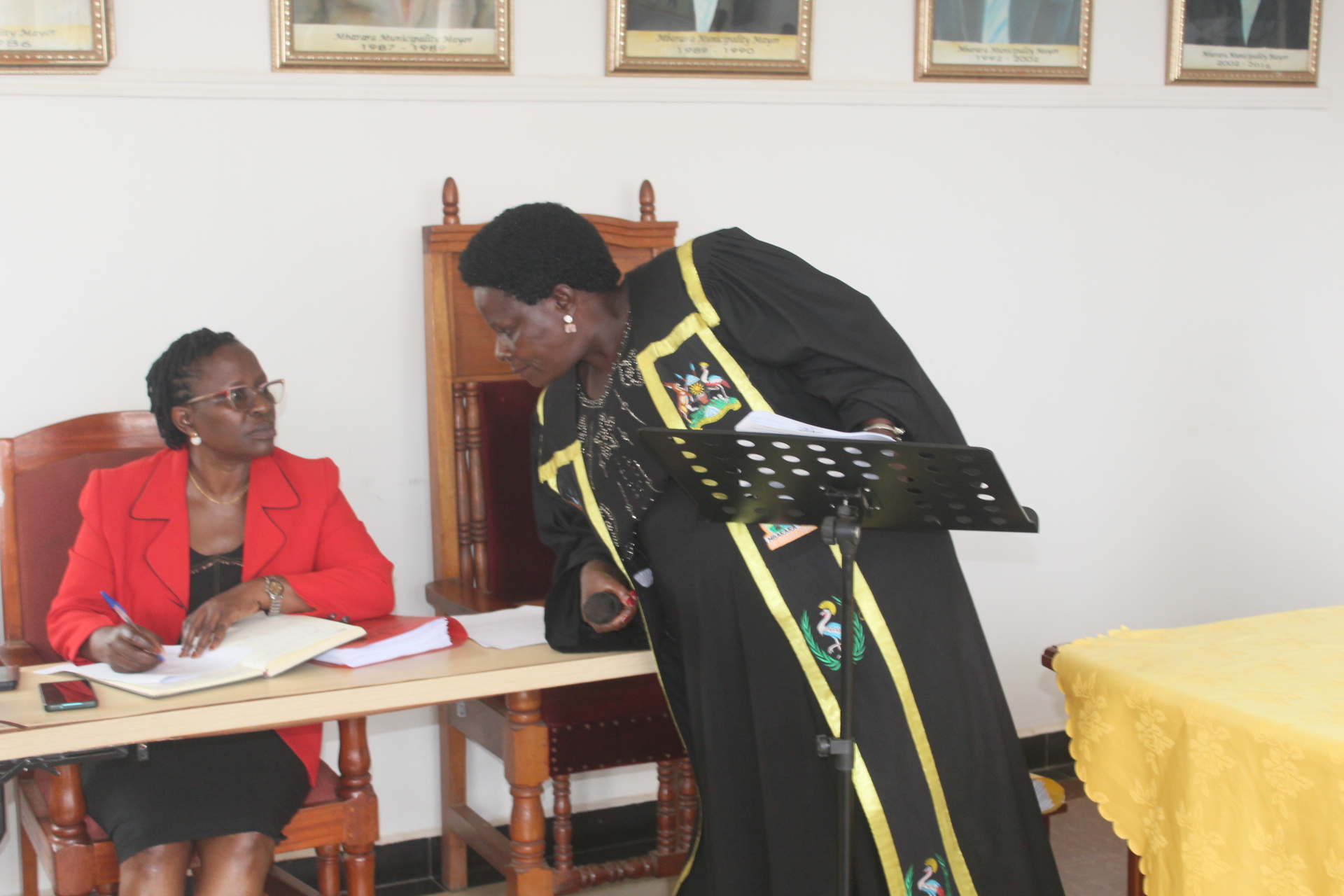
Priscal Murongo, Deputy Mayor inquiring from the Town Clerk.
By Joshua Nahamya
Mbarara City
Leaders in Mbarara City have expressed deep concern that the ongoing strike by teachers could undermine pupils’ performance in the forthcoming Primary Leaving Examinations (PLE). City Speaker Bonny Tashobya Karutysa, speaking during a council meeting on Tuesday, said results from recent mock exams already paint a worrying picture.
“Our education system is struggling with the new curriculum, and now pupils are not being taught because of the strike. The poor performance in mock exams is a clear warning, not only here in Mbarara but also in rural districts like Buhweju,” Tashobya said.
He called on government to address the salary grievances of humanities teachers, who have been on strike since mid-September. “Arts teachers earn about Shs 580,000 while their counterparts in sciences receive over Shs 4 million. Even town clerks now earn Shs 12 million. This disparity is unfair. Teachers deserve better if we expect strong performance in schools,” he added.
Salary Gap Causing Imbalance
Tashobya also warned that the salary imbalance is pushing students to abandon arts subjects for sciences, which could have long-term consequences. “At Ntare, Maryhill, and Mbarara High School, the number of arts students is shrinking. If this trend continues, we risk a shortage of professionals in key non-science sectors such as public administration and law,” he explained.
The speaker urged President Museveni and the Education Ministry to urgently resolve the standoff to prevent further damage to the education sector.
Workers’ Leaders Speak Out
Workers’ Councillor Ben Patrick Twahirwa echoed similar concerns, stressing that pupils’ performance has already been compromised. “UNATU teachers have been on strike since 15 September. Scientists are important, but so are humanities. Not everyone is gifted in sciences. Society also needs communicators, artists, and leaders,” Twahirwa said.
He warned that the push toward sciences risks forcing students into courses they cannot excel in, leading to widespread underperformance. Twahirwa also highlighted understaffing in schools and called for the establishment of a Salary Harmonisation Commission and passage of the Minimum Wage Bill to tackle inequalities across sectors.
Private schools benefiting
Deputy Mayor Priscah Mulongo said low pay is forcing government teachers to seek work in private schools, leaving public institutions understaffed and pupils disadvantaged.
“It’s unfair for one teacher to earn Shs 4 million while another gets Shs 500,000 for doing the same job. In 2023, Mbarara ranked 7th nationally in PLE, and in 2024 we were 5th. This year, we had hoped to reach number one, but now pupils are at home while others are moving to private schools. If government doesn’t act, public schools will be outcompeted,” Mulongo warned. She appealed to government to raise arts teachers’ salaries to at least Shs 1.5–2 million.
Government appeals for calm
Deputy Resident City Commissioner for Mbarara City South, Gerard Tukamuhebwa, acknowledged teachers’ grievances but urged them to pursue dialogue.
“Teachers have a right to demand better pay, but the method matters. Government has already tabled an offer of a 25% increase, but teachers want 50%. A middle ground must be reached so that the country can sustain what is promised,” Tukamuhebwa said.
Regional impact
The strike’s impact is spreading beyond Mbarara. In Ibanda District, the local government offices were closed in solidarity, while in Mbarara City, Town Clerk Justine Barekye held meetings urging staff not to join the industrial action.
With just weeks to the PLE in November, the growing tension between government and teachers threatens to derail years of progress in Mbarara’s education sector. Leaders say unless government swiftly addresses the salary disparities, thousands of pupils risk failing in their final exams — a setback that could haunt the city for years to come.
Torch Media Africa



