Written By | Health Agencies

A supplement sold over the counter to 30 million Americans is now linked to a 90% spike in heart failure risk — and doctors say the warning is getting louder by the week
Health Desk
CHICAGO — It sits in gummy bears on the checkout aisle. It's stirred into "sleepy girl mocktails" all over TikTok. Parents give it to their kids before road trips. And now, cardiologists across the country are fielding a wave of anxious phone calls after a study delivered a gut-punch of a statistic: people who take melatonin every night for a year or more may be nearly twice as likely to develop heart failure as people who don't.
The number driving the panic: 90%.
That's how much higher the five-year risk of heart failure was among long-term melatonin users compared with insomniacs who didn't take it, according to research out of SUNY Downstate Health Sciences University that has been recirculating hard this week across health systems, morning shows, and cardiology newsletters. Northwestern Medicine, Baptist Health, Nebraska Medicine, OhioHealth and Parkview Health have all issued fresh explainer pieces in the last several days, a sign that the finding — first floated at a major cardiology conference last fall — has crossed from academic curiosity into full-blown public worry.
"Melatonin supplements may not be as harmless as commonly assumed," said Dr. Ekenedilichukwu Nnadi, chief resident in internal medicine at SUNY Downstate/Kings County Primary Care in Brooklyn and the study's lead author. "If our study is confirmed, this could affect how doctors counsel patients about sleep aids."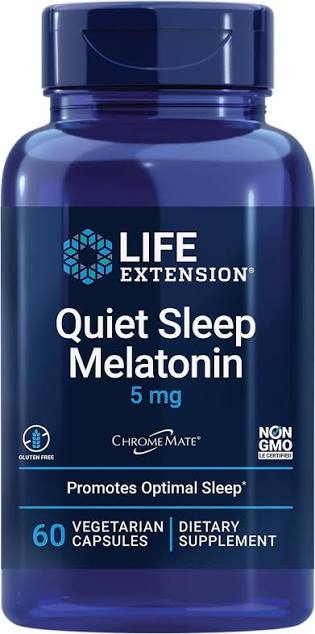
THE NUMBERS BEHIND THE SCARE
Nnadi's team combed through five years of electronic health records covering more than 130,000 adults in the TriNetX Global Research Network, a massive international database that pools de-identified patient data from dozens of health systems. Every person in the study had been diagnosed with insomnia. The average age was 55.7, and nearly two-thirds were women — squarely the demographic that reaches for a melatonin bottle when 2 a.m. rolls around and sleep won't come.
Researchers split the group in two: people with at least one documented melatonin prescription and a year or more of continuous use, and people with insomnia who had no melatonin anywhere in their chart. The two groups were then matched — rigorously, according to the American Heart Association, on more than 40 different baseline health variables, from age and sex to blood pressure, diabetes status, and existing heart conditions — so that the comparison wasn't simply "healthy sleepers versus sick ones."
What came out the other side was stark. Over the five-year follow-up:
Long-term melatonin users had an 89-90% higher hazard of developing new heart failure. They were nearly 3.5 times more likely to be hospitalized specifically for heart failure. And they were almost twice as likely to die from any cause during the study period, not just cardiac causes.
Those are not small effect sizes. In cardiology, a 90% relative increase in risk for a condition as serious as heart failure — where the heart can no longer pump blood efficiently enough to meet the body's needs — is the kind of number that normally accompanies a drug recall, not a $30 bottle of supplements sold without a prescription.
WAIT — IS THIS ACTUALLY NEW?
Here's the twist buried in the fine print, and it matters: this data was first unveiled as an abstract at the American Heart Association's Scientific Sessions in November 2025. It has not yet been published as a full, peer-reviewed paper in a scientific journal — it exists right now only as a conference abstract, posted to the AHA's own journal Circulation as a summary of findings rather than a complete manuscript. Nearly a year later, the finding is roaring back into headlines this week as more outlets pick it up, cardiologists weigh in publicly, and patients start asking their doctors about it in droves.
Why the renewed attention now? Partly it's the news cycle catching up to a slow-burn story. Partly it's that melatonin use has only kept climbing — CDC survey data shows adult melatonin use has roughly quintupled over the past two decades, driven by a pandemic-era sleep crisis that never fully resolved and a wellness-influencer culture that treats the hormone as a harmless, "natural" alternative to prescription sleep aids. And partly it's that, in the world of medical news, a scary round number like "90% higher risk" has a long shelf life.
Independent scientists have not been shy about applying the brakes on the panic, though. The UK's Science Media Centre gathered expert reaction that repeatedly hammered the same point: this is an association, not proof of causation. Researchers did not have access to how much melatonin patients were actually taking, whether it was an over-the-counter gummy or a prescription-strength formulation, how severe each patient's underlying insomnia was, or whether untreated mental health conditions — which independently raise heart failure risk — were driving people toward both worse sleep and heavier melatonin use in the first place.
"What it showed was an association between melatonin use and heart failure, not causation," multiple outlets summarizing the findings were careful to note, echoing language from the researchers themselves. In plain English: people who need melatonin every night for a year might simply be sicker, more stressed, or more sleep-deprived to begin with — and it could be that underlying dysfunction, not the pill, that's stressing their hearts.
WHAT DOCTORS ARE ACTUALLY TELLING PATIENTS
Despite the caveats, the volume of institutional response is telling. When Northwestern Medicine, Baptist Health, Nebraska Medicine, OhioHealth, and Parkview Health all publish patient-facing explainers on the same study within days of each other, it's because their cardiologists are getting asked about it at the bedside, not because a press release told them to.
The consistent advice emerging from those pieces: melatonin is not a vitamin, and "natural" doesn't mean "risk-free." It is a hormone that plays a role in regulating not just sleep-wake cycles but also blood pressure and heart rhythm. Short-term, occasional use — a few nights around jet lag, or a temporary rough patch — is broadly considered low-risk by the cardiologists weighing in. The concern is specifically about daily, indefinite, "I've been taking this every night for years" use, especially among people who already have risk factors for heart disease: high blood pressure, diabetes, obesity, or a family history of cardiac problems.
Doctors are also using the moment to point out something less flashy but arguably more important: insomnia itself, left untreated, is independently linked to higher cardiovascular risk. Chronic poor sleep raises blood pressure, spikes stress hormones, and is associated with obesity and diabetes — all established heart failure risk factors. That means some of what this study is picking up may simply be that people with the worst, most stubborn insomnia — the kind that pushes someone to rely on nightly melatonin for a full year — already have a heart-unhealthy sleep profile long before they ever reach for a bottle.
THE BIGGER PICTURE: A MOSTLY UNREGULATED MARKET
Part of what makes this story land so hard is the regulatory backdrop. In the United States, melatonin is sold as a dietary supplement, not a drug, which means the FDA does not review it for safety or efficacy before it hits shelves, and dosage on the label is not always what's actually in the bottle. Independent lab testing over the past several years has repeatedly found that gummy and capsule melatonin products can contain wildly different amounts than advertised — in some analyses, off by more than 100% in either direction — and some have even turned up trace amounts of serotonin, an ingredient not listed at all.
That means two people both taking "the recommended dose" of melatonin, from two different bottles, could be dosing themselves very differently — a variable this study, like most large database studies, had no way to account for.
WHAT THIS MEANS FOR YOU
If you take melatonin once in a while — for a red-eye flight, a bad week, or an occasional restless night — nothing in this research suggests you need to panic. The concern researchers and cardiologists are raising is specifically about daily, long-term, indefinite use, particularly if you already carry other cardiovascular risk factors.
If that describes you, doctors are recommending a conversation, not a cold-turkey stop: talk to your physician about why you've needed melatonin every night for a year, whether an underlying sleep disorder like sleep apnea has been ruled out, and whether cognitive behavioral therapy for insomnia (CBT-I) — which has a much stronger evidence base for long-term use than melatonin does — might be a better long-term fix than a nightly supplement.
It's also worth having your blood pressure and general cardiovascular risk checked if you've been a long-term nightly user, especially if you're over 50 or have other risk factors, simply so any early signs of heart strain get caught rather than dismissed as "just getting older."
THE BOTTOM LINE
This is not a final verdict on melatonin — it's a red flag from a large, carefully matched, but still preliminary and unpublished dataset, and the researchers themselves are the first to say it needs to be replicated in a peer-reviewed study before anyone rewrites clinical guidelines. But the sheer size of the risk increase, combined with just how many people reach for melatonin as a supposedly consequence-free sleep fix, is exactly why hospital systems nationwide are rushing to get ahead of the conversation this week rather than waiting for the final published paper.
For now, the message from cardiology is consistent: melatonin isn't candy, insomnia itself is a heart risk worth treating seriously, and "natural" was never a synonym for "safe at any dose, for any length of time."
If you are considering stopping or changing any supplement or medication, talk to your doctor first — do not adjust your treatment based on preliminary research alone.



