Written By |
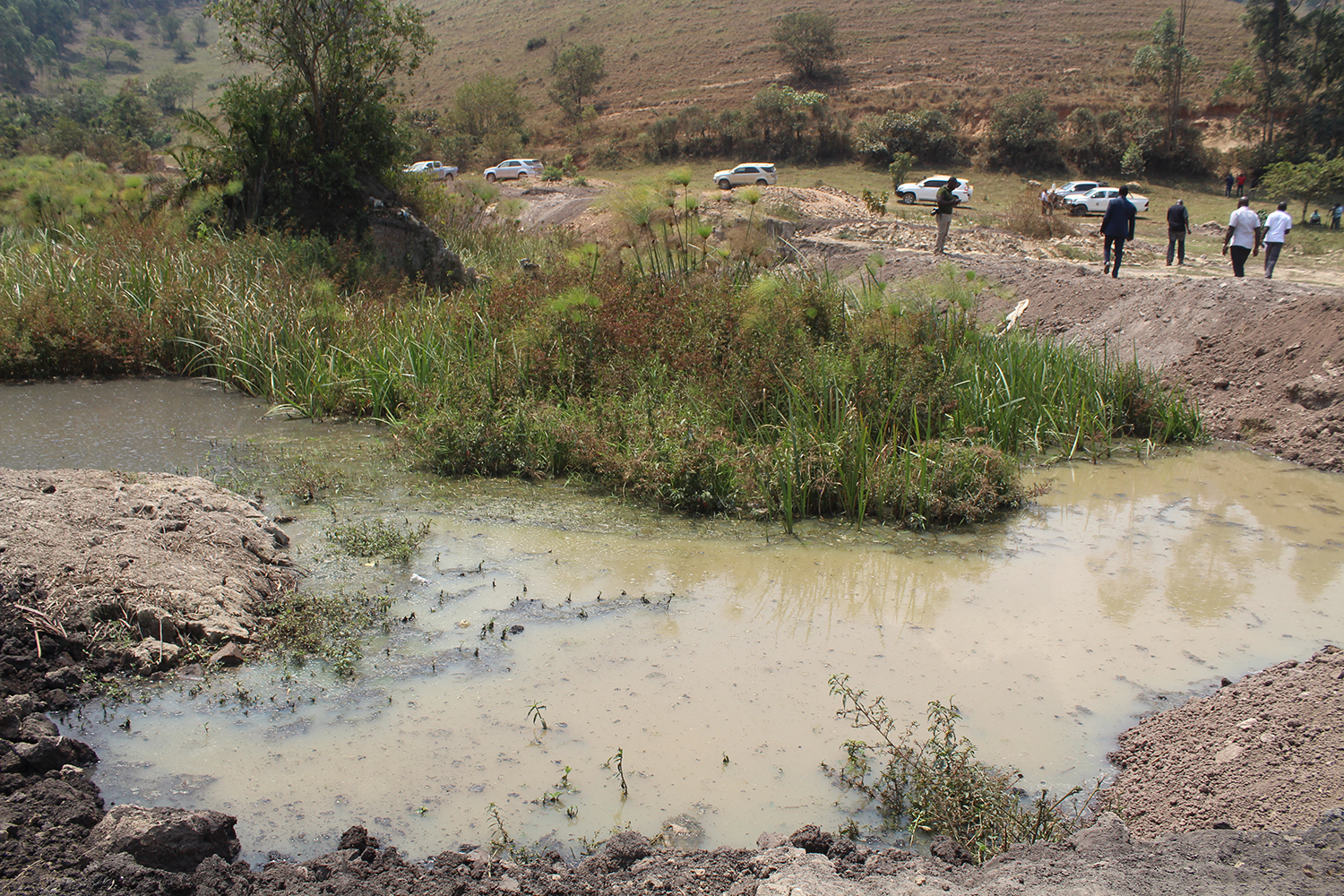
The Kibale wetland in Rwampara district that was destroyed due to brick laying is under restoration after sensitization. (Photo: Jovita Kyarisiima)
By Jovita Hasto
Rwampara
The Ministry of Water and Environment and its partners have registered success in efforts to save wetlands in Rwampara District. This follows positive responses from locals who had been dwelling near wetlands and encroaching on them for activities such as farming and bricklaying. After sensitization campaigns, they have peacefully accepted to vacate. The restoration process, which began in 2019, is now showing results as encroachers voluntarily leave wetlands to allow River Rwizi to regain its former glory.
River Rwizi had started drying up due to human activities such as bricklaying, cattle grazing, sand mining, and cultivation, which have continued to degrade its ecosystem. Ms. Beatrice Kobusingye, a resident of Karagwe Village in Kakigani Ward, Rwampara District, is among the farmers who had encroached on wetlands. After sensitization by the World Wide Fund (WWF), she vacated and joined a local SACCO, where she received funds to start income-generating projects.
"I was one of the residents farming and fetching water in wetlands, but I did not know the damage I was causing to the environment," she said.
Through WWF support, she invested her share of Shs10 million in goat rearing. “Now I have seven goats, and we are still benefiting,” she noted, adding that the project has enabled her to pay school fees and earn more than she previously did from farming in wetlands. She was also awarded a water tank to support her household.
Mr. Amos Kankunda, the Rwampara County Member of Parliament, urged communities to take responsibility in protecting wetlands for future generations.
"It is our responsibility as leaders to sensitize locals on conserving natural resources. If we fail to do so, the future generation will suffer," he said.
Mr. Phillipson Mugumya, the District Natural Resources Officer, observed that despite government funding for restoration, wetlands remain under threat mainly from farming, construction, sand mining, and eucalyptus planting. “Most people here encroach on wetlands for livelihood. To succeed, we must support them with alternative projects such as poultry and fish farming, which are less harmful,” he said.
Mr. Ivan Tumuhimbise, WWF Country Director in Uganda, noted that demarcating catchment areas and involving locals has been key in reducing encroachment.
“We started with bricklayers in Kibale Wetland, and we are glad they vacated peacefully. Restoration is now ongoing, with support from local and district leaders,” he said.
Mr. Emmanuel Njuki, Head of Corporate and Legal Affairs at Nile Breweries, emphasized the need for corporate involvement.
“If communities are not supported to engage in sustainable activities, nature will dry up, and businesses that rely on water will collapse. Companies must come out and sensitize locals to protect wetlands,” he said.
Torch Media Africa



