HEALTH
Cameron Webb, Virginia's state health commissioner, had to write a letter to every clinician in the state this week explaining something that had never happened in Virginia's history: a resident had come down with dengue fever without ever leaving the state, the country, or even, as far as investigators can tell, their own zip code.
No trip to the Caribbean. No overseas wedding. No layover in Puerto Rico. Just a mosquito that, sometime in July, bit an infected traveler recently back from abroad, then flew a few hundred yards and bit someone else. That second person is now Virginia's first-ever documented case of "autochthonous" — locally transmitted — dengue.
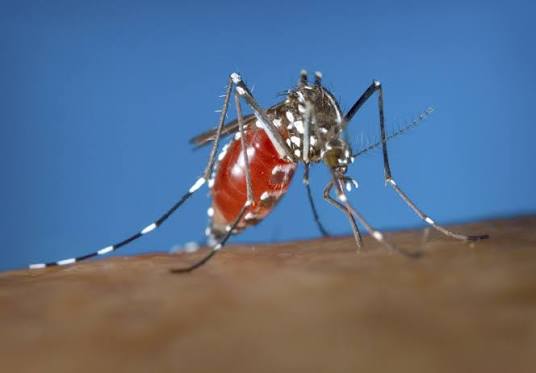
It sounds almost too mundane to be alarming. One bite. One mosquito. One unlucky Northern Virginia resident in Fairfax or Loudoun County. But public health officials say the case is a genuine milestone, and not a good one. It means the specific mosquito species capable of carrying dengue, and the specific conditions that let the virus incubate and spread, now exist as far north as the D.C. suburbs — territory that, a decade ago, would have been considered far too cool and far too far from the tropics for dengue to take hold.
"The overall risk to Virginians remains low," state officials stressed in their advisory, the standard line trotted out whenever a "first ever" disease case shows up somewhere it was never supposed to be. But low risk today doesn't mean low risk next August, or the one after that — and infectious disease researchers who track mosquito-borne illness have been warning for years that this exact scenario was coming.

THE COUNTY WITH THE FIRST DENGUE PROBLEM WASN'T EVEN THE FIRST
While Virginia was digesting the news of its own unprecedented case, Florida — dengue's more familiar American address — was busy racking up local transmissions of its own. Miami-Dade County confirmed its own locally acquired case in early August, becoming the third Florida county this year, after Hillsborough (July) and Palm Beach (also early August), to record dengue transmission that didn't involve a plane ticket.
Statewide, Florida has now logged three local cases and roughly 49 travel-associated cases as of late July, with 21 of those travel cases concentrated in Miami-Dade alone. The Florida Department of Health in both Miami-Dade and Palm Beach counties issued mosquito-borne illness advisories within days of each other in early August, urging residents to dump standing water, wear repellent, and watch for symptoms: sudden high fever, severe headache, pain behind the eyes, joint and muscle pain so intense that dengue earned the nickname "breakbone fever" long before anyone in Virginia had heard of it.
Nationally, the picture is worse than it looks county by county. The CDC has now recorded more than 500 dengue cases in the U.S. so far in 2026, and health officials say the mosquito responsible — Aedes aegypti, along with its cousin Aedes albopictus, the Asian tiger mosquito — is expanding its range northward as winters get shorter and summers get hotter and wetter. For context, the U.S. averaged just 828 dengue cases a year total between 2010 and 2023. Last year alone blew past that with room to spare, and 2026 is on pace to do it again.
Researchers investigating a separate, unrelated outbreak in Los Angeles County last year documented something just as unsettling: a seven-week chain of sustained local dengue transmission in a major U.S. city that had never previously seen it, published in the CDC's own journal, Emerging Infectious Diseases. Put Los Angeles, Miami-Dade, and now Fairfax County side by side, and a pattern emerges that looks less like a string of coincidences and more like a slow-motion redrawing of the map.
WHY YOUR BACKYARD IS SUDDENLY MOSQUITO TERRITORY
Dengue has always been a tropical and subtropical disease — a problem for travelers coming back from Southeast Asia, Latin America, and the Caribbean, not something homegrown in the mid-Atlantic. What's changed is the mosquito's real estate.
Aedes aegypti and Aedes albopictus need specific conditions to thrive and to transmit disease efficiently: warm temperatures, humidity, and a long enough season for the virus to incubate inside the mosquito before it bites its next victim. Climate scientists studying vector-borne disease have been documenting, methodically, how a warming planet is quietly satisfying more and more of those conditions in places that used to be inhospitable — expanding both the geographic range and the length of the transmission season for these mosquitoes across the temperate United States, while simultaneously intensifying transmission in places that were already tropical.
Translated out of research-speak: the mosquitoes are moving north, and they're staying active longer once they get there. A bite in Fairfax County in August 2026 would have been essentially impossible to result in local transmission a generation ago. Now it's a documented case with the state health commissioner's name on the advisory letter.
There's a political wrinkle layered on top of the biology, too. In Florida — ground zero for the country's dengue problem — voters are heading to the polls in November to decide on a statewide property tax amendment that would cut funding to a range of local services, including the state's network of independent mosquito control districts. Those districts are the ones responsible for the larvicide treatments, aerial and ground spraying operations, and standing-water abatement that currently keep Aedes aegypti populations in check in hot spots like Miami-Dade. Public health advocates warn that gutting mosquito control funding in the middle of the state's worst dengue year in recent memory is, to put it mildly, terrible timing.

NO VACCINE, NO CURE, JUST PREVENTION
Here's the part that should really get your attention: there is no dengue vaccine approved for general use in the continental United States, and no antiviral treatment exists for the virus once you've caught it. Doctors can only manage symptoms — fluids, rest, fever control — and watch closely for the small percentage of cases that progress to severe dengue, a potentially life-threatening complication involving plasma leakage, bleeding, and organ impairment.
A vaccine, Dengvaxia, does exist, but it's approved in the U.S. only for children ages 9 to 16 who live in dengue-endemic areas like Puerto Rico and have laboratory-confirmed evidence of a previous dengue infection — a narrow eligibility window that leaves the vast majority of Americans, including every resident of Virginia and the vast majority of Floridians, with zero vaccine protection available to them.
That leaves prevention as the only real tool on the table, and it's decidedly low-tech: empty anything that holds standing water — flowerpots, gutters, bird baths, forgotten buckets, even bottle caps can breed a generation of mosquitoes. Wear EPA-registered insect repellent. Wear long sleeves during peak biting hours at dawn and dusk. And if you develop a sudden high fever with severe headache, eye pain, or joint pain within two weeks of any mosquito exposure — even if you never left your home state — tell your doctor you're worried about dengue specifically, because it's not the first thing most U.S. physicians are trained to suspect.
EXPERT PERSPECTIVE
Virginia's own health department framed the Fairfax County case with unusual bluntness for a government advisory. In his letter to clinicians, Commissioner Webb explained the transmission chain in plain terms: a local mosquito almost certainly bit a Virginia resident who had recently returned from international travel and was already carrying the virus, then bit a second person nearby days later, passing the infection along entirely within the state's borders. It's the textbook definition of "the virus doesn't need your passport to spread anymore" — it just needs one mosquito with a short commute.
Researchers who study the intersection of climate and infectious disease have been sounding a version of this alarm for years: as Aedes mosquito populations expand into new U.S. territory and their active season stretches longer into the calendar, isolated local transmission events that used to be virtually unheard of outside South Florida and South Texas are going to keep happening, and keep happening farther north, more often, for longer stretches of the year. Los Angeles saw it. Miami-Dade, Palm Beach, and Hillsborough counties are seeing it happen repeatedly, in the same single season. Now Fairfax County has seen it too. Investigators emphasize this is exactly the pattern climate-suitability models have been predicting — and that better mosquito surveillance, not just after-the-fact case investigation, is going to be essential as the range keeps shifting.
WHAT THIS MEANS FOR YOU
If you live anywhere east of the Rockies and south of, say, the Great Lakes, dengue is no longer purely a "did you travel somewhere tropical" question — it's now, at least in isolated pockets, a "did a mosquito in your own neighborhood happen to bite the wrong person first" question. The overall odds of any individual American catching locally transmitted dengue remain low. But low is not zero, and the trend line over the past several years points in exactly one direction: more local cases, in more states, more often.
Practical takeaways: treat mosquito bites as a genuine health risk this summer, not just an itchy nuisance. Eliminate standing water around your home this week — it takes ten minutes and it's the single most effective thing an individual can do. If you or a family member develops a sudden, severe fever with intense headache and joint pain in the coming weeks, seek medical attention and specifically mention dengue as a possibility, especially if you live in Florida, Virginia, or anywhere else that's recently reported local transmission. And if you're a Florida voter heading to the polls in November, know that the mosquito control funding question on your ballot isn't an abstract budget line — it's connected directly to how many more Miami-Dades and Palm Beaches show up on the map next summer.
CONCLUSION
A single mosquito bite in Fairfax County has quietly rewritten what health officials thought they knew about dengue's American reach. It's not a headline about a distant outbreak in a country most Americans couldn't find on a map — it's a headline about a disease that used to require a passport, and now, for the first time in Virginia's history, doesn't. Florida's mosquito control districts are fighting a multi-front battle against a virus that's already establishing beachheads county by county, even as their own funding hangs in the balance of a November vote. And with no vaccine available to the general public and no antiviral cure on the horizon, the only real weapon most Americans have against dengue's slow creep northward is the same one their grandparents had: empty the bucket, wear the repellent, and watch the mosquitoes a little more closely than they used to.
Note: This article discusses a disease outbreak affecting public health. If you have concerns about symptoms or exposure, consult a healthcare provider.
Published By | Features Editor