HAMILTON, ONTARIO / SÃO PAULO
For nearly five years, the millions of people living with long COVID fatigue have heard some version of the same sentence from their doctors: there's nothing proven that actually works. This week, that sentence got a lot harder to say.
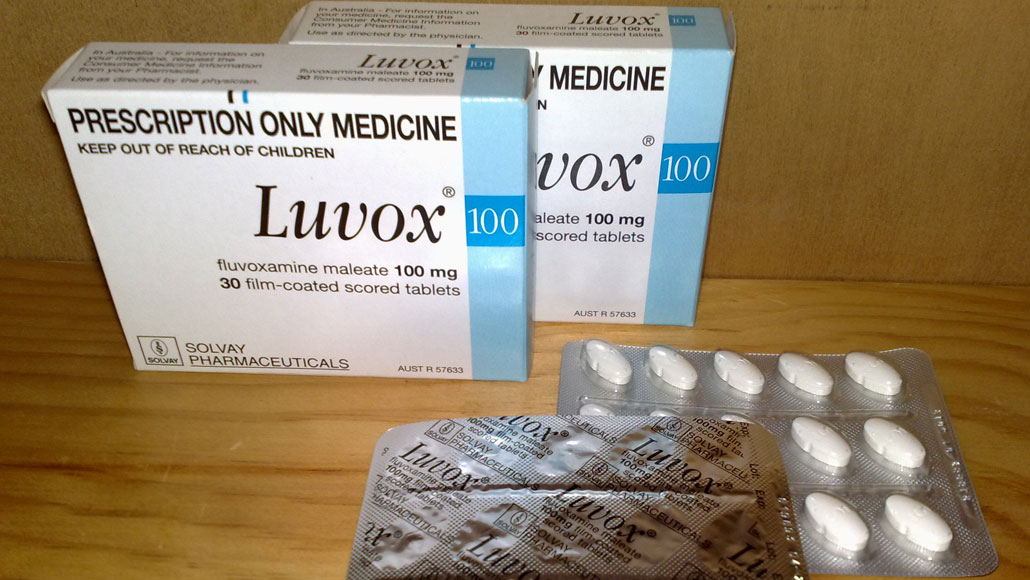
A rigorous, placebo-controlled clinical trial co-led by researchers at McMaster University and published in the Annals of Internal Medicine has found that fluvoxamine — a decades-old, generic antidepressant that costs pennies a pill — significantly reduced fatigue and improved quality of life in adults suffering from long COVID, with the benefit still holding a full month after patients stopped taking it. The finding, first published March 31 and freshly recirculating through the medical press this month after fresh coverage from outlets including ScienceDaily, is being described by long COVID researchers as one of the first genuinely evidence-based treatment options for the condition's most disabling and least understood symptom.
"This is an important step forward for patients who have been desperate for evidence-based options," said Edward Mills, the trial's senior author and a professor in McMaster's Department of Health Research Methods, Evidence, and Impact.
THE SYMPTOM THAT WON'T GO AWAY
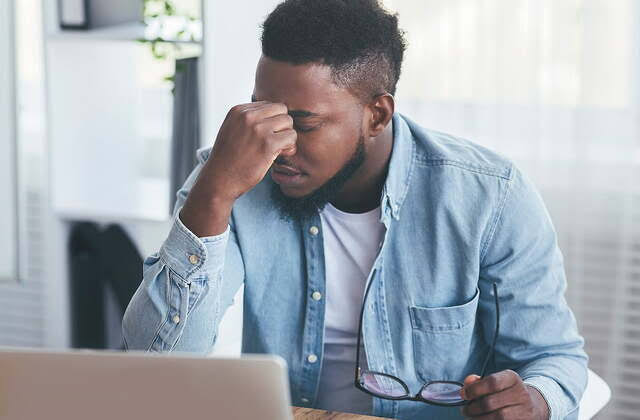
Fatigue is, by a wide margin, the most common complaint among people with long COVID — the catch-all term for symptoms that persist for months or years after a SARS-CoV-2 infection has cleared. Unlike ordinary tiredness, long COVID fatigue is frequently described by patients as a full-body exhaustion that doesn't improve with rest and can be dramatically worsened by even mild physical or mental exertion, a phenomenon researchers call post-exertional malaise. For a meaningful slice of long haulers, the symptom is severe enough to end careers, unravel marriages, and confine previously active adults to their beds for large parts of the day.
Despite the condition affecting tens of millions of people worldwide since 2020, the cupboard of proven treatments has remained close to bare. Doctors have had little to offer beyond pacing strategies, symptom management, and, in many cases, an honest shrug.
Mills and his co-investigators, led by first author Thiago Reis in Brazil, set out to change that by testing two existing, cheap, widely available drugs that already had a biological rationale for why they might help: fluvoxamine, an SSRI antidepressant with anti-inflammatory properties independent of its effect on mood, and metformin, the ubiquitous first-line diabetes medication that some earlier, smaller studies had suggested might reduce viral persistence and post-COVID symptoms.
"We wanted to test whether two existing, widely available, and affordable medications could help," Mills explained. "Both had biological reasons to think they might work against long COVID fatigue, but neither had been rigorously tested for this purpose in a proper clinical trial."
INSIDE THE TRIAL
The study enrolled 399 adults in Brazil, all of whom had experienced fatigue for at least 90 days following a confirmed SARS-CoV-2 infection — the clinical threshold commonly used to define long COVID. Participants were randomly assigned to one of three groups: fluvoxamine at 100 milligrams twice daily, metformin at 750 milligrams twice daily, or a matching placebo, taken for 60 days using an adaptive randomized trial design that allowed researchers to adjust enrollment as early data came in.
The results, tracked out to both day 60 and day 90, split cleanly down the middle. Fluvoxamine group patients showed a statistically significant reduction in fatigue scores compared with placebo at day 60, with researchers calculating a 99% probability that the drug outperformed placebo — about as close to a slam dunk as clinical trial statistics get. Crucially, the benefit didn't evaporate once the pills stopped: at day 90, a full month after the 60-day treatment course ended, the fatigue reduction in the fluvoxamine group was not just sustained but slightly larger than it had been at day 60.
Metformin, by contrast, showed no meaningful benefit for fatigue over placebo — a disappointing result for a drug that had generated real optimism in the long COVID research community after earlier, smaller studies hinted it might disrupt the virus's ability to persist in the body.
Just as notable as fluvoxamine's effectiveness was its safety profile. Adverse events were actually less frequent in the fluvoxamine group — 20% of patients — than in either the metformin group (28.8%) or the placebo group (29.7%). Serious, higher-grade adverse events were rare across all three arms of the study. Patients on fluvoxamine also reported improved quality of life scores relative to the other two groups, suggesting the benefit extended beyond a single symptom measure into how patients actually felt about their day-to-day functioning.

WHY A DECADES-OLD ANTIDEPRESSANT MIGHT FIGHT A VIRUS'S AFTERMATH
Fluvoxamine has been on pharmacy shelves since 1994, originally approved to treat obsessive-compulsive disorder, and it earned a strange second act during the acute phase of the COVID-19 pandemic, when several studies suggested that early use in newly infected patients might reduce the risk of hospitalization — a theory researchers linked to the drug's action on a cellular receptor involved in regulating inflammation, separate entirely from its effect on serotonin and mood.
That anti-inflammatory mechanism is precisely why Mills' team thought it was worth testing against long COVID fatigue, a condition increasingly understood to involve chronic, low-grade inflammatory processes and immune dysregulation that lingers long after the original infection has cleared. If fatigue in long COVID is partly driven by an immune system that never quite stood down, a drug that dials down inflammatory signaling — rather than simply masking tiredness the way a stimulant would — has a plausible shot at addressing something closer to a root cause.
Researchers are careful to note that the trial does not prove fluvoxamine "cures" long COVID or reverses the underlying condition. What it demonstrates, in Mills' words, is a "consistent and meaningful" benefit on a symptom that has resisted nearly every other intervention tried against it so far, in a drug that is already FDA-approved, off-patent, inexpensive, and stocked in virtually every pharmacy in the world.
THE PATIENT ANGLE ADVOCATES HAVE BEEN WAITING FOR
For long COVID patient advocacy groups, the results validate years of complaints that the condition has been chronically under-researched relative to its scale. Commentary on the trial from patient-focused organizations, including the UK's ME Association, has noted that while the fluvoxamine result is genuinely encouraging, it should be read alongside the broader pattern in long COVID research: promising signals for some interventions, disappointing results for others (as metformin's failure here illustrates), and an overall field still searching for treatments that meaningfully move the needle on the condition's most disabling symptoms.
That mixed picture is itself part of the story. A trial willing to test two candidate drugs head-to-head against placebo — and openly report that one failed — is exactly the kind of rigorous, adaptive design that long COVID research has often been criticized for lacking. The fact that it produced one clear winner, rather than two ambiguous non-results, is what has researchers cautiously energized rather than merely hopeful.
WHAT THIS MEANS FOR YOU
If you or someone you know has been living with long COVID fatigue, this study is not a green light to start self-medicating with a leftover prescription or an online pharmacy order. Fluvoxamine is a prescription SSRI with its own set of interactions, contraindications, and side effects, and 100 milligrams twice daily — the dose used in this trial — is a substantial dose that needs to be titrated and monitored by a physician, not started cold.
What the study does give patients is something many haven't had in years of dealing with this condition: a concrete, published, peer-reviewed data point to bring into a doctor's office. If you've been told there's nothing to try, this trial is evidence to the contrary, worth raising directly with a physician familiar with long COVID management, particularly given fluvoxamine's low cost and wide availability compared to more speculative or expensive experimental treatments circulating in wellness circles.
For the broader public, the study is also a reminder that not every breakthrough in medicine requires a new molecule, a decade of development, and a billion-dollar price tag. Sometimes the answer has been sitting in the generic drug aisle since the Clinton administration, waiting for someone to ask the right question about it in a properly designed trial.
CONCLUSION
Five years into the long COVID crisis, patients have grown understandably skeptical of headlines promising breakthroughs that quietly disappear from view a few months later. What sets this trial apart is its size, its rigor, its head-to-head design against a genuine placebo, and its refusal to oversell a mixed result — metformin failed, and the researchers said so plainly. Fluvoxamine's benefit was real, statistically robust, safer than the comparator drugs, and durable a month after treatment ended. It won't end the long COVID crisis on its own. But for a condition that has offered patients remarkably little to hold onto, a $10-a-month pill with a 30-year safety record just became one of the most credible options on the table.
Published By | Health News Editor