Written By | BK Mugizi
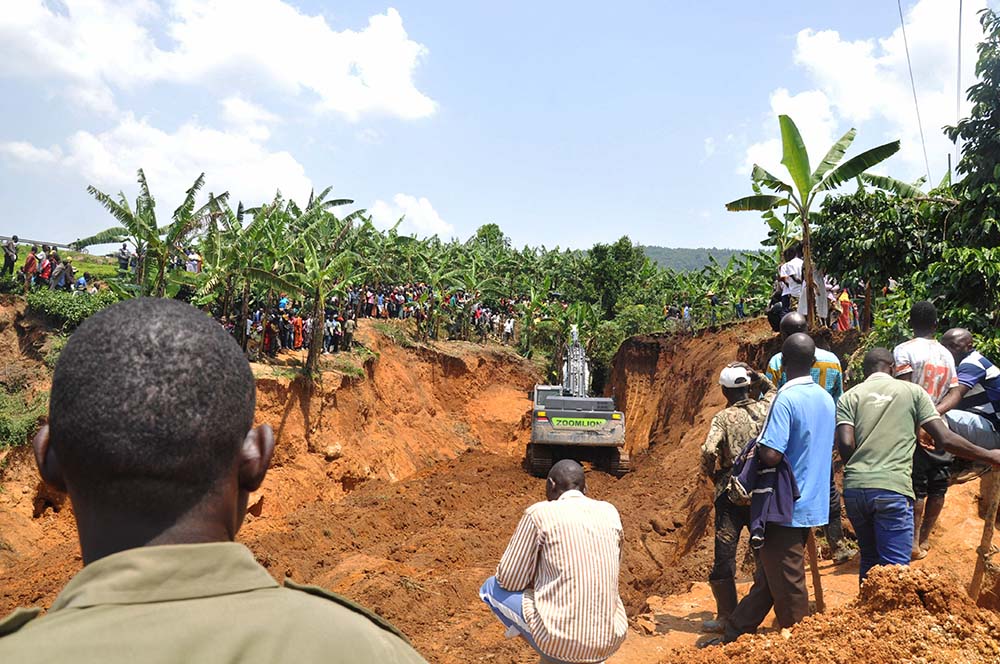
People in Bushenyi looking at the dead bodies from the mining site
BUSHENYI
What was once the peaceful quiet of rolling tea-covered hills has turned into a heavy silence of grief. Five people were buried alive on February 24, 2026, after a gold mine collapsed at Kayanga in Kyamuhunga Sub-county, exposing the growing dangers of informal mining in Igara West.
Over the past three years, artisanal gold mining has quietly expanded across Kyamuhunga Sub-county, Bitooma Town Council, and surrounding areas. The hills that once echoed with tea pluckers’ songs now conceal makeshift shafts dug deep into fragile soils.
Youth, middle-aged men, and increasingly women descend into narrow pits without helmets, boots, or structural support.
Driven by unemployment and declining tea incomes, artisanal mining has become a lifeline—but one built on risk. Mining pits are often dug several metres deep without reinforcement.
During the rainy season, loose soils become unstable, increasing the likelihood of deadly landslides.
Government Halts Operations
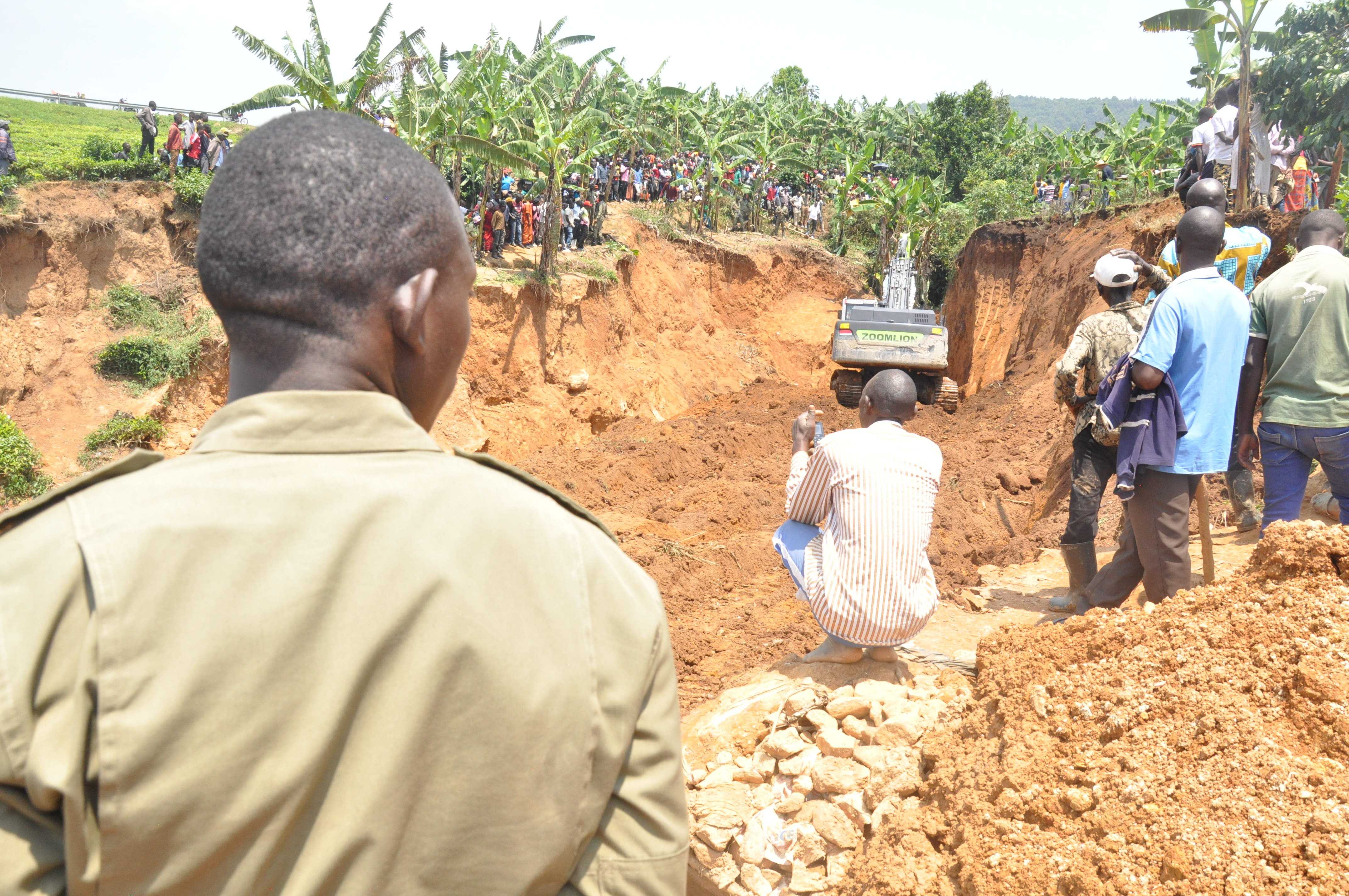
Following the collapse, police halted operations at the site. Bushenyi District Police Commander Felix Mugizi confirmed the suspension.
“No one is allowed to continue mining in that area until investigations are complete. Anyone found operating illegally will face the law,” he warned.
Deputy Resident District Commissioner Donanto Kasigazi said the government would conduct an environmental and safety assessment to establish the cause of the collapse.
“We condemn unsafe mining practices. We shall ensure proper measures are taken to prevent similar incidents,” he said.
Bushenyi District LCV chairperson Jafari Basajjabalaba described the incident as unfortunate and called for urgent reforms.
“We must sensitise our people about the dangers of unsupported pits. We are encouraging miners to organise themselves into groups and formalise their operations so they can be guided by technical officers,” he said.
He added that the district would work with relevant government agencies to strengthen monitoring and enforcement of safety standards.
Civil Society Raises Concerns
Kakonge Apollo, chief executive officer of the Western Ankole Civil Society Forum (WACSOF), condemned what he described as government laxity.
“It was unfortunate that lives were lost as a result of unregulated local mining activities. There is laxity on the part of government in ensuring compliance with even the most basic rules.
“Mining is inherently risky, and wherever it is happening, authorities must monitor activities closely to prevent loss of life and environmental harm,” he said.
Kakonge questioned whether anyone in government would take responsibility for the negligence that led to the deaths.
“The government, including district leadership, must do its part to prevent such tragedies,” he added.
Poverty Pushing Youth Underground
Residents say the mining boom is rooted in economic hardship. In Mashonga Ward, Sula Nuwe said many young people had few options long before gold fever gripped the area.
“Many young people previously earned a living by plucking tea, but following the decline in tea prices, they have turned to illegal mining in search of alternative income opportunities. Government should not only stop people from mining but also support them with safer methods and proper equipment,” he said.
Lauben Gumisiriza, a resident of Kayanga Cell, said most affected families depend entirely on gold mining.
“This is their only source of income. If you stop them without alternatives, they will return secretly,” he said.
Beatrice Birungi, the LCIII vice-chairperson of Kyamuhunga Sub-county, described the tragedy as a wake-up call.
“Lives are being lost because of poverty and weak regulation. We need a lasting solution, not temporary closures,” she said.
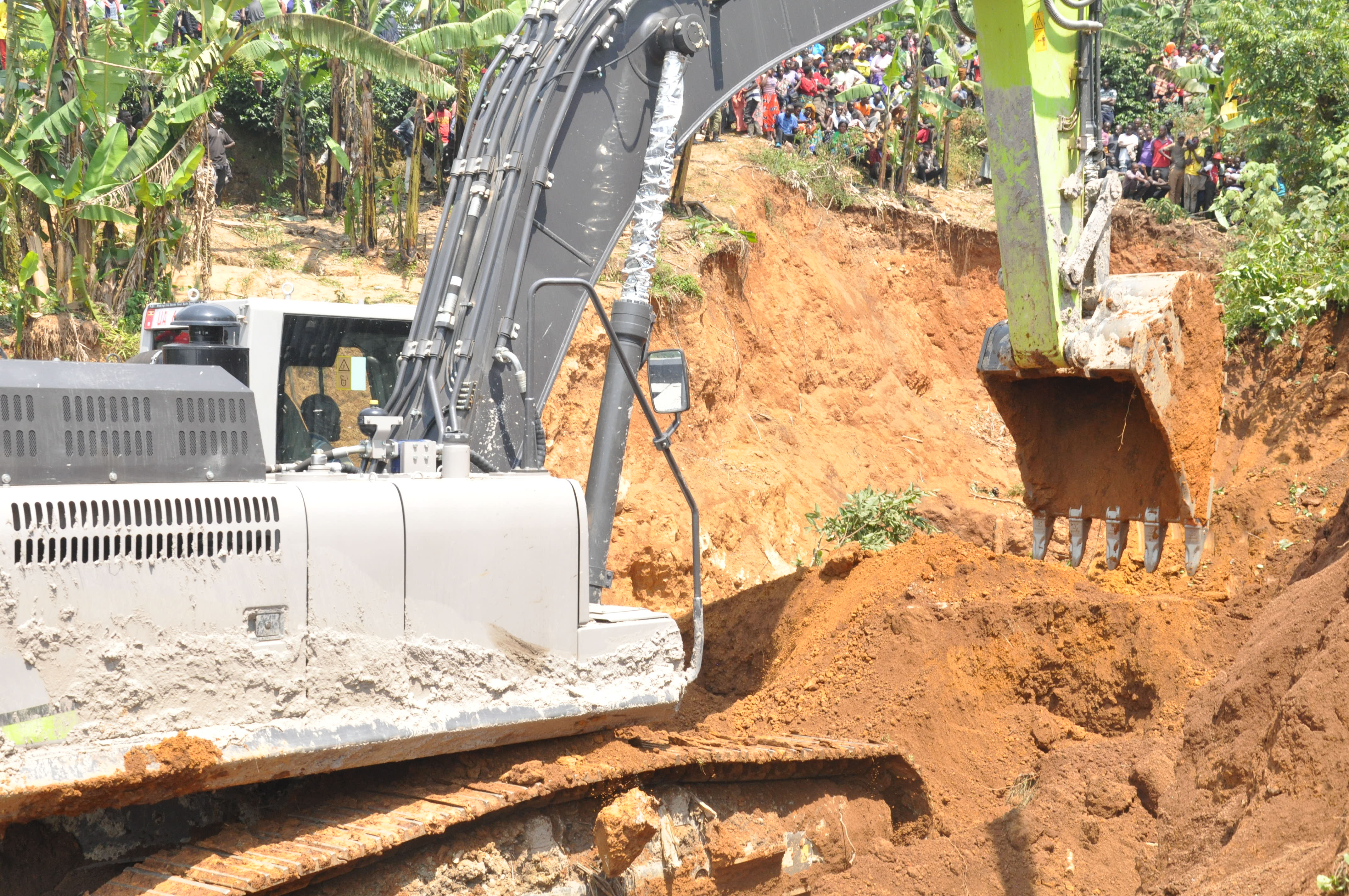
An excavator tries to retrieve the body of one of the deceased from the informal mining collapse
Families Left Shattered
For the family of 32-year-old Sansio Twijukye, the collapse erased not only a life but also the family’s future.
Esther Aikirize said her brother had become the family’s de facto father after their biological father died years ago.
“He was the heir. We have not only lost a brother but also the father of the family,” she said.
Twijukye leaves behind six children.
The tragedy also claimed the life of 16-year-old Stuart Kokyenga Akanyamba, who had stepped up as the primary provider for his siblings after their father’s death.
His mother, Evalyne Kyomuhendo, described him as both a son and a husband in responsibility.
“He was paying school fees for his siblings. He was the breadwinner of my family,” she said.
She said she received the news at around 2 p.m. and rushed to the scene in shock.
To compound the family’s grief, Shs700,000 that Stuart had saved was reportedly stolen during the funeral.
“He had planned to reach Shs2 million to educate his sister and enrol in a driving course. All his plans have perished,” she said.
Medline Ahumuza, 24, the widow of Julius Mujurizi, said her husband left behind an 11-month-old baby after only 22 months of marriage.
“When I heard he was trapped, I felt as if I had been struck by lightning,” she said.
Gold Beneath, Hardship Above
Igara West is reportedly rich in gold deposits, particularly in Kyanyamugiira, Nyakazinga, Kayanga, and Mirambi villages.
Yet residents question whether the mineral wealth beneath their soil has translated into development.
“There is gold here, but nothing has changed in our lives,” said one miner who preferred anonymity.
Adrine Ainomugisha, a resident of Mirambi, accused some investors of leaving behind dangerous open pits.
“Children have fallen into some of them,” she said.
Adolf Kanyomozi, the Kyamuhunga Sub-county LCIII chairperson, said weak regulation has created dangerous loopholes.
“Youth and investors are operating with minimal oversight due to gaps in mining regulations, putting our communities at risk of environmental damage and safety hazards,” he said.
Torch Media Africa



