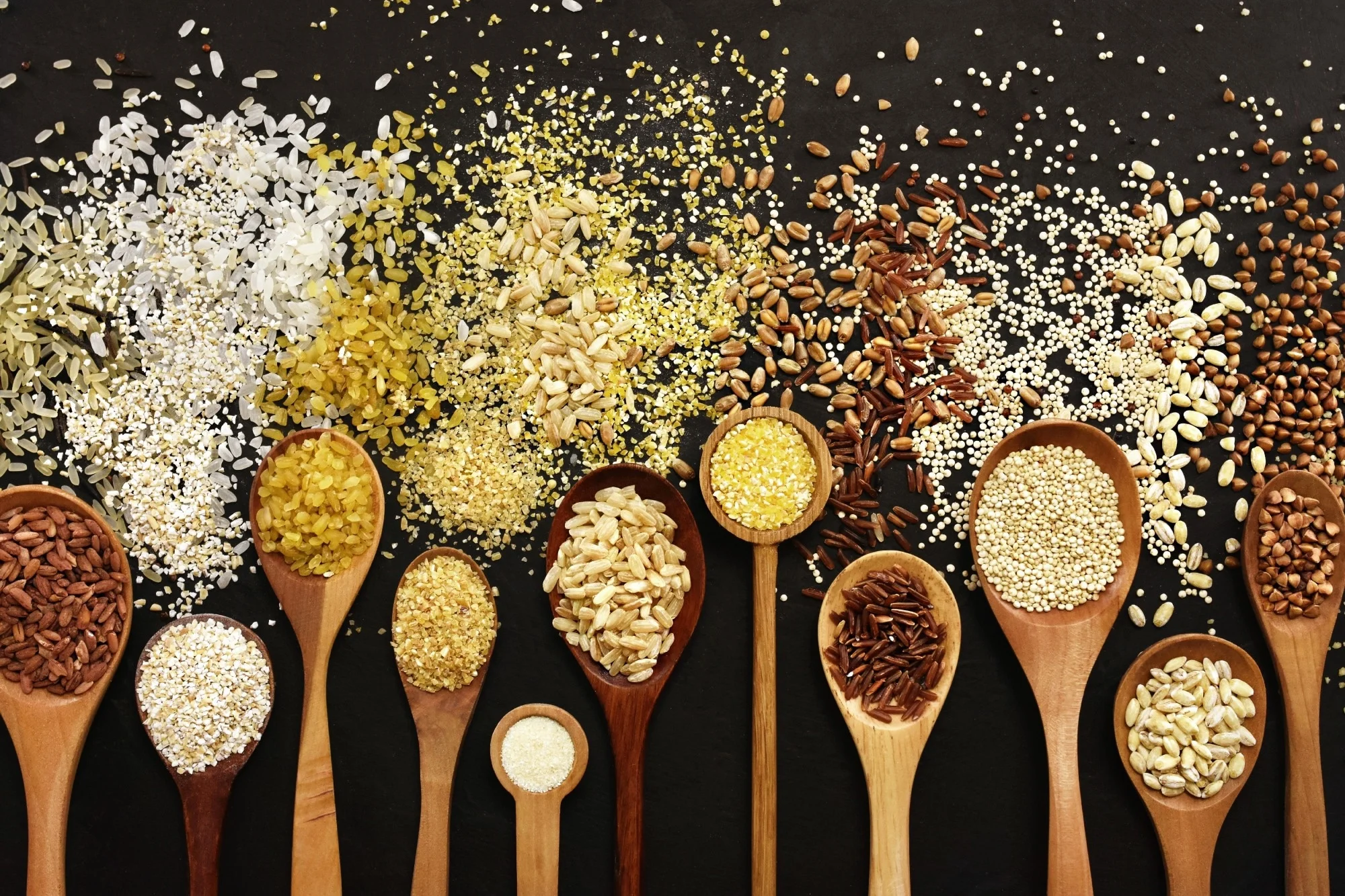
87 trials. 6,529 people. A quarter-century of contradictory results settled at last — except for one awkward phrase that keeps turning up in the small print next to the good news: "clinically irrelevant"
SOPHIA ANTIPOLIS, France
For fifty years the advice has been the same and the evidence has been a mess.
Eat whole grains, the guidelines say. Brown rice instead of white. Oats instead of cornflakes. Wholemeal instead of the soft white loaf. Population studies have backed it up for decades: people who eat more whole grain get less heart disease.
But population studies only tell you who eats what, not what the eating does. And when researchers ran the actual experiments — randomised controlled trials, people assigned to whole grain or refined grain and measured afterwards — the results came back all over the place. Some trials found weight loss. Some found nothing. Some found cholesterol improvements that vanished in the next study.
So the practical question sat there, unanswered, for years: how much?
On Wednesday 16 September, the European Heart Journal published the biggest attempt yet to answer it. And the answer, it turns out, is not simply "more".
The headline number
The study is a systematic review and meta-analysis — a pooling of every randomised trial that has ever tested whole-grain food against cardiometabolic risk. It swept in 101 publications representing 87 separate trials, with 6,529 participants across Asia, Europe, the United States, Canada, Australia and Brazil. Whole-grain doses in those trials ranged from about 12 grams a day up to 213 grams, measured as dry weight.
It was led by Dr Helda Tutunchi of Tabriz University of Medical Sciences in Iran, with first author S. Naghshi and colleagues.
"Although higher wholegrain intake has long been linked to better heart health in population studies, clinical trials have produced mixed findings," Dr Tutunchi said. "This left an important practical question unanswered: how much whole grain should people eat to meaningfully improve cardiovascular health? To address this, we systematically combined and analysed all available randomised controlled trials to identify the amount of whole grain associated with the greatest benefits."
The verdict: benefits start showing up at 30 to 40 grams of whole grain per day. But the sweet spot — the range where the improvements are biggest and most consistent — is 60 to 100 grams a day, dry weight. That is roughly four to six servings.
What that actually looks like on a plate
Four to six servings sounds like a lot until you lay it out.
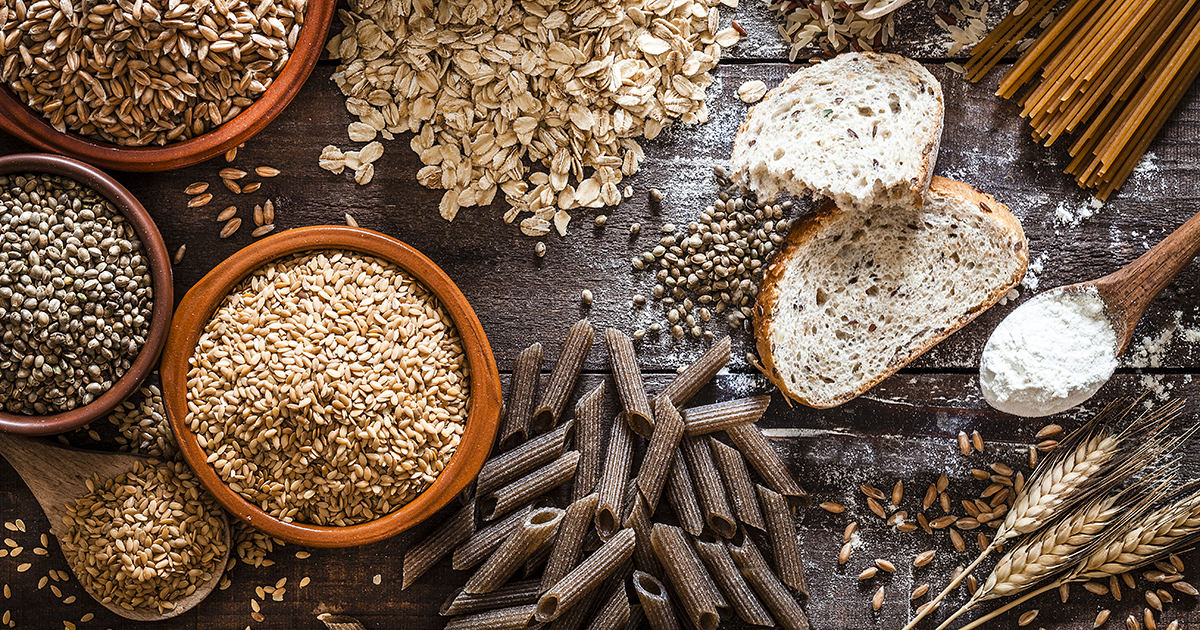
A bowl of porridge oats in the morning. A sandwich made with genuine wholegrain bread at lunch. A serving of brown rice with dinner. That is the researchers' own worked example, and it gets you into the range.
The definition matters too, and the European Heart Journal's accompanying editorial spells it out: a whole grain is one where all three parts of the kernel — bran, germ and endosperm — are retained in the same proportions as in the intact grain. Whole kernels, flakes, or milled into flour and baked into bread all count. A "multigrain" loaf made mostly of refined white flour does not.
Now the awkward part
Here is where the story gets more interesting than the press release.
Go into the paper itself, and next to several of the improvements sits a phrase that rarely survives the journey into a newspaper headline: clinically irrelevant.
The researchers set thresholds in advance for what counts as a difference big enough to matter to an actual human being. Then they measured their results against those thresholds. Several fell short.
Across 60 trials and 4,390 participants, whole-grain diets reduced body weight by an average of 0.51 kg compared with controls. The evidence was rated high certainty — and the researchers judged the size of the reduction clinically irrelevant.
Fasting blood glucose fell by 0.07 mmol/L. Moderate certainty. Too small to matter clinically.
Waist circumference shrank by 0.60 cm. HbA1c — the three-month blood sugar average — dropped by 0.05 percentage points. Triglycerides fell 0.05 mmol/L, total cholesterol 0.17 mmol/L. Statistically real. Below the bar the authors had set.
Blood pressure came down by 1.50 mmHg systolic and 0.82 mmHg diastolic. Again — below the threshold.
The one primary outcome that cleared its own bar in the head-to-head analysis was LDL cholesterol, the so-called "bad" cholesterol, which fell by 0.13 mmol/L on moderate-certainty evidence.
That is the honest shape of the finding: one clearly meaningful win, and a long list of small, real, individually underwhelming nudges.
Why the small nudges might still be the point
Dr Tutunchi's own framing is the most important thing in the whole release, and it is worth quoting at length.
"One important finding is that whole grains may benefit cardiovascular health through several modest improvements acting together, rather than through one large effect on a single risk factor," she said. "We observed improvements across multiple pathways, including blood lipids, blood pressure, glucose regulation, body fat and some markers of inflammation. Although the change in each individual risk factor was generally modest, improving several risk factors simultaneously could contribute to a greater reduction in long-term cardiovascular risk."
In other words: this is not a drug. Nobody should expect a bowl of oats to behave like a statin. What a whole-grain diet appears to do is lean gently on eight or nine levers at once — and the argument, which the paper cannot itself prove, is that leaning on all of them together adds up to more than the sum of the individual numbers.
She adds the crucial caveat immediately: "The included trials did not assess cardiovascular events directly, so longer-term studies are needed to confirm this." Nobody in these 87 trials was followed long enough to see whether they had a heart attack.
The curve that isn't a straight line
The most technically novel part of the paper is the dose-response modelling — and it produced a genuine surprise.
Push the dose up by 48 grams a day (about three servings, or 90 grams fresh weight) and you get a straight-line reduction in LDL cholesterol, body weight, fasting glucose, waist circumference, insulin resistance, triglycerides, total cholesterol, systolic blood pressure, C-reactive protein and interleukin-6. Linear. Predictable.
But the non-linear analyses told a different story. Several outcomes peaked at moderate intakes and then flattened or reversed.
For total cholesterol, LDL and triglycerides, the biggest estimated reductions landed at about 80 grams a day — 0.21, 0.16 and 0.08 mmol/L respectively. Push past that and the modelled benefit did not keep climbing.
Systolic blood pressure showed its greatest drops at roughly 60 and 80 grams a day — 2.44 and 2.35 mmHg, both of which cleared the clinical-importance threshold, unlike the flat average.
C-reactive protein, an inflammation marker, showed its largest reduction of 0.58 mg/L at around 60 grams a day, then less benefit at higher intakes.
HDL cholesterol behaved strangest of all: it dipped slightly as intake rose to about 60 grams, then climbed again, with the biggest modelled increase at roughly 220 grams a day. But almost no trials tested doses that high, so that particular number sits on very thin ice.
The conclusion the authors draw is measured. Their 60–100 g/day range, they write, should be read "as evidence-based benchmarks rather than universal prescriptions".
Burkitt's ghost
The journal's editorial, by Dr Cecilie Kyrø of the Danish Cancer Institute in Copenhagen and colleagues, situates all this in a much older argument.
"More than half a century ago, Sir Denis Burkitt and colleagues proposed that the refining of staple carbohydrates, with the accompanying removal of cereal fibre... underpinned a broad spectrum of 'Western' diseases via effects on stool bulk, transit time, and the colonic milieu," they write.
Their verdict on the new paper is warm but grounded: "For clinicians, the message from Naghshi et al. is reassuringly simple: encouraging patients to replace refined grain foods with minimally processed whole grains is likely to yield modest but meaningful improvements in body weight, waist circumference, and blood lipids, perhaps particularly in individuals with type 2 diabetes. At the population level, even small shifts in these markers can translate into substantial reductions in cardiometabolic events."
That last sentence is the whole defence of the small numbers. A 1.5 mmHg drop in one person's blood pressure is nothing. A 1.5 mmHg drop across a national population is a measurable number of strokes that never happen.
The guidelines are behind
There is a policy sting in the tail. Current US dietary guidelines recommend 2 to 4 servings of whole grains a day. This paper's dose-response analysis points to 4 to 6.
"While this is an important step in the right direction," the editorial notes, "the trial evidence indicates that higher whole-grain intakes than presently recommended in some guidelines may be optimal for cardiometabolic health."
Dr Tutunchi is more cautious about rewriting anything: "These findings do not necessarily call for major changes to existing guidelines, but they support public health strategies that help people increase their whole-grain intake and move toward the higher end of current targets."
The editorial also flags the trap waiting at the end of any whole-grain push. "From a policy perspective, the challenge is to make minimally processed whole-grain staples accessible, affordable, and culturally acceptable, while avoiding a drift towards ultra-processed products that merely add whole grains to otherwise highly processed formulations."
Translation: the food industry's answer to "eat more whole grain" will be a shelf of sugary cereals with a wholegrain flash on the box. That is not what this study tested.
What the researchers admit they don't know
To their credit, the limitations section is substantial.
The median trial lasted just eight weeks. "As a result, we cannot determine whether these benefits are maintained over the long term," Dr Tutunchi said. It may also explain why observational studies show bigger effects — a lifetime of porridge is not an eight-week experiment.
Data above roughly 140 grams a day were sparse, widening the confidence intervals and leaving very high intakes genuinely uncertain.
Participants and staff were generally not blinded — you cannot hide brown rice from the person eating it. Many trials analysed only the people who stuck to the protocol rather than everyone who started. Habitual whole-grain intake before the trials usually went unreported, which could blur the line between intervention and control diets. And several findings — diastolic blood pressure, HbA1c, interleukin-6, body fat percentage — shifted noticeably when individual studies were removed, which is a warning sign that they rest on one or two influential trials.
Whole-grain intake was not linked to more mild-to-moderate adverse events, though those were inconsistently reported and the evidence there was low certainty.
"Further well-designed, longer-term trials are needed to more clearly define the intake range that may maximize health benefits," the authors conclude.
What this means for you
Strip away the statistics and the practical advice is unglamorous and unchanged — it just now has a number attached.
Aim for four to six servings of genuine whole grain a day, roughly 60 to 100 grams dry weight. Porridge, wholegrain bread, brown rice, quinoa, whole oats, barley. The evidence is strongest for replacing refined grains rather than simply adding whole ones on top — the clearest results in the analysis came from trials that swapped one for the other.
Read the ingredients, not the front of the packet. "Multigrain", "made with whole grains" and a picture of a wheatsheaf tell you nothing. The first ingredient should be a whole grain.
Do not expect a transformation. Half a kilo of weight, a point and a half of blood pressure, a modest shift in LDL: that is what the trials actually delivered. This is a background intervention, not a treatment. If you have high cholesterol or high blood pressure, this does not replace whatever your doctor has prescribed.
And do not assume more is always better. The most interesting single finding in this paper is that several benefits peaked around 60 to 80 grams a day and went no further.
The bottom line
After 87 trials and 6,529 volunteers, the science has finally given the porridge advice a dose — and simultaneously admitted that most of the individual effects are small.
Both things are true. Whole grains are not medicine, and the researchers are honest enough to say so. But four to six servings a day is cheap, ordinary, available in every supermarket on earth, and it moves nine different risk factors in the right direction at once.
There are worse deals on offer in the health aisle. Most of them cost a great deal more.
Published By | Features Editor