Written By | International News Agencies
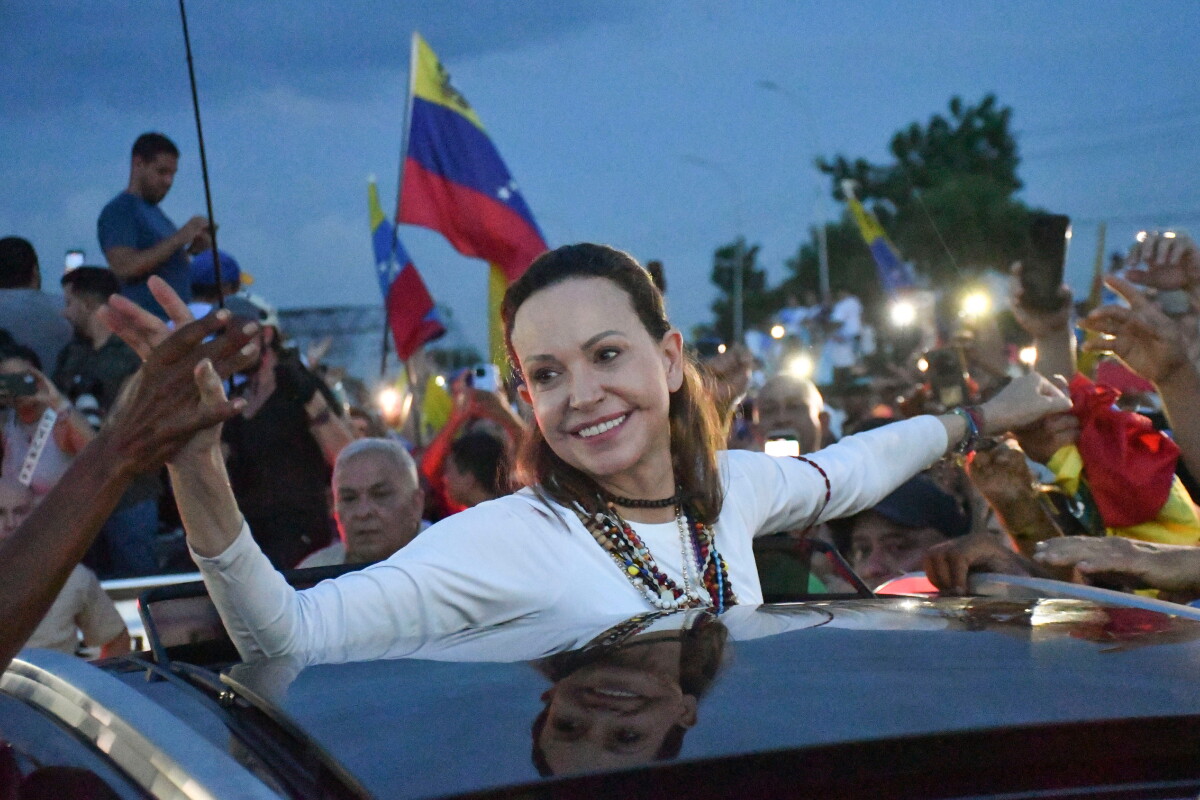
Machado’s path to this moment has been long. She was barred from challenging Maduro in the disputed 2024 election.
World Politics
Background
María Corina Machado, Venezuela’s Nobel Peace Prize–winning opposition leader, returned to her country on Sunday after roughly ten months abroad, and was met by crowds that her movement and several news organizations put in the tens of thousands. The homecoming is the most visible political event in Venezuela since the United States captured Nicolás Maduro in January, and it has reopened a question that Washington and Caracas have both preferred to leave vague: when, and under whose rules, will Venezuelans get to choose a president?
Machado’s path to this moment has been long. She was barred from challenging Maduro in the disputed 2024 election. She was briefly detained in January 2025 after protesting Maduro’s swearing-in, then lived in hiding inside Venezuela before surfacing in Norway in December 2025 to receive the Nobel Prize. Since then she has campaigned abroad for free and fair elections. After the American military operation that removed Maduro, power passed to Delcy Rodríguez, a former Maduro deputy, who has served as interim president with the backing of the Trump administration. Reports differ on the terms of that arrangement: i24NEWS said her tenure was initially meant to last 90 days, while TIME reported that her interim term officially expired in April and that the National Assembly did not vote to extend it. Both agree that she remains in office and that no election has been scheduled.
Key Developments
Machado announced her return on X, and her movement posted video of crowds greeting her in Caracas. The details of the journey have not been fully disclosed. i24NEWS reported that she flew privately from Panama to Colombia and then crossed overland into Venezuela, while TIME said the New York Times, citing two government officials, reported that she entered from Colombia. A person briefed on her movements told i24 that the return was coordinated with the United States, Panama and Colombia, that President Trump approved it, and that American security contractors guarded her. Trump himself said he knew nothing about it. That discrepancy has not been reconciled in the reporting reviewed here, and the anonymous account should be treated with caution.
She stopped at a church in the western state of Lara, where bystanders sang the national anthem, and the final leg to Caracas took about eight hours because of the crowds that lined the route. She greeted supporters from the sunroof of her convoy as it entered the capital late on Sunday. “This country is giving lessons to everyone,” she told the crowd, according to i24. Her foreign affairs adviser, David Smolansky, said she plans to meet earthquake victims, relatives of political prisoners and democratic leaders, and will press for a date for free and fair elections. Edmundo González, the opposition’s candidate in 2024, said he would join her soon.
Machado has said she wants a presidential election by July 2027 and intends to be a candidate, citing a poll indicating that a majority of Venezuelans want her as president. She has also said she was repeatedly blocked from returning, though she denies that the United States was responsible. Headlines on Monday reported that she was ready to meet Rodríguez, and that Rodríguez had criticized the manner of her return; the full text of those reports could not be retrieved, so the specifics of the exchange are not detailed here.
The Washington Factor
The American position is the hinge of the story. Secretary of State Marco Rubio welcomed Machado’s safe return and credited what he called US-supported reconciliation talks, which he said had already led to the release of hundreds of political prisoners and the return of hundreds of opposition figures from exile. Those talks, held this month between the interim government and one faction of the opposition, did not include Machado’s movement. TIME reported that the third round ended without a firm election timetable, and that Venezuelans have been protesting the delay. Rubio said the United States expects all political actors to support the talks, a line that can be read as an invitation to Machado or as pressure on her to work within a process she did not shape.
Trump’s own remarks were warm but noncommittal. He said he knew nothing of the return, called Machado a very nice woman, recalled that she had given him her Nobel Prize, hoped she would be safe, and added that things were going “really well” in Venezuela. In September he said it was too soon to consider elections, and he has praised Rodríguez. Critics quoted by TIME argue that the administration has prioritized a major oil arrangement with Caracas over a democratic transition. CNN’s analysis, which was not retrievable in full, was headlined as describing Machado’s effort to pressure Rodríguez without upsetting Trump, a fair summary of the narrow path she must walk.
Reactions
Her return also lands against a regional backdrop of uneven transitions. The Trump administration has said it wants stability and access to Venezuelan oil, and Trump has argued that the country is doing well under Rodríguez, while Machado and her allies argue that stability without a mandate is fragile. Those competing definitions of success help explain why the same event can be described as a triumph for the talks, as Rubio did, and as an embarrassment for them, as some opposition figures have implied. What is not in dispute is that the scale of Sunday’s welcome was a surprise to a government that has not yet allowed its own voters a say, and that the political temperature in Caracas has risen noticeably since she crossed the border.
Economic strain is the quieter driver beneath the politics. Years of collapse under Maduro, followed by the upheaval of his capture, have left households dependent on remittances and informal work, and public patience for open-ended interim rule is limited. Machado’s message, that elections are the precondition for investment and recovery, speaks to that frustration. The interim government’s message, that order and negotiation must come first, speaks to the fear that a rushed vote could deepen instability. Which argument prevails will shape not only Venezuela’s next government but also how other governments judge the American-backed model of managed transition.
Supporters read the scenes in the streets as proof of a mandate. Conservative commentators framed the crowds as a sign that Rodríguez’s time is running short, and Machado’s allies pointed to the size of the welcome as evidence that any election without her would lack legitimacy. The government and its American sponsors, by contrast, emphasize the prisoner releases and the diplomatic track as evidence of progress, and are wary of anything that could destabilize an arrangement that has kept oil flowing and the interim authorities in place. Venezuelans themselves are living with the consequences of delay: the protests over the missing timetable preceded Machado’s arrival and are part of why her return drew such attention.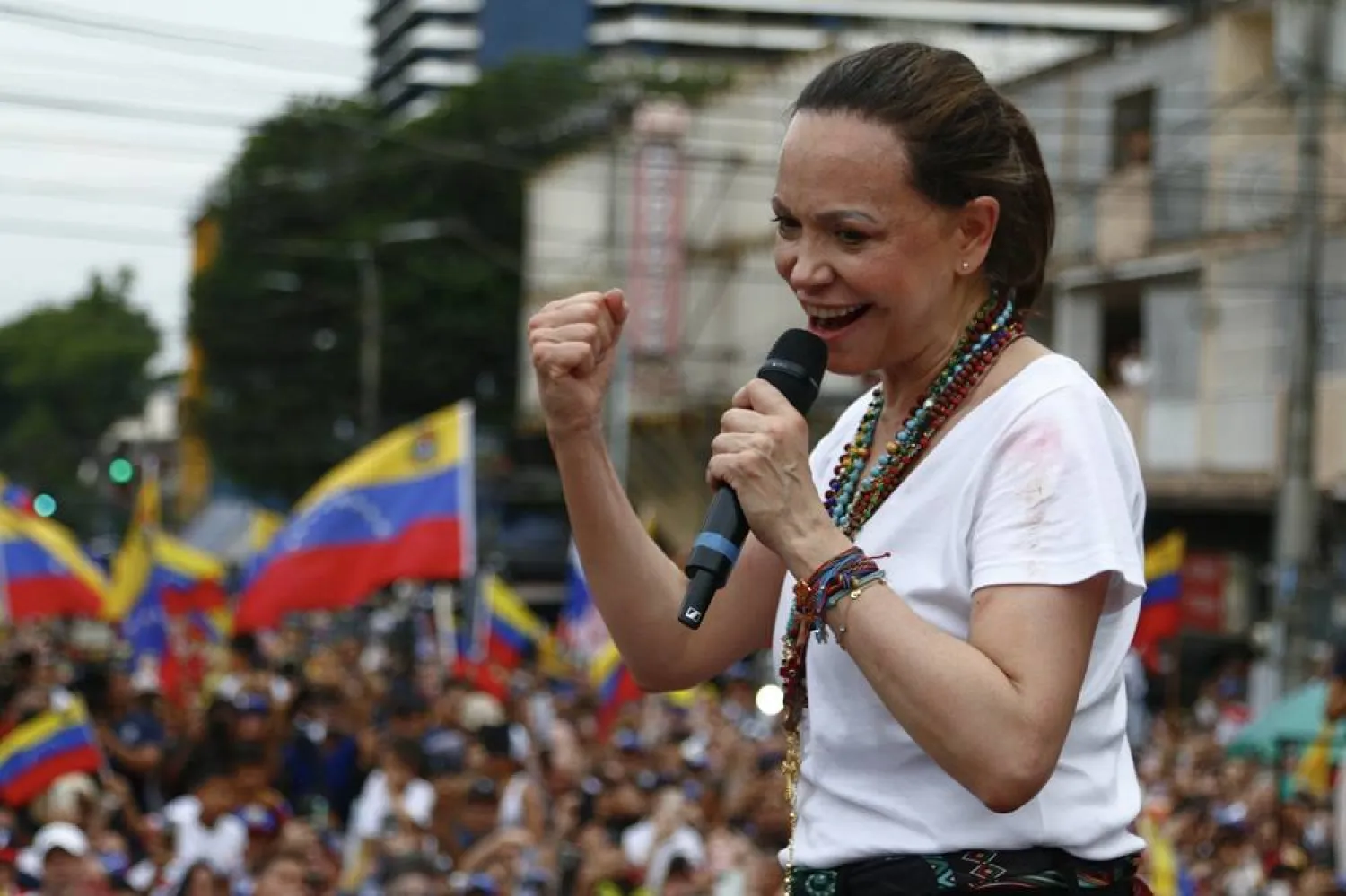
Why It Matters
Venezuela’s transition has so far been negotiated among elites and guaranteed by a foreign power. Machado’s return introduces a popular force into that arrangement that neither Caracas nor Washington controls. For Rodríguez, the presence of a rival with a Nobel Prize and enormous crowds makes indefinite postponement harder to defend. For Washington, it creates a choice between its working relationship with the interim government and its professed commitment to democracy. For the opposition, it sharpens a divide between the faction at the negotiating table and the movement on the street.
There are also risks. A leader of Machado’s stature moving openly through the country raises security concerns, which is presumably why contractors accompanied her. Her insistence on a July 2027 date may collide with a process that has produced no calendar at all. And the promise of free and fair elections depends on institutions, such as the electoral authority and the courts, that were shaped under Maduro and have not been publicly reformed in the reporting available.
What’s Next
The immediate questions are whether Machado and Rodríguez actually meet, whether her movement is brought into the U.S.-backed talks, and whether a fourth negotiating round produces a date. Watch also for González’s arrival, for the scale of any rallies Machado holds in the coming days, and for how Washington reconciles Trump’s caution with Rubio’s call for unity behind the talks. The pace of further prisoner releases and the fate of those still detained will test the government’s sincerity.
Over the longer term, the election calendar is the measure of everything. If Rodríguez and her American backers offer a vote in 2027 that Machado can contest, her return will be remembered as the moment the transition became real. If they stall, the crowds that welcomed her home on Sunday are likely to become the main political fact in Venezuela, and the leaders who have been managing the country from above will have to answer to them.



