Written By | International News Agencies
The fighting, which involved heavy artillery and drone strikes, eased within roughly a day
Addis Ababa/Mekelle, Ethiopia
Reports that Eritrean tanks and heavy artillery are moving toward southern Tigray's Raya front have deepened fears that Ethiopia's four-year-old truce between Addis Ababa and the Tigray People's Liberation Front is giving way to a wider war — one that could pull Eritrea directly into a domestic Ethiopian conflict for the first time since 2022. The reports, which surfaced Aug. 14 and have not been independently verified, follow the most serious armed clash between federal forces and Tigrayan fighters since the Pretoria peace agreement was signed in November 2022, and they arrive as a new coalition of Ethiopian armed factions consolidates against Prime Minister Abiy Ahmed's government. What began the year as strained but manageable tension has, in the space of two weeks, become the sharpest test yet of whether Ethiopia's postwar settlement can hold.
A Peace Deal Never Fully Implemented
The Pretoria Agreement ended a two-year civil war that, according to independent researchers and the United Nations Human Rights Council's Commission of Human Rights Experts on Ethiopia, killed hundreds of thousands of people and displaced millions more across Tigray, Ethiopia's northernmost region. The deal halted major combat and allowed the TPLF, the party that governed Ethiopia for nearly three decades before Abiy took power in 2018, to remain a political actor. But it left unresolved the disputes that caused the war in the first place: the status of Western Tigray, territory contested between Tigrayan and Amhara communities; the disarmament of Tigrayan forces; and the TPLF's long-term legal standing.
Since the deal was signed, the TPLF has also fractured internally. A faction led by Getachew Reda, a former TPLF spokesman, broke away and aligned with the federal government; Reda now serves as an adviser to Abiy. Separately, retired Lt. Gen. Tsadkan Gebretensae formed a rival political movement critical of the TPLF's remaining leadership under chairman Debretsion Gebremichael. Addis Ababa has cited these divisions as evidence that Tigrayan resistance is collapsing — a narrative that came under direct challenge on Aug. 1.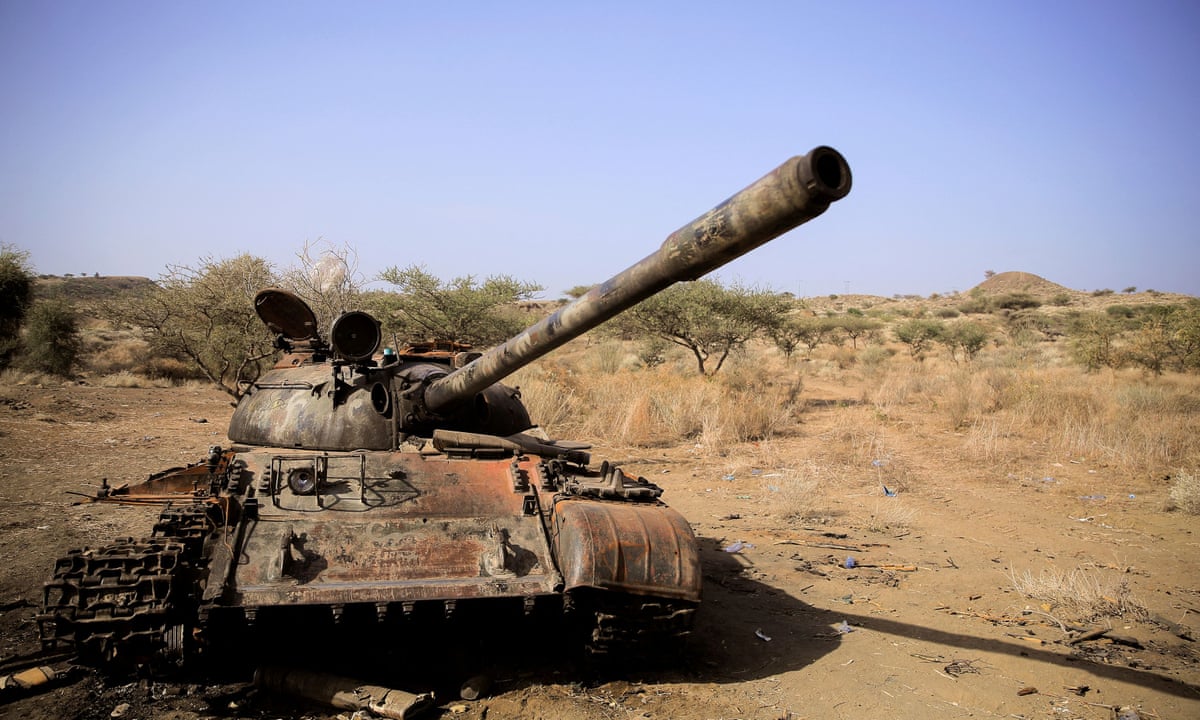
The Clash at Shererina
Fighting broke out before dawn on Aug. 1 near Shererina, a location in western Tigray close to the Sudanese border, in what Tigray's regional government, based in the Tigrayan capital of Mekelle, said was an assault launched by federal forces. Abraham Belay, an Ethiopian government minister who previously led Tigray's transitional administration, confirmed the clashes but blamed Debretsion's forces for starting them. "Enough war! Let us resolve our differences through dialogue," Belay wrote in a Facebook post at the time.
Kjetil Tronvoll, an Ethiopia specialist at Oslo New University College, told Al Jazeera the fighting marked the "most serious incident" since the 2022 peace deal, noting that the agreement had halted the war but left "the core reasons of conflict between Mekelle and Addis" unresolved. Tigrayan authorities accused the ruling Prosperity Party of having waged a prolonged economic blockade and drone campaign against the region even before the Aug. 1 clash, and they called on Tigrayan forces, civil society and religious institutions to prepare for what they described as a struggle for national survival.
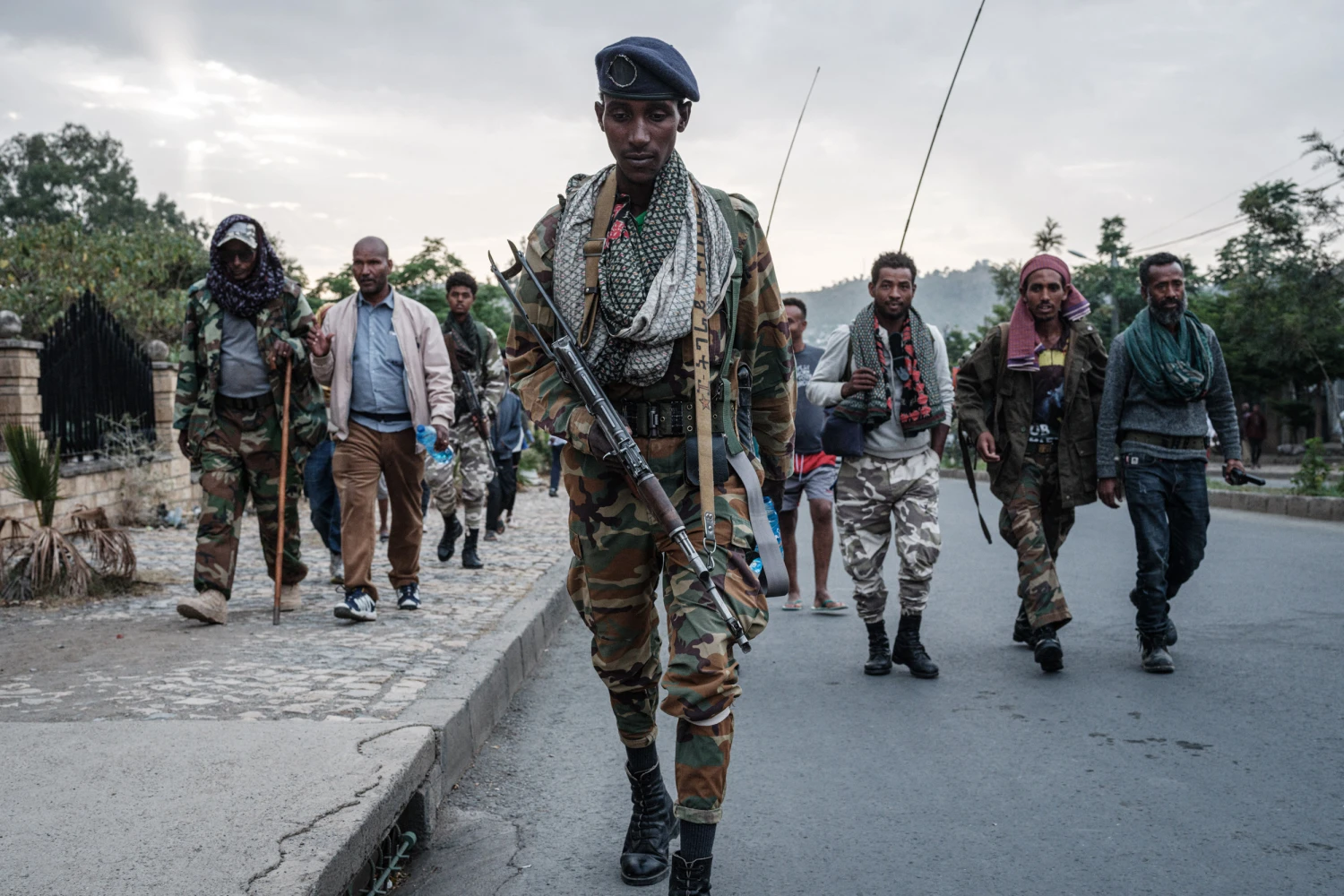
The fighting, which involved heavy artillery and drone strikes, eased within roughly a day. A security source who spoke to Reuters on condition of anonymity described a "de-escalation," though no side has released casualty figures. Even so, the episode capped months of deteriorating relations between Addis Ababa and Mekelle. In June, the United States imposed visa restrictions on TPLF figures it described as hardliners blocking peace, a move the TPLF called based on an "incomplete and imbalanced" picture of the standoff. By mid-July, the TPLF had publicly declared the Pretoria agreement "effectively dead," even as U.S. Ambassador Ervin Massinga traveled to Mekelle in an attempt to preserve it.
Faisal Roble, a regional analyst who spoke to Al Jazeera after the Shererina fighting, said the clash showed that American efforts to resolve the dispute had not succeeded. "Without a powerful international intervention," he said, "we could be heading to a much larger war."
A New Armed Coalition Emerges
The political fallout from Shererina has been as significant as the battle itself. Ethiopian and diaspora analysts covering the Horn of Africa have described the consolidation of a coalition — referred to in regional reporting as "Tsemdo" or "Tsimdo" — linking the TPLF with the Fano militia, which draws support from Ethiopia's Amhara region, and the Oromo Liberation Army, which has fought Ethiopian federal forces in Oromia for years. Ethiopian federal forces are already contending with insurgencies from both Fano and the OLA independent of the Tigray conflict, meaning any renewed war in the north would open a third front against a government already stretched thin.
Analysts tracking the coalition say its emergence reflects miscalculations in Ethiopian foreign policy as much as domestic politics: Addis Ababa's public push for access to a Red Sea port, widely understood to mean territory or facilities in Eritrea, has alarmed Asmara, while Ethiopia's tacit accommodation of Sudan's Rapid Support Forces has strained relations with Khartoum. Both governments, in this reading, have incentives to tolerate or quietly support Ethiopia's domestic opponents.
Eritrea's Reported Move
That dynamic is what makes the Aug. 14 reports of Eritrean military hardware moving toward Tigray so alarming to regional observers. According to reports from Eritrean public media sources relayed by Martin Plaut, a journalist who specializes in the Horn of Africa, Eritrean-supplied tanks and heavy artillery were said to have traveled through the Tigrayan towns of Adigrat, May Mekeda and Mekelle before continuing south toward the Raya district, potentially positioning the equipment along the Alamata-Kobo front. The reports describe seven tanks and five ZU-23 anti-aircraft guns among the matériel moved, though Plaut's own reporting stresses that "these specific numbers and the origin and route of the weapons have not yet been independently verified." Residents in the area have also reported earlier troop and equipment buildups by Tigrayan forces around Chercher, Bisober and the Waja line toward Kobo, and repeated drone strikes were reported in the Raya Alamata district on Aug. 10.
If confirmed, the movement of Eritrean weaponry into Ethiopian territory would mark a significant escalation of the rapprochement between Eritrea's ruling People's Front for Democracy and Justice and the TPLF — two governments that fought a brutal border war from 1998 to 2000 and were, until recently, expected to remain hostile to one another largely because Eritrean President Isaias Afwerki had backed Abiy's 2020 offensive against Tigray. Regional analysts who spoke to Al Jazeera and other outlets this year have said Eritrea's overriding strategic interest is keeping any future confrontation with Ethiopia off Eritrean soil — meaning that arming Tigrayan forces, rather than fighting Ethiopia directly, would let Tigray once again absorb the brunt of a wider war, this time between Addis Ababa and Asmara by proxy.
What Is at Stake
The stakes extend well beyond Tigray's roughly 5.5 million residents, many of whom are still recovering from a war that the Ethiopian, Tigrayan and international human rights investigators have all separately said involved atrocities including sexual violence and ethnic-based killings. A renewed conflict risks drawing in Eritrea and Sudan's competing factions directly, at a moment when Sudan's own civil war has already displaced more than 12 million people and drawn in regional militaries and mercenary networks. It also threatens Abiy's domestic political position: the prime minister has staked his legitimacy on a vision of centralized Ethiopian unity that explicitly rejects the ethnic-federalist system Ethiopia adopted in 1991, and a military setback against Tigrayan forces undercuts the government's narrative that federal forces retain uncontested superiority.
For Washington and the African Union, both of which backed the original Pretoria process, the choice now is between reengaging urgently with a peace framework that Tigrayan authorities have already declared dead, or watching a conflict they helped end reignite on a broader map. Ethiopia analysts, including Tronvoll, have consistently argued that the underlying disputes over Western Tigray's status, TPLF disarmament and the party's political future were never resolved by Pretoria — only postponed. Two weeks of escalating clashes and reports of foreign weaponry moving into the region suggest that postponement may be ending.
What to Watch
In the coming days, independent verification — or denial — of the Eritrean weapons movement will be the most consequential single fact to emerge. Beyond that, analysts are watching whether Addis Ababa responds to the Shererina setback with a renewed federal offensive, whether the TPLF-Fano-OLA coalition formalizes further, and whether the United States or African Union can revive mediation before fighting resumes at scale. Humanitarian access, already restricted by what Tigrayan officials describe as an economic blockade, is likely to be an early casualty regardless of which path the conflict takes.



