Dar es Salaam, Tanzania
A Tanzanian appeals court dealt a setback to prosecutors on July 30 in the treason case against opposition leader Tundu Lissu, dismissing a bid by the director of public prosecutions to revive proceedings that a lower court had effectively frozen months earlier. The ruling is the latest turn in a legal and political standoff that began with an October 2025 election so contested that the United Nations, the European Parliament and the United States have all since taken formal action over its aftermath — and that has left Tanzania's most prominent opposition figure in prison on a capital charge nine months after he was barred from running against President Samia Suluhu Hassan.
The Court of Appeal found the prosecution's application for revision "devoid of merit," according to reporting from Tanzanian outlet The Chanzo, preserving a February ruling in Lissu's favor that had all but paralyzed the state's case. It is the most recent development in a saga that has drawn international scrutiny to Tanzania's judiciary, its security services and the legitimacy of Hassan's landslide reelection — scrutiny that shows no sign of receding as the case grinds toward what could be a pivotal hearing in the weeks ahead.

An Election Decided Before It Was Held
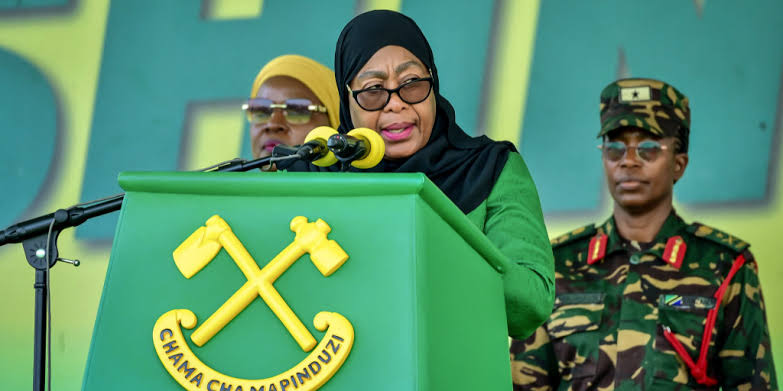
Tanzania's electoral commission declared Hassan, of the long-ruling Chama Cha Mapinduzi (CCM) party, the winner of the Oct. 29, 2025, presidential election with 97.66% of the vote, according to the commission's own tally reported by regional outlets. The result was never seriously in doubt, because Tanzania's two most viable opposition candidates never appeared on the ballot. Lissu, chairman of the main opposition party Chadema, was arrested on April 9, 2025, and charged with treason — a capital offense under Tanzanian law that carries no right to bail — after calling at a rally for electoral reforms before the vote. Chadema was subsequently disqualified from the race entirely after refusing to sign a code of conduct it said would have legitimized an unfair process. Luhaga Mpina, the candidate for the second-largest opposition party, ACT-Wazalendo, was separately disqualified on technical grounds tied to his nomination paperwork.
With both leading challengers removed from the contest, the CCM's victory was effectively secured before voting began. What followed was not a quiet acceptance of the result. Protests erupted on election day and continued for three days afterward in cities across the country, met by a nationwide curfew, a total internet shutdown and what human rights groups and opposition figures describe as one of the most violent crackdowns on civilian protest in East Africa in recent years.
Disputed Death Toll, International Alarm
The scale of the violence remains contested, but every account describes it as severe. Chadema has told international media, including CNN, that it has documented as many as 2,000 deaths, and has accused police of removing bodies from streets and hospitals to undisclosed locations to conceal the toll — an allegation Tanzanian authorities have denied. Other human rights organizations and opposition figures have put the death toll above 1,000. The Tanzanian government has dismissed these figures as exaggerated but has not published its own count of casualties from the unrest, leaving the true scale of the violence unresolved nearly ten months later.
The response from international bodies has been unusually direct for a country that has often avoided the level of Western scrutiny applied to its neighbors. UN High Commissioner for Human Rights Volker Türk called in November for an independent investigation into election-related killings and other rights violations. The European Parliament passed a resolution condemning what it described as post-election killings and a deteriorating human rights situation, explicitly citing Lissu's imprisonment. And in May, the U.S. State Department took the additional step of sanctioning a named Tanzanian security official: Senior Assistant Commissioner Faustine Jackson Mafwele of the Tanzania Police Force was barred from entering the United States over what the department called "credible information" linking him to the detention, torture and sexual assault of two East African human rights defenders — Ugandan activist Agather Atuhaire and Kenyan activist Boniface Mwangi — who had traveled to Dar es Salaam to observe Lissu's trial.

The Case That Won't Go Away
Lissu's treason trial, which formally opened in May 2025, has become its own protracted political drama. In a Feb. 11 ruling, a three-judge High Court panel sided with Lissu's objection that a secret-witness booth used to shield a prosecution witness from view was unlawful, ordering that it be modified so that judges could observe the witness directly. Two weeks later, on Feb. 24, the same court went further, ruling that Section 308 of Tanzania's Criminal Procedure Act permits prosecutors to introduce only evidence that existed at the time of committal proceedings but was not read into the record — not new evidence developed afterward, as prosecutors in Lissu's case had sought to do. That ruling gutted a significant part of the state's approach and effectively suspended the trial.
Rather than proceed under the narrowed evidentiary rules, the director of public prosecutions sought a revision of the ruling at the Court of Appeal — a maneuver Lissu's defense team characterized as an attempt to delay rather than litigate the case on its merits. The Court of Appeal's July 30 dismissal of that bid removes, at least for now, the prosecution's chief legal avenue for reviving the case as originally framed, though Lissu remains in custody in Dar es Salaam, more than 15 months after his initial arrest, with no right to bail under the treason statute.
A Ruling Party Consolidating, Not Loosening, Its Grip
What makes Tanzania's crisis distinctive within the region is less the disputed election itself — flawed votes are not new in East Africa — than the scale and openness of the state's response to dissent afterward, and Hassan's apparent willingness to accept the reputational cost. Analysts who study Tanzanian politics have noted that Hassan, who took office in 2021 pledging to loosen restrictions imposed by her predecessor, the late President John Magufuli, has instead presided over what several describe as a more sweeping closure of political space than Magufuli himself pursued — including the extended detention of a leading opposition figure on a charge that by statute forecloses bail, and a crackdown whose death toll estimates, even at the low end reported by rights groups, would rank among the deadliest state responses to protest in the region's recent history.
What to Watch
Three threads will determine where Tanzania's crisis heads next. First is Lissu's case itself: with the Court of Appeal having rejected the prosecution's revision bid, attention turns to whether the trial resumes under the narrowed evidentiary rules the High Court set in February, whether prosecutors attempt a fresh procedural maneuver, or whether international and domestic pressure eventually forces the government toward a negotiated release. Second is the question of accountability for the post-election deaths — whether Tanzania's government ever produces its own casualty count, and whether any independent international investigation, of the kind Türk called for in November, is permitted to proceed. Third is the durability of Hassan's international standing: the U.S. sanction against a mid-ranking police commissioner is a comparatively narrow measure, but it signals a Washington willing to escalate against individual Tanzanian officials if the human rights picture does not improve — a signal that will be tested again if the Lissu case drags into a second year without resolution.
For now, Tanzania presents a case study in a phenomenon increasingly visible across the region: an election that resolved nothing, a ruling party more entrenched than before it faced dissent, and a legal system where the most consequential political battle is being fought not at the ballot box but inside a courtroom, one procedural ruling at a time.
The Economic Backdrop to a Political Standoff
The crisis also carries costs Hassan's government has largely avoided discussing publicly. Tanzania has spent much of the past decade courting foreign direct investment in mining, tourism and infrastructure, positioning itself as a comparatively stable alternative to more turbulent neighbors in the Great Lakes region. A crackdown that international observers describe in terms usually reserved for war zones complicates that pitch considerably, particularly once a named security official became subject to a formal U.S. entry ban rather than the kind of general statement of concern governments can more easily absorb. Tourism operators and diplomats in Dar es Salaam have privately voiced concern that the internet shutdowns and curfews imposed after the election, even though since lifted, sent a signal to investors that the government is prepared to freeze the country's digital economy at will if political stability appears threatened.
Chadema, for its part, has signaled it intends to keep the pressure on through the courts and international advocacy rather than through renewed street protest, a shift that reflects both the lethality of the state's initial response and the party's calculation that Lissu's case now offers a more sustainable point of international leverage than further demonstrations would. That strategy carries its own risk: it depends on international attention holding steady over a case that could still drag on for months, in a country whose government has shown no sign it intends to yield ground on the timeline it controls.
Published By | News Editor