Written By | Fashion and Design Desk
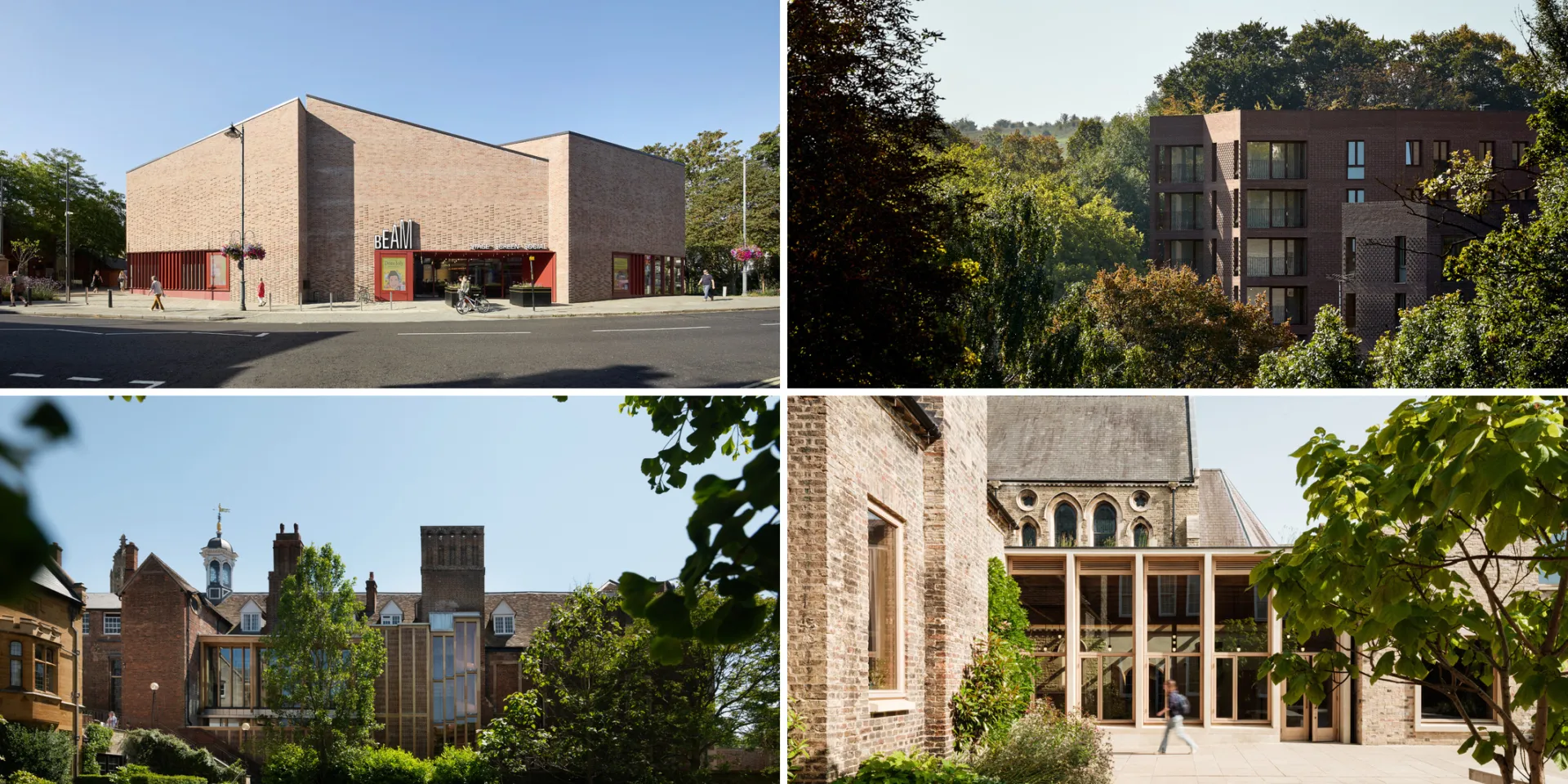
As Britain's top architecture award turns 30, this year's contenders range from a reimagined 1970s theatre to two Cambridge college commissions — and a forest-edge family home
LONDON
Thirty Years of the UK's Toughest Architecture Prize
The Royal Institute of British Architects has spent three decades handing out what is widely regarded as the United Kingdom's most prestigious architecture prize, and this year's Stirling Prize shortlist arrives loaded with the weight of that anniversary. Announced last month and still very much the talk of the UK design world heading into autumn, the six shortlisted projects for the 2026 award span an unusually wide range of building types — public infrastructure, adaptive reuse, dense housing, academic architecture, and private residential work — a deliberate breadth that RIBA has framed as a reflection of the prize's original ambitions.
"This year's shortlist shows us what architecture can achieve when creativity, purpose and public value come together," said RIBA president Chris Williamson in announcing the list. The winner will be revealed at a ceremony at London's Old Billingsgate on October 15 — a milestone 30th edition of an award first handed out in the mid-1990s.
The Six Contenders
Topping the list of unusual entries is BEAM in Hertfordshire, designed by Bennetts Associates, a council-led project that retains the bones of the original 1970s Hertford Theatre while wrapping the structure in a striking new hexagonal brick form housing a cinema and events space — an adaptive-reuse approach that has become increasingly central to UK architecture as sustainability concerns push firms away from demolition-and-rebuild projects.
Renzo Piano Building Workshop returns to the shortlist for the second time with Paddington Square, a new public plaza built above one of London's busiest transport interchanges — notably, the practice's second Stirling nomination after The Shard narrowly missed out on the prize back in 2014. Elsewhere, Cambridge features twice: Witherford Watson Mann, last year's winners for their Appleby Blue Almshouse in Southwark, return with a new wing for the Grade I-listed Clare College Old Court, while Haworth Tompkins earns a nomination for Chiu Court at Pembroke College.
Rounding out the list are two very different residential entries: Lion Green Road in Croydon, a high-density housing scheme from Mary Duggan Architects and Ruff Architects, and a single family home from Sergison Bates set on the edge of Epping Forest — a scale contrast that underscores just how broad this year's judging brief has been.
A Shortlist Built on Reuse and Density
Taken together, the six projects tell a story about where British architecture has focused its energy over the past cycle: adaptive reuse of aging civic buildings, high-density urban housing responding to the country's ongoing housing crunch, and institutional commissions for centuries-old universities trying to modernize without losing historic character. Notably absent from this year's list are the kind of purely spectacular, statement-making cultural buildings that have often dominated past shortlists — a shift some UK critics have read as evidence that the profession, and the prize itself, is prioritizing pragmatic public value over architectural showmanship.
The presence of two Cambridge college projects in particular has generated debate among UK design commentators, with some noting that heritage-sensitive academic commissions — while technically demanding — represent a very different kind of design challenge than the theatre reuse or high-density housing schemes also on this year's list.
Why the 30th Anniversary Matters
For an award that has, over three decades, shaped how the British public understands and values contemporary architecture, the 30th edition carries symbolic weight beyond this year's six finalists. Past winners have gone on to define entire design conversations — from urban regeneration schemes to museums to social housing — and RIBA's decision to frame this milestone year around adaptive reuse and dense, community-oriented housing signals where the institute wants the profession's attention focused for the decade ahead.
It's a notable contrast to some of the prize's flashier historical wins, and one that mirrors a broader European trend: juries increasingly rewarding projects that extend the life of existing structures or address acute housing shortages over purely novel construction.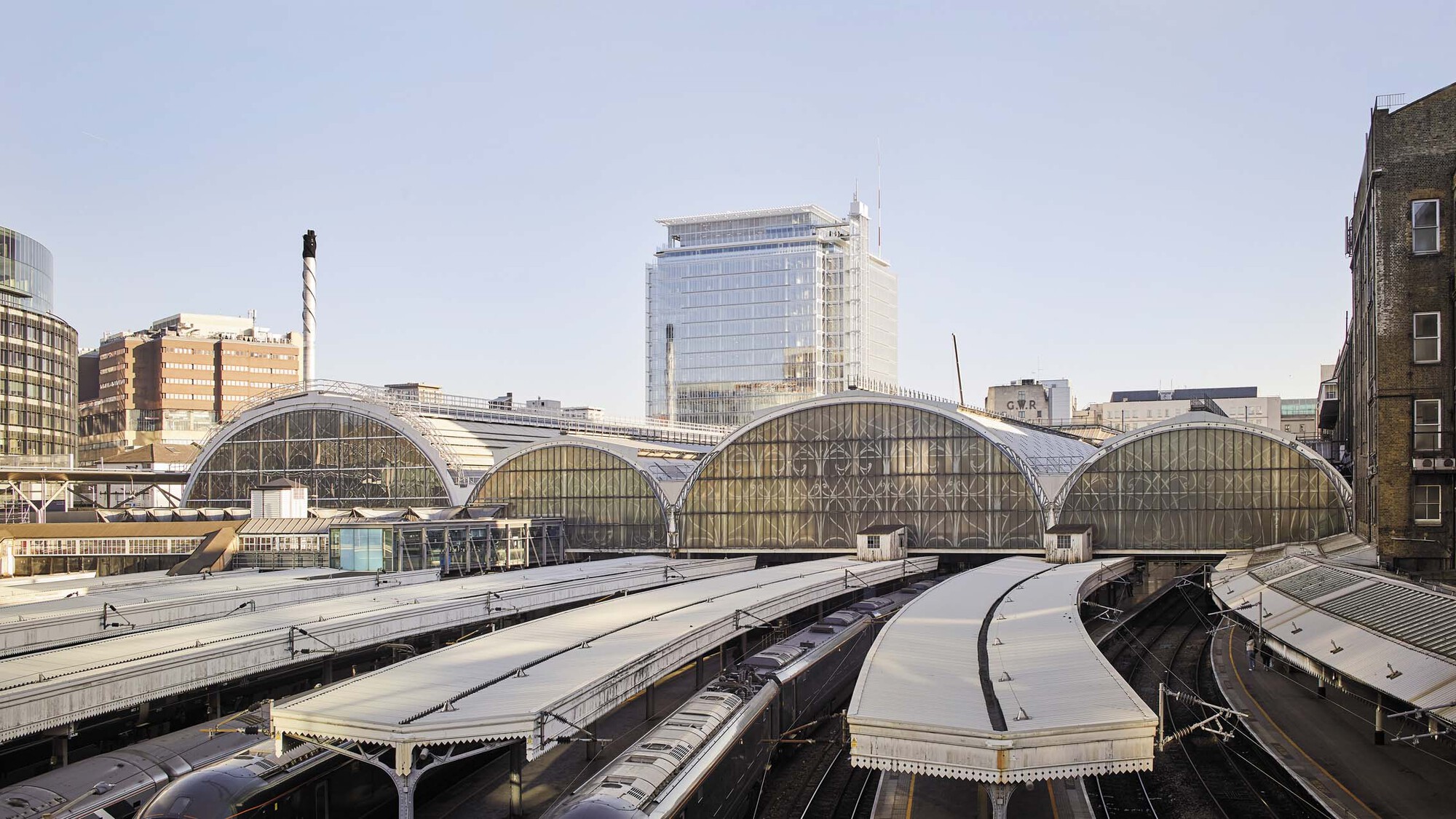
What This Means for the Public
For everyday Britons, several of this year's shortlisted projects are directly usable public spaces rather than abstract architectural statements — Paddington Square is already a functioning transit plaza, BEAM's cinema and events space is open to the Hertford public, and the Lion Green Road housing scheme adds genuinely needed density to Croydon's residential stock. That accessibility marks a departure from years when Stirling shortlists skewed toward institutional or corporate commissions with more limited public access.
As the October 15 ceremony approaches, all six projects remain viewable or partially accessible to the public in some form, giving design enthusiasts and casual visitors alike a rare chance to judge the shortlist for themselves before the winner is named — a democratic wrinkle that RIBA has increasingly leaned into as the prize enters its fourth decade.
The Road to October
Between now and the ceremony, each shortlisted practice will host site visits for the judging panel, a process that has historically proven decisive — Stirling juries have long placed heavy weight on how a building performs in daily use, not just how it photographs. That scrutiny has, in past years, produced upsets over more heavily favored entries, and this year's panel is expected to weigh factors like energy performance, material longevity, and how well each project has settled into its surrounding community since completion.
For architecture students and professionals, the shortlist doubles as an informal syllabus each year — a snapshot of the techniques, material choices, and planning strategies the profession's establishment considers most instructive. With reuse and density dominating this year's six entries, expect both themes to feature heavily in design school crits and practice pitch decks well before October's winner is ever named.



