Written By | Torch Media Africa
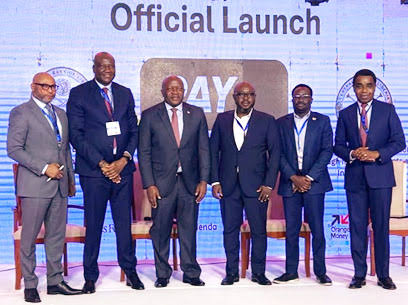
Pay nana launch
TECHNOLOGY
For years, Liberia's mobile money market has been split into two incompatible camps: Lonestar Cell MTN's Mobile Money and Orange Liberia's Orange Money, unable to talk to one another. A customer on one network could not send funds directly to a customer on the other without routing through cash or a bank intermediary — a friction that has quietly taxed financial inclusion in a country where the overwhelming majority of transactions remain informal. That changed on December 16, 2025, when the Central Bank of Liberia (CBL) formally launched the Liberia Inclusive Instant Payments System, branded "Pay Na-Na," alongside a broader five-year digital transformation roadmap and a fresh $50 million World Bank financing package. Together, these moves mark the most concrete step yet in Liberia's attempt to close one of West Africa's more persistent digital divides.
Pay Na-Na: Ending the Mobile Money Silos
The Liberia Inclusive Instant Payments System (IIPS) was developed by the Central Bank of Liberia in partnership with the Mojaloop Foundation, ThitsaWorks and the AfricaNenda Foundation — the same regional coalition that has underpinned instant payment rollouts elsewhere on the continent. Mojaloop's open-source payment-switch architecture allows previously siloed mobile money operators, banks and other financial service providers to interoperate on a single national rail, meaning a Lonestar Cell MTN Mobile Money customer can now send funds directly and instantly to an Orange Money customer, and vice versa, without needing a shared account relationship or a cash-based workaround.
The system launched under the popular local name "Pay Na-Na" (roughly, "pay right now" in Liberian English), and the CBL announced its formal fee structure ahead of a January 5, 2026 effective date. The near-term ambition, according to Finance and Development Planning Minister Augustine Kpehe Ngafuan, is full integration of Liberia's nine commercial banks into the switch, which officials argue would make mobile wallets accessible to practically the entire banked and unbanked population simultaneously, speeding transaction times and pulling more of Liberia's cash-dominated economy into formal, traceable channels. As part of the interoperability push, the Liberia Telecommunications Authority separately granted Orange Money formal Value-Added Services authorization, bringing its mobile money, digital payment and electronic transfer operations under an explicit regulatory framework rather than an informal one.
The scale of the addressable market is notable: as of the most recent published figures, Liberia counted more than 4.3 million active mobile money users, a substantial base in a country of roughly 5.4 million people, underscoring how central mobile wallets already are to everyday commerce even before full interoperability existed.
A $50 Million World Bank Bet on Digital Infrastructure
The payments overhaul sits inside a larger financing push. The World Bank has committed $50 million specifically to accelerate Liberia's digital transformation agenda, part of a wider $125 million package that also funds road and electricity access projects — a pairing that reflects how directly Liberia's digital ambitions depend on more basic infrastructure gaps being closed simultaneously. A core component of the digital tranche is regional connectivity: the financing supports development of submarine cable systems and new landing stations serving Liberia, Benin and Sierra Leone, directly targeting the single point of failure that has repeatedly disrupted Liberian internet service.
That vulnerability is well documented. Liberia currently depends heavily on the Africa Coast to Europe (ACE) submarine cable system, and in March 2024 a simultaneous failure across ACE, WACS, SAT-3 and MainOne caused widespread internet outages across Côte d'Ivoire, Ghana, Nigeria and Liberia alike. In response, the Economic Community of West African States (ECOWAS), the World Bank and Liberian authorities launched a Second Submarine Cable Project aimed at building redundant capacity across Gambia, Guinea-Bissau, Guinea, Sierra Leone and Liberia. The telecommunications consultancy Tactis was commissioned to conduct the feasibility study, and its team carried out consultations and site inspections in Liberia from July 14 to 18, 2025. In the interim, the Djoliba pan-West African fiber backbone, owned by Orange and its regional affiliates, has served as a partial alternative route during submarine cable disruptions, while Starlink terminals have begun appearing in rural areas — from schools in Bong County to businesses in Harper — as a stopgap for communities far from fiber infrastructure altogether.
"Digital Liberia: Equity, Sovereignty and Innovation"
Underpinning these individual projects is a formal strategic document: the Ministry of Posts and Telecommunications' Strategic Plan for 2025–2029, titled "Digital Liberia: Equity, Sovereignty and Innovation for a Connected Future." The five-year roadmap frames Liberia's digital push explicitly in terms of national control over critical technology systems — a sovereignty framing increasingly common across African digital strategies as governments seek to avoid over-dependence on any single foreign infrastructure provider or platform. The plan's title signals three simultaneous priorities: equity (closing urban-rural and gender gaps in access), sovereignty (building domestically anchored infrastructure and data governance), and innovation (fostering a homegrown technology and fintech sector rather than remaining purely a consumer of imported digital services).
The Connectivity Gap That Remains
Despite the payments breakthrough, Liberia's underlying connectivity base remains thin by regional standards. Internet penetration stood at just 23.5% as of the most recent International Telecommunication Union (ITU) data, meaning fewer than one in four Liberians has internet access at all — a baseline that puts a hard ceiling on how quickly digital financial services, e-government platforms or a domestic startup ecosystem can scale nationally, even as mobile money usage (a lower-bandwidth, feature-phone-compatible service) has outpaced broader internet adoption. This gap is precisely why the World Bank financing bundles submarine cable redundancy, rural connectivity and payments modernization together rather than treating them as separate initiatives: without addressing the physical layer, interoperability at the payments layer only reaches the portion of the population already connected.
What It Means for Financial Inclusion
The interoperability push arrives at a moment when Liberia's fintech sector, while still small relative to regional leaders like Nigeria or Kenya, has begun attracting more sustained attention from regulators and development partners. The shift from a two-operator walled-garden model to an open, switch-based national payments rail mirrors the trajectory several other African markets have followed — Ghana, Tanzania and Rwanda among them — where interoperability mandates preceded significant jumps in the share of adults using formal financial services. For a country where cash still dominates day-to-day commerce and where formal bank account penetration lags mobile wallet adoption, the practical test now shifts from technology deployment to adoption: whether merchants, remittance senders and rural users actually migrate transaction volume onto Pay Na-Na now that the technical barrier to interoperability has been removed, and whether the parallel submarine cable and rural connectivity investments arrive quickly enough to widen the pool of Liberians who can participate at all.
Liberia's experience over the next twelve to eighteen months — as the nine-bank integration proceeds, the ECOWAS-backed second submarine cable project moves from feasibility study toward construction, and the 2025–2029 digital strategy's equity and sovereignty goals are tested against a still-low internet penetration base — will offer a useful case study in how much a national payments-interoperability breakthrough can accomplish when it runs ahead of the physical connectivity needed to fully capitalize on it.



