Share
COMMENTARY
There is something deeply disturbing about watching a road being built in the name of development while the people who are supposed to benefit from it are already beginning to worry about their safety. A new road should be a symbol of progress. It should shorten journeys, connect communities, stimulate business and make the movement of people and goods easier. It should not become a newly constructed death trap.
This is why the ongoing works on Sentema Road 2, the approximately 6.10-kilometre section running from the Kampala Northern Bypass at Masanafu Roundabout towards Bukasa Link and Bukasa Police Station, deserve more than the usual celebration that accompanies the construction of a new road.
The road is part of the Kampala City Roads Rehabilitation Project, implemented by the Kampala Capital City Authority with financing support from the African Development Bank. It falls under Lot 5, for which China Communications Construction Company, CCCC, is the contractor. Official project documents describe Sentema Road 2 as an arterial road that was previously unpaved and characterised by potholes, excessive dust and corrugations. The project is intended to upgrade it to bituminous standard.
For the residents of Masanafu, Nakuwadde, Kireka, Bira, Nakabugo, Bukasa and the communities along the corridor, this is not merely another government infrastructure project. It is a road that carries the daily lives of thousands of people. It is the route through which workers travel to Kampala, children go to school, traders move their merchandise, boda boda riders earn their livelihoods and patients seek medical attention.
That is why the road must be judged by more than the smoothness of its asphalt.
The real test is whether the road will make people's lives safer.
And this is where the questions begin.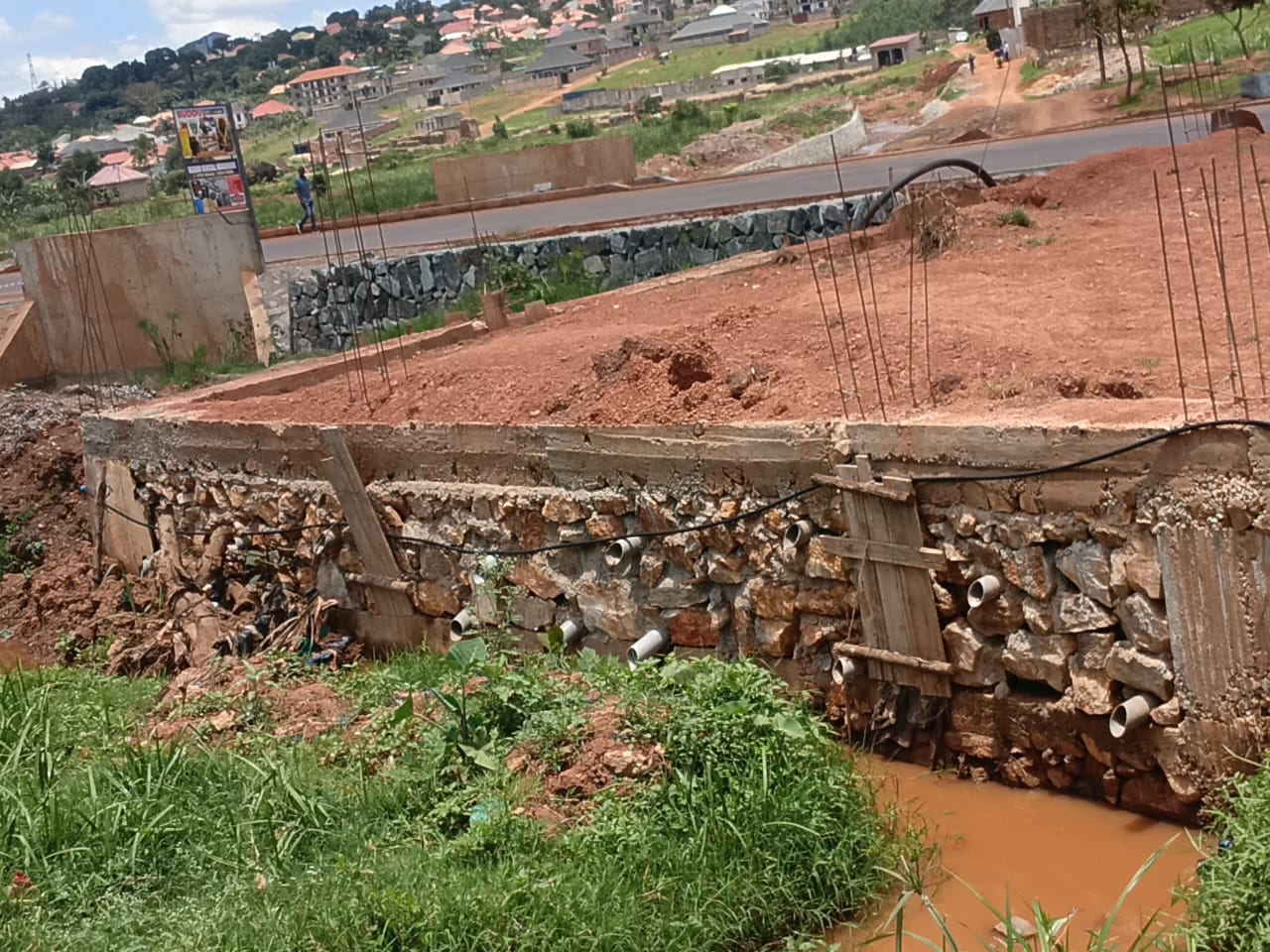
Along parts of Sentema Road 2, particularly around the steep section between the Wakiso Sub-county offices and the Nabirola swamp area, motorists and residents have raised concerns about the combination of a steep gradient, fast-moving vehicles, construction traffic, pedestrians and boda bodas. The concern is particularly serious when heavy construction trucks carrying materials are negotiating the gradient while ordinary motorists are travelling in the opposite direction.
Anyone who has driven this road understands the anxiety.
A heavily loaded truck climbing a steep hill is not the same thing as a saloon car travelling on a level road. Add a wet surface, a motorcycle attempting to overtake, a pedestrian walking along the edge and a vehicle descending from the opposite direction, and the road suddenly becomes a contest between human judgement and physics.
Physics rarely loses.
The question, therefore, is not whether drivers should exercise caution. Of course they should. The deeper question is whether the road infrastructure itself has done enough to compensate for predictable human error.
A responsible road design assumes that motorists will sometimes speed, pedestrians will sometimes cross at inconvenient places, boda bodas will sometimes overtake dangerously and heavy vehicles will sometimes experience mechanical problems. Good road engineering does not simply hope that everybody will behave perfectly. It builds safeguards against foreseeable mistakes.
That is why the absence or inadequacy of speed-control measures, warning signs, pedestrian protection, safe passenger stopping points and other appropriate interventions at dangerous sections deserves serious examination before this road is finally handed over.
Interestingly, these are not demands being invented after the fact. The project's own design documents provide for pedestrian walkways along both sides of Sentema Road 2, bus bays at strategic locations where space permits and protected pedestrian crossings at key controlled intersections. The road's drainage system is also designed around kerb inlets and longitudinal drainage networks connected to existing storm-water systems.
Therefore, Kampala should ask a simple question before the ribbon is cut: Have the safety provisions contained in the design actually translated into safety on the ground?
That question is particularly important because Sentema Road 2 passes through a challenging environment.
The official design documents themselves identify a swampy section between approximately Ch. 4+700 and Ch. 5+500. The existing road was already characterised by drainage and swamp-related conditions, meaning that water management was not something that engineers could reasonably have discovered after construction began. It was part of the road's physical reality from the beginning.
This brings us to the Nabirola swamp.
Residents in the area have raised concerns about encroachment, soil filling and construction close to drainage and bridge structures. These allegations deserve investigation rather than political speeches. If wetlands and natural drainage channels have been narrowed by private development, the consequences will eventually be felt not only by the swamp but by the road itself.
Water does not care about land titles.
It does not recognise political connections.
It does not stop because somebody has constructed a wall.
When rain falls upstream, water will find its natural path. If that path has been blocked, narrowed or filled with soil, the water will find another route. And in an urbanising environment, that route may be through people's homes, businesses, roads and bridges.
This is why the National Environment Management Authority and the relevant local authorities should not wait for a major flood before asking what is happening around the swamp.
If there is no illegal reclamation, the authorities should say so and reassure the public.
If there is encroachment, the responsible agencies should act.
If drainage capacity has been compromised, it should be corrected before the road is commissioned.
What Uganda cannot afford is the familiar cycle in which everybody sees a problem but nobody takes responsibility until the problem becomes a disaster.
There is another question that deserves attention: the relationship between passenger movement and road design.
Sentema is not an expressway passing through an empty landscape. It is a populated urban and peri-urban corridor. People board taxis there. Boda bodas stop there. Pedestrians cross there. Shops and homes open directly onto the road. Workers and students use it every day.
A road designed without adequate consideration of how people actually use it can become dangerous even when its engineering specifications look impressive on paper.
This is why bus bays and pedestrian walkways are not decorative additions. They are safety infrastructure.
A passenger should not have to step directly into a live traffic lane to board a taxi.
A pedestrian should not have to gamble with speeding vehicles simply to cross from one side of the community to another.
A boda boda rider should not have to stop in the middle of moving traffic because there is nowhere else to pull over.
A mother carrying a child should not have to compete for road space with a loaded construction truck.
That is what development should prevent.
It is also why the experiences of ordinary residents deserve to be taken seriously.
There are citizens who have watched this road every day throughout its transformation. They know where vehicles accelerate. They know where pedestrians cross. They know where water accumulates. They know where trucks struggle. They know where boda bodas congregate. They know where accidents happen.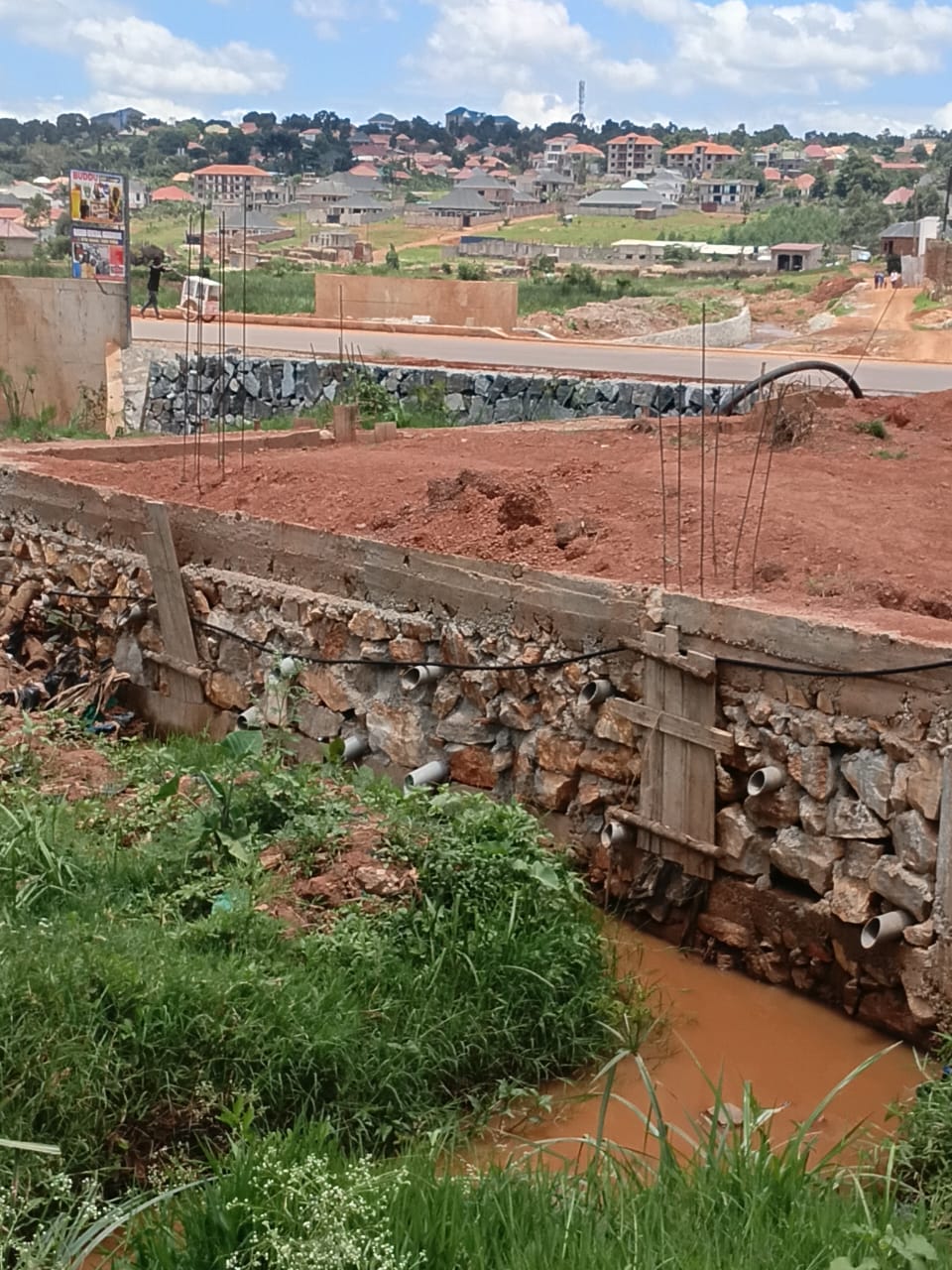
Engineers have drawings.
Residents have experience.
Good public infrastructure should listen to both.
There is also a medical dimension that deserves investigation. Bionet Medical Centre along the Nakabugo section has, according to concerns raised locally, encountered accident victims from the surrounding road corridor. I would not publish the claim that the facility receives a particular number of crash victims without documentary confirmation. But that is precisely why the health centre's records could be valuable.
How many road-traffic injury patients have been treated there?
How many came from Sentema Road?
At which locations did the accidents occur?
At what times?
Were boda bodas involved?
Were pedestrians involved?
Were heavy vehicles involved?
These are questions that can be answered through records rather than speculation.
The Uganda Police Force traffic department, KCCA, Wakiso authorities, health facilities and the road project engineers should be able to establish whether particular sections of the road are emerging as accident black spots.
And if they are, the response should come before inauguration, not after tragedy.
There is something particularly important about this timing.
Sentema Road 2 is not an old road that government inherited and forgot. It is part of a major modernisation programme. The KCRRP was conceived to improve mobility, road safety, drainage and non-motorised transport infrastructure in Kampala. KCCA itself describes the programme as an intervention intended to improve mobility, reduce flooding and enhance road safety.
That creates an obligation for the authorities to think beyond asphalt.
A road is a system.
It is asphalt, drainage, pedestrians, vehicles, crossings, lighting, bus bays, shoulders, bridges, signs, speed management and the surrounding environment working together.
Remove one important component and the entire system becomes weaker.
The Minister of State for Kampala, during the Prime Minister's inspection of KCRRP sites in December 2024, specifically called for streetlights and walkways on Sentema Road. That recognition is important because it shows that pedestrian safety and visibility were already matters of concern during the project's implementation.
The authorities therefore have no excuse for treating these matters as afterthoughts.
Nor should the contractor be made the sole object of public anger. CCCC has defended its performance and stated that its Lot 5 works were being carried out according to contractual specifications. The company has also distinguished its work from other Kampala road projects that had attracted criticism.
That distinction matters.
The purpose of this article is not to convict CCCC in the court of public opinion.
The purpose is to ask whether everybody responsible for the road has done enough to ensure that the final product is safe.
The contractor has responsibilities.
The supervising engineers have responsibilities.
KCCA has responsibilities.
Environmental authorities have responsibilities.
Traffic authorities have responsibilities.
Local leaders have responsibilities.
And ultimately, government has a responsibility to the taxpayer who finances the entire enterprise.
Nobody should be allowed to hide behind the sentence, "The road was constructed according to specification," if the specification itself failed to adequately respond to an obvious safety problem.
Conversely, nobody should accuse a contractor of poor workmanship simply because residents are unhappy about an issue that falls outside the contractor's contractual responsibility.
This is precisely why an independent pre-commissioning safety audit would be appropriate.
Before Sentema Road 2 is formally opened, the authorities should walk the entire 6.10-kilometre corridor not merely with engineers but with traffic officers, environmental experts, disability-access specialists, public-health representatives and community representatives.
They should identify the dangerous gradients.
They should inspect pedestrian facilities.
They should establish whether bus bays are sufficient.
They should examine crossing points.
They should inspect drainage channels and bridge approaches.
They should investigate the swamp and its catchment.
They should examine alleged wetland encroachment.
They should assess the speed of construction vehicles.
They should review accident records.
They should listen to residents.
And they should correct whatever can reasonably be corrected before the road is officially presented to the public as a finished project.
There is nothing embarrassing about correcting a road before inauguration.
What is embarrassing is inaugurating it, celebrating it, taking photographs beside it and then waiting for funerals to teach us what engineers should have discovered beforehand.
Uganda has for too long measured development by kilometres of tarmac.
Perhaps we should begin measuring it by something more human: how many people arrive home safely.
Sentema Road 2 has the potential to transform transportation and economic activity across this rapidly growing corridor. It deserves to succeed. The taxpayers deserve to see their money converted into durable infrastructure. CCCC deserves to complete the work against the required standards. KCCA deserves credit where the project is properly executed.
But the citizens deserve something even more fundamental.
They deserve to use the road without fearing that a journey to work, school, hospital or market could become their final journey.
The road is not yet merely a monument to what government has built.
It is still an opportunity to demonstrate what government can learn.
Before the ribbon is cut, before the speeches are made, before the cameras arrive and before officials congratulate one another, Kampala should stop and ask one final question:
Is Sentema Road 2 merely complete, or is it actually safe?
The answer should determine whether the ribbon is cut.
Because a new road should open a route to the future.
It should never open a route to the cemetery.
About the Writer
Evan Sande Ndahura is a Ugandan political and legal commentator, columnist, poet, and social justice advocate whose writings focus on governance, constitutionalism, democracy, and the political economy of power in Africa. He is widely published on issues of judicial accountability, electoral justice, human rights, and institutional reform, with particular emphasis on Uganda's political and legal systems. Writing from a Pan-African critical perspective, he interrogates the failures of state institutions and the lived realities of ordinary citizens under entrenched systems of power. He strongly believes that the liberation of Africa will ultimately be achieved through the mighty pen.



