Written By |
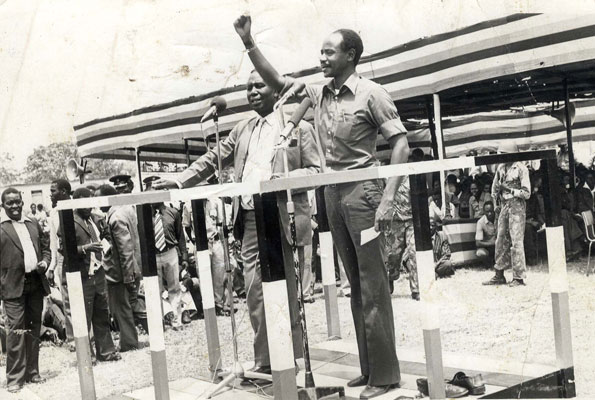
The NRM still invokes the Ten-Point language, but while the text calls for an “independent, integrated and self-sustaining economy” and “elimination of corruption
By Evan Sande Ndahura
When the National Resistance Army (NRA) handed the nation to the National Resistance Movement (NRM) in 1986, it did so wearing a manifesto: the Ten-Point Programme produced in the bush in 1984. Framed as a compact — democracy, security, national unity, independence, a self-reliant economy, social services, and the elimination of corruption among them — the Ten-Point Programme set expectations for a recovered and re-ordered Uganda. Four decades on, those expectations are contested. Some of the programme’s promises became templates for stability and development; others have calcified into contradictions. The NRM still invokes the Ten-Point language, but where the text calls for an “independent, integrated and self-sustaining economy” and “elimination of corruption,” the reality is an economy heavily in debt, an emboldened executive that has amended the constitution to remove institutional checks, and repeated high-profile corruption scandals that have eroded public trust.
This article examines each major strand of the Ten-Point Programme, evaluates how it has been implemented, and explains why a set of measures conceived as a moral compass now reads as both a map of achievement and a map of democratic jeopardy.
1) Democracy: An aspiration slowly hollowed out
The first point — promotion of democracy — is where the largest contradiction lies. The NRM rolled out a programme of local councils (LCs) and, later, multi-party elections; it presided over return of regular ballots and a restored constitution in 1995. But the endurance of a single ruling formation and the repeated removal of institutional constraints on the presidency undercut the democratic architecture that the party itself once promoted. Two constitutional milestones matter. In 2005 Parliament removed presidential term limits, allowing incumbents to run indefinitely. In 2017 Parliament removed the 75-year age cap for presidential candidates. Both amendments were decisive: they dismantled two of the most visible constitutional brakes on executive tenure. The term-limits change came in 2005; the age-limit repeal was enacted into law at the end of 2017.
For critics and many civil society actors these changes crystallised an erosion of peaceful turnover norms. “The language of the ‘third term’ debate is misleading…you, Mr President, are seeking a sixth — and not a third,” wrote scholar Mahmood Mamdani in the debate over repeated re-election. For him and other analysts, the problem is institutional weakness: without robust parties, an independent judiciary and a free media, constitutional limits easily become political footnotes.
Effect: The immediate effect has been to concentrate power in the executive and to make constitutional restoration of term or age limits — should that be desired — politically difficult without a broad political settlement.
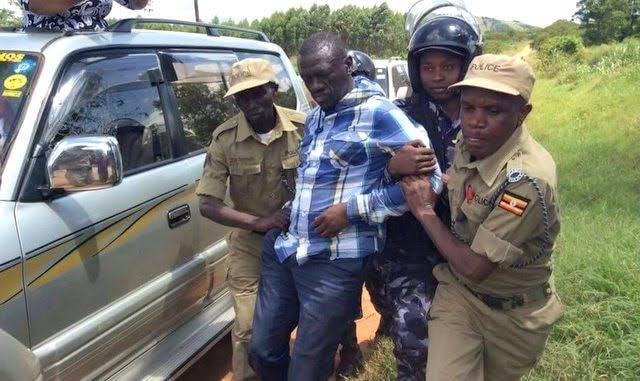
Besigye's numerous arrests as he opposes the government defeats the ideology of democracy in Uganda
2) Security and 3) Consolidation of national unity: stability at what cost?
Security was the NRM’s original selling point — end the violence, restore law and order. That promise largely succeeded: successive governments have kept large-scale civil war off the streets for most of the country. Uganda is also a key regional security partner (Somalia, peacekeeping, border stability).
But the second and third points — security for all and consolidation of national unity — reveal dual problems. First, the security apparatus remains politicised: the military is a central pillar of NRM power, with institutional advantages in parliament and state budgets. Second, national unity is frayed by perceptions of regional favouritism and patronage politics. Observers point to uneven development, district proliferation and elite capture of resources as drivers of grievance: Buganda (central), parts of the west, the north and other regions still nurse unresolved historic and economic grievances. Freedom House and other analysts name the use of public resources and patronage networks as mechanisms the government uses to build political support.
A striking contemporary tension is how central and western regions read access to public goods and jobs: accusations of monopoly and favouritism — whether grounded or exaggerated — are real political currency. Those tensions complicate the NRM’s unity project: national cohesion is harder when perceived spoils are scarce and unevenly distributed.
4) Defending national independence: geostrategic wins, domestic compromises
The Ten-Point emphasis on defending independence has manifested in active foreign policy and attraction of foreign direct investment, especially in oil and infrastructure. But independence intertwined with heavy borrowing and strategic partnerships — notably with China and regional finance institutions — has come with strings: projects financed by external creditors have sometimes led to single-sourced contracts and limited local content, fuelling accusations of opaque deals and patronage. The Karuma and Isimba hydropower projects, for example, have been repeatedly flagged for procurement irregularities and supervision failures.
5) Building an independent, integrated and self-sustaining economy — the debt reality
Point five — the economy — was an explicit pledge to make Uganda self-reliant. That aspiration now looks distant. Uganda’s public debt has increased sharply in recent years. Official government Debt Statistical Bulletins show that by end June 2025 external debt and domestic obligations had combined into a public-debt stock that, in fiscal terms, rose markedly year-on-year. Press reporting and finance ministry publications recorded a jump to about UGX116.2 trillion (roughly US$32.3 billion) as of June 2025; that puts the debt-to-GDP ratio at just over 50% in 2025 — a sharp rise from earlier years. Reuters reported a 26.2% annual increase in public debt and flagged that domestic borrowing was the main driver. In short: the pursuit of infrastructure, plus fiscal gaps and higher domestic issuance, have produced a debt profile that strains the financing envelope.
Why does this undermine the Ten-Point promise? A self-sustaining economy requires productive investment, resilient revenue systems, and limited roll-over risk. High domestic borrowing crowds out private credit, raises interest costs, and amplifies debt-service pressure — which in turn reduces fiscal space for social services that the NRM pledged to improve. The finance ministry itself announced measures to cut domestic borrowing and spending in order to stabilise the fiscal trajectory.
6) Improvement of social services — mixed scores
Pillars like primary healthcare, universal education and local infrastructure have seen investment and measurable gains. But the same fiscal constraints that belie self-sufficiency have left social sectors vulnerable. Debt service and misallocated spending have undercut the state’s ability to fully fund services at scale. Human rights and civic organisations warn that austerity plus poor procurement governance will stymie equitable gains.
7) Elimination of corruption and misuse of power — the weakest link
The Ten-Point Programme explicitly promised elimination of corruption. Reality: corruption remains endemic and periodic scandals have been high profile, damaging public trust and diverting funds intended for public goods. Below are several headline corruption “candles” — emblematic cases that illuminate the problem:
COVID-19 procurement scandal (2020–2021): top officials were arrested over alleged procurement fraud in emergency purchases; watchdogs and the media reported inflated contracts and questionable award processes.
Karuma and Isimba dams: repeated questions over bidding, cost-benchmarks, construction defects and weak oversight have dogged these flagship infrastructure projects. Audits and reporting found procurement irregularities and supervision failures.
Pension and health-fund scandals: prosecutions and asset-recovery cases (including the $45.8m pension case and Global Fund embezzlement cases) demonstrate large sums diverted from social programmes.
Finance ministry hacking case (2024–2025): multiple officials were charged in 2025 over alleged corruption, electronic fraud and money-laundering tied to a central-bank systems hack that cost the state millions.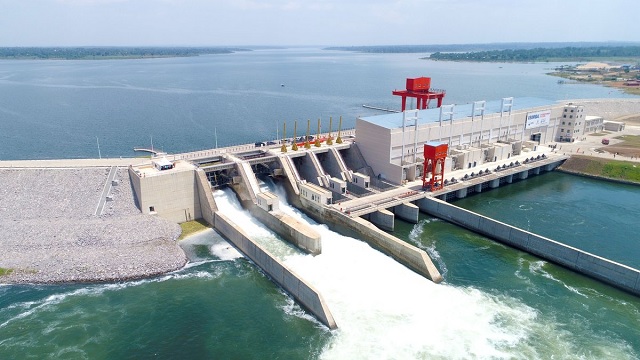
Karuma and Isimba Dams
Collectively these scandals do more than lose resources: they damage the state’s capacity to deliver, raise risk premia for lenders, and feed regional grievances when local communities see infrastructure funded but service delivery lagging. Civil society reports and international partners repeatedly say governance — not only capacity — is the central constraint to converting public investment into public good.
What removing the age limit and term limits has meant — democratically
The Good (as framed by supporters):
The NRM argues the constitutional changes allow continuity, policy stability, and completion of long-term projects (infrastructure and oil developments) where “start-stop” leadership would be costly. President Museveni framed his case as asking Ugandans to decide their path: “Ugandans should have final say on who leads them.” Supporters say voters can still replace leaders at the ballot box.
The Bad (as documented by critics and observers):
The amendments removed constitutional guardrails against incumbency advantage. The practical result is concentration of power and a political playing field that favours the ruling party. Analysts warn that such institutional changes reduce incentives for internal party renewal and for cultivating alternative leadership. Afrobarometer polling and civil society research show broad public support for reinstating limits — implying a legitimacy gap between elite maneuvers and popular sentiment.
Net effect: While the argument for continuity has rhetorical force, the democratic cost is the weakening of mechanisms that encourage political competition and leadership circulation. That has long-term consequences for accountability, anti-corruption pressure, and the kind of governance needed to manage a rising debt burden and to ensure equitable development.
Can the Ten-Point Programme be rescued — and how?
Reaching the programme’s original moral centre would require three linked reforms:
1. Restore institutional checks. Rebuild judicial independence, strengthen parliament’s oversight capacity, and reform political finance to reduce the executive’s rent-seeking leverage.
2. Debt strategy and transparency. Commit to a clear, published medium-term debt management plan; prioritise concessional finance and transparent procurement; and open project contracts to independent audits. Uganda’s 2025 Debt Statistical Bulletin is a starting point — but implementation must follow.
3. Anti-corruption teeth, not optics. Prosecutions must be impartial, asset recovery functional, and procurement systems modernised to reduce discretion. Civil society should be empowered, not contested.
When scholars and analysts are asked what would restore public faith they converge on the same theme: “institutionalise limits so that leadership is not personalised,” says Dr. Frederick Golooba-Mutebi, a leading Ugandan political analyst. “Post-Museveni, Uganda will need far more change than continuity. Who will have the credibility to convince Ugandans of his or her vision?”
In a nutshell — Ten points, many lessons
The Ten-Point Programme was not wrong in its moral aims. It foresaw democracy, security, unity and a self-reliant economy as interlocking goals. The last forty years show the triumphs that can attend firm security and infrastructure drives, but also the fragility of institutions that are allowed to atrophy.
Uganda’s choices today — how it manages debt, whether it invests in institutional checks and anti-corruption mechanisms, and how it addresses regional grievances — will determine whether the Ten-Point Programme is remembered as the founding map of a mature republic or as a set of promises that, unguarded, permitted a long consolidation of personal rule.
If the programme’s spirit is to survive, the NRM and its political opponents must agree on one modest bargain: that the rules that govern succession, the contracts that fund projects, and the systems that hold officials accountable must be more durable than the individuals who occupy the offices. Without that bargain, the Ten-Point Programme will remain a historical artifact — quoted, honoured, but only partially fulfilled.
Torch Media Africa



