SOUTH AFRICA
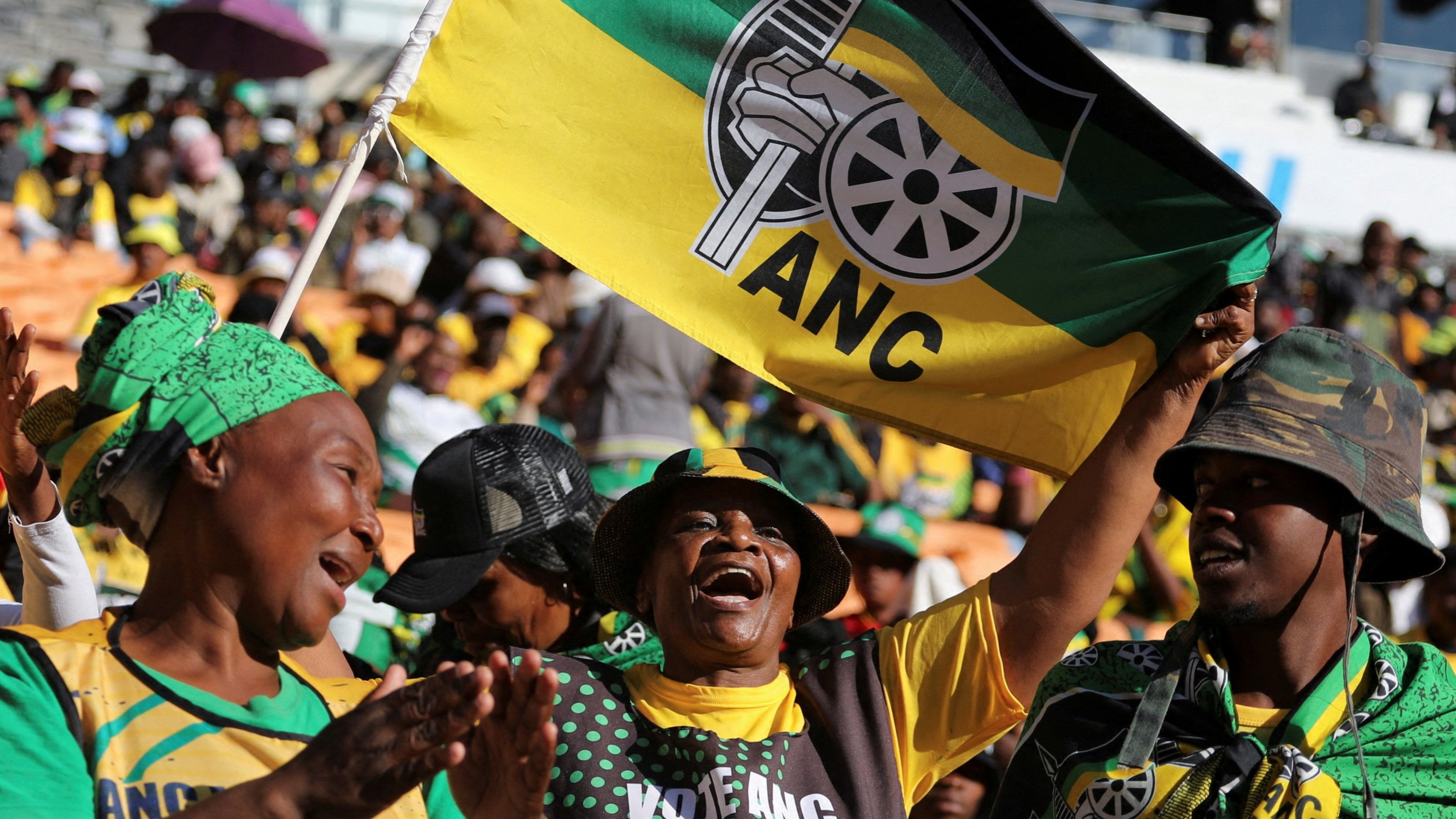
South Africans vote Wednesday in municipal elections that pollsters expect to leave the African National Congress (ANC) far below its former dominance and to produce yet another round of coalition bargaining in the country's biggest cities. Polls open at 7 a.m. and close at 9 p.m. Special voting for the elderly, the infirm and others unable to reach a polling station began Monday and continues Tuesday. The contest will decide who controls the councils that run Johannesburg, Tshwane, Ekurhuleni, Cape Town, Durban and the other metros, and, in the case of hung councils, which small parties hold the casting votes.
Why this election matters now
Local elections rarely draw the attention paid to national contests, but this one is being read as a referendum on the national Government of National Unity (GNU) as well as on municipal service delivery. The ANC lost its parliamentary majority in 2024 and now governs nationally alongside the Democratic Alliance (DA) and other parties. Wednesday's vote is the first nationwide test of how voters judge that arrangement and of whether the ANC's slide, the rise of former president Jacob Zuma's uMkhonto weSizwe (MK) party, and the DA's push for outright metro wins are lasting trends.
The Independent Electoral Commission (IEC) says more than 29 million people are registered. The pollster Ipsos puts the number at 29.2 million, about 65% of the 44.9 million adults eligible to vote. Special votes were approved for 2,655,067 people, an increase of 131% over 2021, according to Rio Times reporting on the IEC's figures. The commission scheduled more than 600,000 home visits, roughly 80% of them for voters aged 60 or older.

The numbers: a fragmented field
The most recent major survey is Ipsos's Pulse of the People, released Oct. 30, with fieldwork from Sept. 12 to Oct. 13. It put national support at 30% for the ANC, 28% for the DA, 12% for MK in its first local contest, about 10% for the Economic Freedom Fighters (EFF), and 4% each for ActionSA and the Inkatha Freedom Party (IFP). The Patriotic Alliance (PA) stood at 2%. The DA won 19.9% in the 2021 local elections, so the poll implies a large gain for the party, while the ANC's number is well below what it won in 2021.
Ipsos's metro-level findings suggest few clear winners:
- Johannesburg: DA 30%, ANC 27%, EFF 12%, ActionSA 11%, MK 5%.
- Tshwane (Pretoria): DA 34%, ANC 31%, EFF 8%, ActionSA 8%.
- eThekwini (Durban): MK 47%, DA 21%, ANC 10%.
- Cape Town: DA 51%, down from 58.3% in 2021.
Ipsos withheld figures for four smaller metros, citing larger margins of error. It said the ANC was narrowly ahead of the DA in Ekurhuleni, with MK third, and that the DA and ANC were extremely close in Nelson Mandela Bay.
Other pollsters paint a somewhat different picture, and readers should treat all projections cautiously. Daily Maverick reported that Ipsos, News24, the Social Research Foundation (SRF) and The Common Sense have put ANC support at between 22% and 32% nationally. The SRF projects the DA at 36%. A survey by eNCA and Mark Data put the DA at 35% in Johannesburg against 21.8% for the ANC and 10.3% for ActionSA, and at 33.9% in Tshwane against 24.9% for the ANC and 10.7% for ActionSA. An earlier Ipsos poll, cited by Rio Times, had MK at 55% in eThekwini; the October survey lowered that to 47%. Daily Maverick said projections for MK in Durban range from 33% to 55%.
Those differences matter because a party with more than half of a council's seats needs no partners. Daily Maverick noted that Ipsos's earlier 55% figure would have made MK the only party able to govern a metro without a coalition, apart from the DA in Cape Town. Ipsos analyst Mari Harris said in the October release that coalitions are likely in most metros, with Cape Town and eThekwini the likeliest exceptions.
Turnout: the great unknown
Turnout may decide more councils than any campaign pledge. Daily Maverick reported that national turnout fell from 89.3% in 1999 to an all-time low of 58.6% in 2024, while the 2021 local elections drew 45.86%. An eNCA and Mark Data poll predicts 48.8% this time. Ipsos calculated that turnout similar to 2021 would mean roughly 12.8 million votes cast, while 2024-style turnout would mean about 16.3 million.
Voter sentiment is sour. Ipsos found that 53% of eligible voters and 50% of registered voters agree that no party represents their views, and that 68% of registered voters agree politicians cannot be trusted. Even so, 62% of respondents said they looked forward to voting. Harris said voters are "disappointed, disillusioned and frustrated with the situation in the country." Low turnout is generally thought to favor the DA, Daily Maverick said, because disillusioned ANC supporters are more likely to stay home.
The ANC's ballot fight
The campaign has not been smooth for the governing party. In mid-October the Constitutional Court ordered the IEC to restore 181 ANC candidates who had been excluded after the party missed a filing deadline. They stand in six municipalities across the Eastern Cape, KwaZulu-Natal and the Free State. The IEC applied the same reasoning to 32 other parties and printed 6.6 million additional ballots, according to Rio Times. IEC chair Mosotho Moepya said the election date would not move. Chief Electoral Officer Sy Mamabolo said audit findings on the results system had been remediated, and the commission is working to avoid a repeat of a roughly two-hour glitch on the 2024 results leaderboard.
The ANC has also postponed announcing mayoral candidates until after the vote, Daily Maverick reported, leaving voters in key metros unsure whom they would be empowering.
Service delivery and coalition fatigue
The issues dominating the campaign are basic: water shortages, power cuts, sewage spills and potholes, with the water crises in Johannesburg and Tshwane especially prominent. Gauteng's three metros, Johannesburg, Tshwane and Ekurhuleni, have changed hands repeatedly since the ANC lost outright majorities there in 2016. After 2021 they were run by DA-led coalitions, and ANC-led pacts later replaced them. Those ANC-led arrangements now rely on ActionSA, the EFF, the PA and the IFP, according to Daily Maverick.
The number of local coalitions rose from 27 in 2016 to 70 in 2021, and coalitions govern 67% of Western Cape municipalities, Daily Maverick said. The DA has campaigned on a warning against "coalitions of chaos" if voters back smaller parties, and it blames Johannesburg's service collapse on its coalition arrangements. The party has ruled out working with MK and the EFF. Its possible partners include ActionSA, which has clashed with it in the past, the PA, which Daily Maverick described as a foe, the Freedom Front Plus (FF Plus) and the IFP.
The smaller parties will hold the leverage. Between February 2022 and June 2026, Daily Maverick reported, 120 of 435 contested wards changed hands in by-elections, and the ANC lost 68 of them, with gains spread across the IFP, DA, PA, EFF and MK. The PA won 23 of those wards, 11 of them from the DA. ActionSA's Nasiphi Moya became Tshwane mayor in October 2024 through an ANC-EFF-PA arrangement. The PA is open to partnering with the ANC, which gives it leverage in tight councils.
The EFF faces its own pressure. Its share was 10.31% in 2021, and recent polls range from 8% to 11%. Daily Maverick cited competition from MK in KwaZulu-Natal and Gauteng and the departures of Floyd Shivambu, Dali Mpofu and Mbuyiseni Ndlozi.

Washington adds pressure
The election arrives as South Africa faces a new external shock. President Donald Trump notified Congress that South Africa and Rwanda will lose benefits under the African Growth and Opportunity Act (AGOA) from Jan. 1, 2027, after a review found they did not meet eligibility requirements, allAfrica reported. Washington cited trade and investment barriers, national security and foreign policy concerns, and, for South Africa, corruption. Trade Minister Parks Tau called the decision "unfortunate" and said Washington had raised new concerns outside ongoing trade talks. He said Pretoria will diversify export markets to protect jobs. The move gives the ANC-led government another domestic political problem on the eve of the vote.
Analysis: what a "good" night looks like
Because no party is expected to dominate nationally, each side will define success differently. For the DA, success means outright control of Cape Town and a strong showing in Johannesburg and Tshwane that positions it to lead their coalitions. For the ANC, it means holding its share near 30% and keeping the Gauteng metros it currently leads. For MK, it means turning Zuma's base in KwaZulu-Natal into a council it can run alone, or at least veto others from running. The EFF must show it can survive defections and MK's competition.
The larger story is the cost of coalition government at the local level. Ongama Mtimka of Nelson Mandela University told Daily Maverick he expects parties to be warier of partners and to seek more stable agreements, and he pointed to the Local Government: Municipal Structures Amendment Bill as evidence of reform intent. Whether such rules arrive in time to prevent another cycle of unstable pacts is unclear. Harris warned of "two weeks of intense speculation and uncertainty" after the final results are announced.
What to watch
First, the IEC results timeline. The date of the official declaration has not been confirmed, and councils elect mayors only after results are certified. Second, eThekwini, where a gap between 33% and 55% in MK projections is the difference between a coalition and a single-party majority. Third, Johannesburg and Tshwane, where ActionSA's shift from DA partner to ANC ally will be tested. Fourth, turnout, which could move several councils away from poll projections. Ipsos itself cautioned that final results may differ from its numbers.
Finally, watch Pretoria. A weak ANC result would intensify questions about its ability to hold together the GNU, even though municipal results do not directly change the composition of the national government.
Published By | News Editor