Uganda’s music industry did not begin as spectacle. It began as sound, story, and social conscience. From the disciplined elegance of Afrigo Band to the soulful patriotism of the late Philly Bongole Lutaya, early Ugandan musicians understood performance as a public trust. Their dress mirrored their message; their art reflected the values of a society negotiating modernity without severing its moral spine. Music entertained—but it also educated, united, and dignified. That ethical foundation began to fracture in the early 2000s. As unemployment intensified, the creative industry became an escape route for frustrated but educated youth. The music space crowded rapidly. Talent, patience, and investment—always the costly route—were replaced by shortcuts. One of the cheapest shortcuts was indecency as marketing.

Afrigo Band has mantained decency
When Shock Replaced Skill
Unable to compete on lyrical depth, musical innovation, or cultural storytelling, a section of new entrants discovered that crowds could be pulled faster through visual provocation than through rehearsed harmony. Stage outfits grew thinner, lyrics emptier, and controversy more profitable. Over time, indecency normalized itself as a business model—particularly for female performers, whose bodies became commodified in an oversaturated industry.
Uganda witnessed defining moments that entrenched this culture. The Desire Luzinda nude scandal marked a grim turning point. What should have provoked industry-wide reflection instead delivered a dangerous lesson: notoriety sells. By later public admission, performances that followed the scandal drew unprecedented crowds and revenue, enabling material success. The message to struggling artists was unmistakable—shock converts faster than skill.
From then on, the pattern repeated itself: leaked or staged nude images, sexually explicit performances, and calculated controversies—each followed by sold-out shows. In an industry driven by survival, dignity became optional.

Gloria Bugie, Ugandas female artiste
Male Indecency and the Collapse of Meaning
Indecency has not been gendered alone. Many male musicians, confronting creative limitations, substituted substance with spectacle. Performing in pajamas, vests, exaggerated oversized outfits, cultivating dreadlocks as costume rather than culture, and openly glorifying drug use became part of the brand.
Marijuana and other substances were normalized—even as some of the same artists quietly entered rehabilitation.
When music loses meaning, spectacle fills the vacuum. The cost has been severe. Uganda’s youth—watching live shows, television rotations, cinema screenings, and endlessly scrolling social media—consume these images as aspirations. The consequences are visible in schools and urban suburbs: imitation of drug culture, erosion of discipline, and confusion between rebellion and creativity.
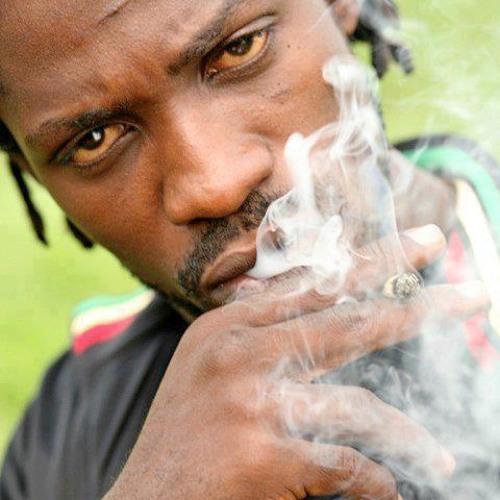
Bobi Wine, Uganda Musician turned Politician
From Stage to State: When Indecency Becomes a Political Burden
The long-term cost of this culture becomes most visible when musicians later attempt to cross into other careers—especially political leadership. While popularity among youth may translate into votes, respect and trust across generations do not convert as easily. In Uganda’s cultural setting, leadership is not judged by numbers alone but by symbolism, restraint, and perceived moral grounding. Many former musicians discover—often too late—that what entertained the crowd undermines credibility in governance.
This is not a judgment on personal capacity or legal qualification. It is a reality of cultural perception.
Older Ugandans, the educated elite, and traditional opinion leaders often struggle to reconcile leadership with individuals historically associated—fairly or unfairly—with drugs, indecent performance, or exaggerated nonconformity. In African political culture, the messenger is inseparable from the message.
Children as Symbols, Not Individuals
This cultural scrutiny extends unfairly—but powerfully—to families.
For years, Dr. Kizza Besigye’s son, Anselm, has been subjected to public judgment based largely on hairstyle and appearance. In conservative social interpretation, this has been framed—wrongly—as parental failure or negligence, as though a child’s personal expression negates the intellectual and moral stature of his parents. This reveals how deeply appearance is tied to reputation in African societies.
More recently, Solomon Kampala, son of Robert Kyagulanyi Ssentamu, became a social media target not for the substance of his political message but for his hairstyle and earrings. The debate shifted from ideas to aesthetics. For many older Ugandans, such symbols are interpreted—rightly or wrongly—as cultural transgression, reinforcing stereotypes long associated with the music industry.
This is not an indictment of the young men themselves. It is an exposure of how symbolism operates ruthlessly in conservative societies.
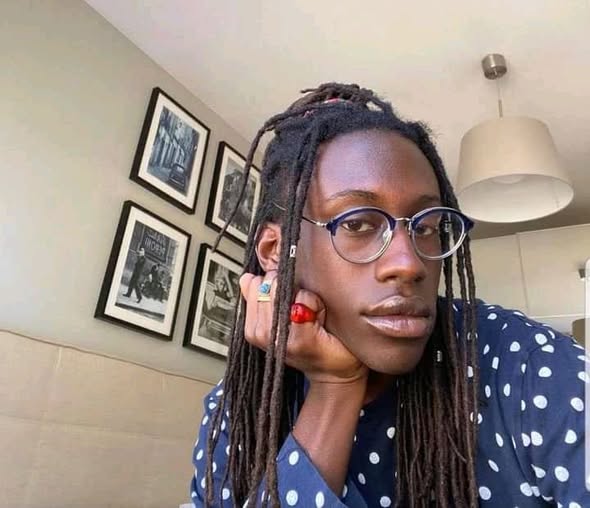
Anselm Besigye
The Unfinished Burden of the Past
When one speaks privately with older and highly educated Ugandans about Kyagulanyi, a recurring sentiment emerges: “We cannot trust leadership shaped by drugs and dreadlocks.” Even as many acknowledge his transformation and political growth, the past continues to tax the present.
African societies do not easily detach a leader from their origin story. Reinvention is possible—but it is slow, costly, and never guaranteed.
The same applies within professional spaces. Isaac Ssemakadde, President of the Uganda Law Society, has also faced generational judgment tied to hairstyle and public image. While his legal competence is not in question, the cultural expectations attached to professional authority continue to shape perception—often more loudly than credentials.
Political Silence and Regulatory Complicity
Governments have not been innocent observers. Musicians command large youth followings, making them politically useful. This utility has produced selective silence. Artists who mobilize crowds during political seasons often enjoy regulatory leniency.
The late Minister for Ethics and Integrity, Father Simon Lokodo, repeatedly warned that public indecency was a cultural time bomb. After his death, enforcement weakened. Morality became negotiable.
Uganda has laws—the Anti-Pornography Act, the Penal Code, and broadcasting standards under the Uganda Communications Commission (UCC). Yet indecent music videos rotate freely on television; explicit lyrics dominate radio playlists. The question remains: Why does regulation stop at paper?
When regulators abdicate, the market dictates—and the market rewards shock.
Indecency Beyond Uganda: A Continental Pattern of Cultural Contradiction
Uganda’s experience is not isolated. Across East Africa and the African continent, indecency has increasingly been deployed as a deliberate marketing strategy within popular music—often in direct contradiction to Africa’s long-held traditions of modesty, symbolism, and communal moral restraint.
In Kenya, several contemporary artists have repeatedly courted controversy through music videos saturated with sexual imagery, explicit choreography, and lyrics stripped of metaphor or cultural grounding. These productions, frequently banned and later reinstated, often gain popularity precisely because of their shock value rather than musical depth.
In Tanzania, despite comparatively stricter cultural regulation, waves of artists have pushed boundaries through suggestive visuals and coded explicit content, particularly in the Bongo Flava genre. While some artists have been sanctioned, others benefit from online platforms beyond the reach of national regulators.
Further south, Nigeria’s Afrobeats industry, now globally influential, presents a complex paradox. While musically innovative, sections of the industry have normalized hyper-sexualized visuals, glorification of excess, and commodification of women’s bodies as global export aesthetics. In the pursuit of international markets, cultural restraint has often been sacrificed for virality.
In South Africa, particularly within segments of the Amapiano and hip-hop scenes, explicit content—both lyrical and visual—has become normalized under the banner of artistic freedom. Yet this normalization has sparked growing concern among cultural scholars and elders who warn that the line between expression and erosion has been crossed. Across West and Central Africa, similar patterns emerge: music videos are designed less for African living rooms and more for algorithmic attention—nudity, simulated sexual acts, and shock symbolism deployed as branding tools. These trends do not merely entertain; they redefine aspiration, especially for a generation whose cultural education is increasingly outsourced to screens.
The Cultural Cost of Global Validation
What unites these cases is not geography but incentive. In a digitized economy, indecency has become a shortcut to relevance. African musicians, competing not just locally but globally, are pressured to conform to visual templates that reward extremity over authenticity. In the process, African cultural decency is reframed as backward, while restraint is mistaken for irrelevance. Yet Africa’s traditions have never been hostile to creativity or expression. They have been hostile only to excess without meaning. The danger, therefore, is not moral panic but cultural displacement—where African youth grow up consuming images that contradict the values taught at home, school, and community, while the state and regulators look away. When indecency becomes continental and unchecked, it ceases to be rebellion and becomes policy failure.
Reclaiming Sound, Substance, and Social Trust
Uganda’s music industry does not need censorship. It needs standards, mentorship, and accountability. It needs to remember that art outlives applause, and that careers do not end at entertainment.
Afrigo Band did not need nudity to endure. Philly Bongole Lutaya did not need intoxication to inspire a nation. Their legacy reminds us that lasting influence is built on discipline, not distraction.
If today’s artists continue trading dignity for visibility, they may win the night—but lose the future, the office, and the nation’s trust.
Author’s Biography
Evan Sande Ndahura is a Ugandan political and legal commentator, columnist, poet, and social justice advocate whose writings focus on governance, constitutionalism, democracy, and the political economy of power in Africa. He is widely published on issues of judicial accountability, electoral justice, human rights, and institutional reform, with a particular emphasis on Uganda’s political and legal systems. Ndahura writes from a Pan-African critical perspective, interrogating the failures of state institutions and the lived realities of ordinary citizens under entrenched systems of power. He believes that the liberation of Africa will occur through a mighty pen, not the gun.
Published By | Features Editor