Written By | International News Agencies
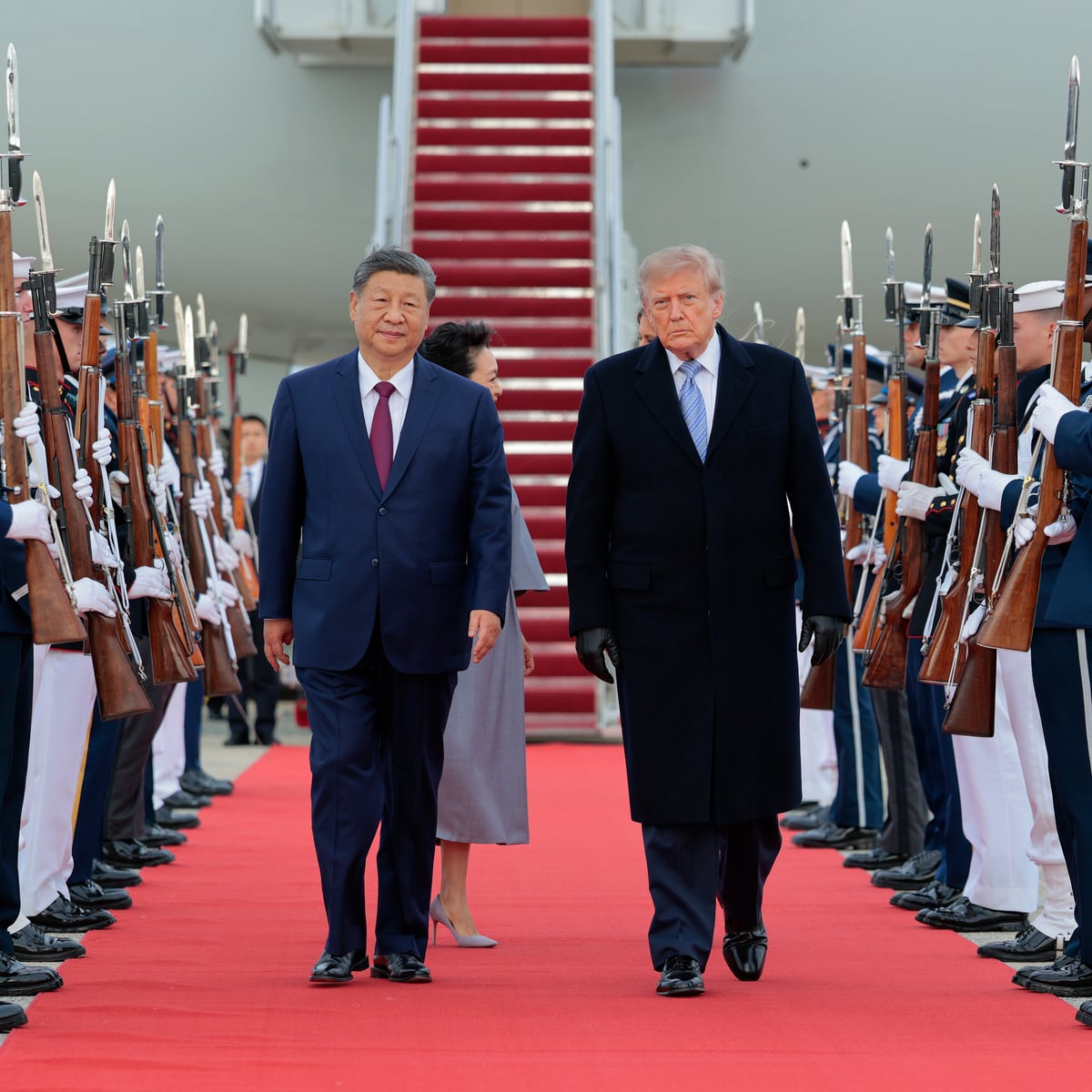
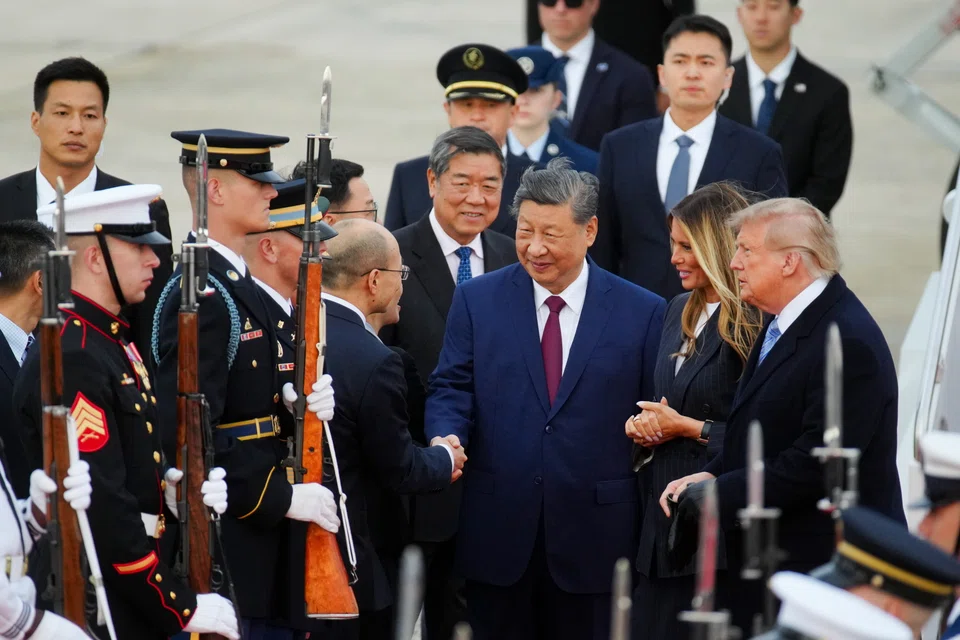
Chinese leader Xi Jinping touched down at Joint Base Andrews on the afternoon of Wednesday
World Politics Desk
Background
Chinese leader Xi Jinping touched down at Joint Base Andrews on the afternoon of Wednesday, September 24, greeted personally by President Donald Trump on the tarmac in an unusually elaborate welcome for a foreign head of state. (Some outlets, including the South China Morning Post and Taiwan's The China Post, put the arrival at roughly 4 p.m.; several American networks described it more loosely as "late Wednesday," a small but telling discrepancy given the White House's ongoing dispute with parts of the press pool over access.) The visit, which continues through Friday, marks Xi's first trip to Washington in eleven years — his last White House state visit came in 2015, as a guest of President Barack Obama — and it is being described by both governments as a formal state visit, complete with a guard-of-honor ceremony, a state dinner and the pageantry that Beijing has long sought as recognition of China's standing. Xi arrived with his wife, Peng Liyuan, and a large delegation of Chinese business executives, underscoring how much of the visit's real business would be commercial rather than ceremonial.
The trip is the product of a diplomatic sequence stretching back nearly a year. In October 2025, Trump and Xi met on the sidelines of the APEC summit in Busan, South Korea, where they patched together a fragile one-year trade truce after months of escalating tariffs, and Trump extended an invitation for Xi to visit Washington. Trump reciprocated in May 2026 with his own state visit to Beijing, the first by a sitting U.S. president in nearly a decade, where the two sides announced preliminary — and, it would turn out, only partially fulfilled — commitments on Chinese soybean purchases and rare-earth mineral exports. It was during that Beijing trip that Trump formally proposed a September return visit, setting up this week's summit as the second Trump-Xi meeting of the year and a test of whether the fragile détente struck in Busan could be converted into something more durable.
The backdrop was not a friendly one. Years of tariff escalation, U.S. restrictions on Chinese access to advanced semiconductors and artificial-intelligence hardware, and the unresolved question of Taiwan have kept the relationship on edge even as both leaders have professed a desire for stability. Newer flashpoints have sharpened the stakes further: China's economic and diplomatic ties to Iran amid its six-month war with the United States and Israel, and Beijing's wariness of a U.S.-brokered settlement in the Gulf that might reset regional power on Washington's terms, both hung over the talks alongside the familiar disputes over trade and technology.
Key Developments
The two days blended heavy ceremony with narrow, incremental substance. Wednesday's arrival was followed Thursday by working meetings, a joint appearance in the Rose Garden and an East Room state dinner whose guest list read like a roll call of the American technology industry: Elon Musk, Apple's Tim Cook, OpenAI's Sam Altman, Google's Sundar Pichai, Microsoft's Satya Nadella, Nvidia's Jensen Huang and Amazon's Jeff Bezos were all present, a lineup that underlined how central the artificial-intelligence race has become to the U.S.-China relationship. Trump presented Xi with a custom bald-eagle statue and gave him a personal tour of his in-progress $400 million White House ballroom project. Xi, for his part, announced that China would send a new pair of giant pandas to American zoos and unveiled a new bilateral student exchange initiative — both gestures aimed at softening the summit's harder edges.
On substance, the headline outcome was an extension of the U.S.-China trade truce, which Treasury Secretary Scott Bessent announced would now run until January 10, 2027 — roughly two months beyond the date it had been set to lapse. It amounts to more breathing room than a resolution. No detailed list of reciprocal tariff cuts was produced, despite pre-summit reporting that a package trimming tariffs on roughly $30 billion of goods was under discussion. China's rare-earth export deliveries continue to run behind the volumes pledged in May, and Washington's restrictions on advanced chip and AI-hardware exports to China remain fully in place, notwithstanding Beijing's repeated push to have them eased. On agriculture, one of the few tangible wins from the May Beijing summit appears to be holding up: China is reported to be on track with roughly 25 million tonnes of soybean purchases, though other categories of promised farm-goods purchases are lagging behind the commitments made earlier this year.
Taiwan and Iran both featured prominently without producing any visible shift in either side's position. Xi urged Washington to oppose "Taiwan independence" and to handle the island question with "prudence," explicitly invoking the 1982 U.S.-China communiqué that Beijing has long cited to argue for limits on American arms sales to Taipei; a pending $14 billion U.S. arms package for Taiwan remains on hold. On Iran, Xi voiced support for the existing ceasefire framework and for eventual peace negotiations between Washington and Tehran — a notable statement given China's deep economic relationship with Iran and its own stake in keeping Gulf oil-shipping lanes open during the six-month-old war. On artificial intelligence, Xi called for the two powers to jointly "develop and manage AI for good" and keep it "under human control," while Trump, posting on Truth Social afterward, said "Super Intelligence will be a big topic" between the countries but that he wanted to "leave it exactly where it is" for now — a comment that left observers uncertain whether he meant to preserve existing U.S. export controls or to signal openness to loosening them. Ukraine came up as well, though neither side disclosed any specifics of that portion of the discussion.
Reactions
Xi's own public remarks leaned into cooperative language — he called on both countries to "uphold our people-centered approach, demonstrate historical initiative … and work together to build a better world" — but he also invoked the "Thucydides Trap," the theory describing how conflict has historically erupted when a rising power challenges an established one. Analysts read the reference as a signal that Beijing remains wary of American containment even amid the diplomatic warmth on display this week. Trump, for his part, told reporters that "President Xi and I both understand we represent different systems, but the ties between our people endure, and we've never gotten along better," a characteristically upbeat framing that outside analysts were quick to qualify.
Jennifer Welch of Bloomberg Economics said the elaborate ceremonial trappings were "meant to create a positive atmosphere for the summit" and cast Trump in the role of a stabilizing force in the relationship, rather than reflecting any deeper resolution of the two sides' disputes. That assessment echoed pre-summit forecasts from Washington's foreign-policy establishment; CSIS's Scott Kennedy had predicted the summit would prove "underwhelming," a forecast that largely held up. Market analysts at Saxo Bank summarized the outcome as "stability, not a breakthrough" — an outcome better than a fresh escalation, in their view, but weaker than what markets had been hoping for heading into the talks.
Financial markets registered that disappointment in real time. Chinese and Hong Kong equities recorded their steepest one-day drop in a month as investors who had bid shares higher in anticipation of a more substantial breakthrough recalibrated once it became clear the truce extension would not be accompanied by detailed tariff or export-control concessions. U.S. markets were choppy through the summit as well, though that volatility was compounded by a separate run-up in Treasury yields unrelated to the China talks.
What's Next
The extended truce buys both sides until January 10, 2027 to convert this week's rapport into a more durable framework, but the unresolved issues on the table — the Taiwan arms package, chip and AI-hardware export controls, and China's shortfall on rare-earth deliveries — remain live and could resurface tension quickly if left unaddressed. Officials on both sides floated the idea of a new bilateral "Board of Trade" mechanism to keep negotiations moving between now and the truce deadline, though few details of its mandate have been made public. The bigger test, according to analysts who have watched the Trump-Xi relationship evolve over the past year, is whether the personal chemistry on display in Washington this week outlasts the next dispute — a pattern that has repeated itself since the two leaders first patched together their truce in Busan last October, only to see it fray and require renegotiation more than once since. Xi's public backing for the U.S.-Iran ceasefire framework could also matter beyond the bilateral relationship: it adds a notable voice of support to the diplomatic track pursued in recent days by U.S. envoys Steve Witkoff and Jared Kushner, who met for roughly three hours with Iranian officials in New York earlier this week in the first direct US-Iran contact in months. Whether that alignment translates into renewed momentum toward ending the six-month war remains to be seen.